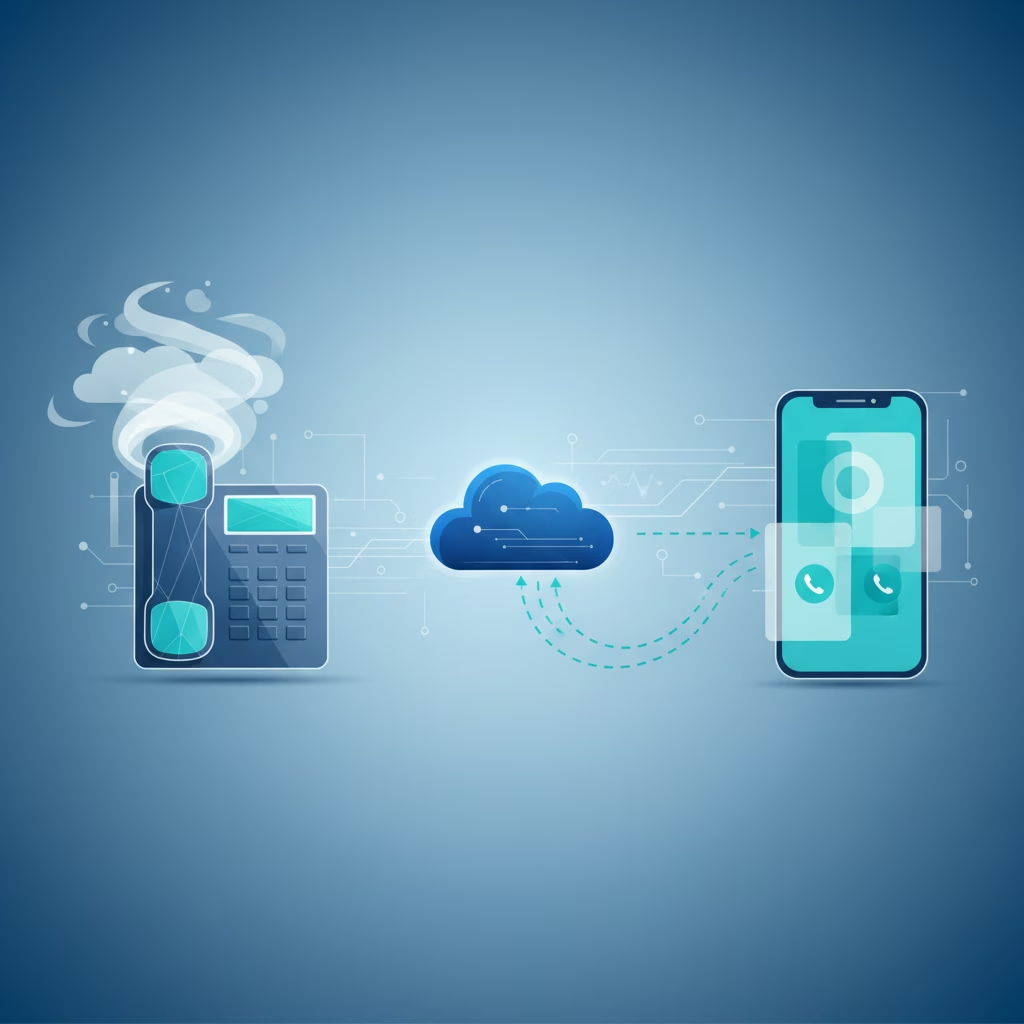
In the evolving landscape of business telecommunications, Voice over Internet Protocol (VoIP) has become the gold standard for reliable, flexible, and cost-effective communication. As a business owner or IT professional considering a cloud-based phone system like TheVoĉo, one of the primary decisions you'll face is selecting the right endpoint for your team: a traditional VoIP desk phone or a versatile softphone application. Both options offer distinct advantages, and understanding their nuances is crucial for optimising your organisation's communication strategy across European time zones and beyond.## The Enduring Appeal of VoIP Desk PhonesVoIP desk phones closely resemble traditional office phones but connect via your internet network (LAN) rather than a dedicated phone line. These dedicated hardware devices offer a familiar and reliable experience, making them a popular choice for many businesses.Key Characteristics and Benefits:* Dedicated Hardware: Designed exclusively for making and receiving calls, minimising distractions from other applications.* Superior Call Quality: Often equipped with advanced HD voice codecs and dedicated processors, providing crystal-clear audio even in busy environments.* Reliability & Durability: Robust construction ensures longevity, and a direct network connection can offer more stable performance than a Wi-Fi-dependent softphone.* Familiar User Experience: Employees accustomed to traditional phones will find the physical buttons, handset, and display intuitive to use, reducing the learning curve.* Advanced Features: Many models include programmable keys, headset ports, speakerphones, large displays, and even video capabilities, ideal for receptionists or executives.* Power over Ethernet (PoE): Often powered directly through the Ethernet cable, simplifying installation and reducing cable clutter.Considerations:* Initial Investment: Generally higher upfront cost per unit compared to simply utilising existing devices for softphones.* Portability: Fixed to a desk, limiting flexibility for remote or highly mobile employees.* Desk Space: Requires physical space on a desk.VoIP desk phones are often the preferred choice for roles requiring constant phone use, such as reception desks, sales teams with high call volumes, or executive offices where a professional, dedicated device is valued.## Embracing Flexibility with VoIP SoftphonesA softphone is a software application that allows users to make and receive calls over the internet using a computer, tablet, or smartphone. When paired with a quality headset and a reliable internet connection, softphones transform existing devices into powerful communication tools.Key Characteristics and Benefits:* Cost-Effectiveness: Leverages existing hardware (computers, smartphones), significantly reducing initial investment.* Ultimate Portability & Flexibility: Employees can work from anywhere – the office, home, or on the go – using their preferred device, which is increasingly important for hybrid and remote European workforces.* Seamless Integration: Softphones often integrate directly with Customer Relationship Management (CRM) systems, email, and other business applications, streamlining workflows and enhancing productivity. Click-to-dial functionality and caller ID look-ups are common benefits.* Rapid Deployment: Easy to download and configure, allowing new users to get up and running quickly without physical hardware installation.* Unified Communications (UC):: Often part of a broader UC suite, combining voice, video conferencing, instant messaging, and presence information into a single interface.* Scalability: Effortlessly add or remove users without needing to purchase or reconfigure physical phones.Considerations:* Reliance on Device Performance: The quality of calls can be affected by the performance of the host device, its operating system, and other running applications.* Internet Connection Quality: Highly dependent on a stable and fast internet connection; an unreliable Wi-Fi signal can degrade call quality.* Headset Requirement: A good quality headset is essential for optimal sound clarity and privacy, adding a separate purchase requirement.* Potential for Distraction: Sharing a device with other applications can lead to context-switching and distractions.Softphones are ideal for mobile sales teams, remote workers, freelancers, or any organisation looking for maximum flexibility and cost efficiency.## Key Factors in Your Decision: Desk Phone vs. SoftphoneWhen weighing your options, consider these crucial factors:* Cost: While desk phones have a higher upfront cost, softphones might require investment in quality headsets. Factor in maintenance and longevity.* Portability and Mobility: If your team is primarily office-based, desk phones are fine. For remote, hybrid, or field-based roles, softphones are indispensable.* Call Quality: Dedicated desk phones often offer superior, consistent call quality. Softphone quality is heavily reliant on the user's device, headset, and network.* Functionality & Integration: Desk phones excel with physical buttons and dedicated features. Softphones shine with deep software integrations (CRM, ERP) and UC capabilities.* User Experience: Some users prefer the tactile feel of a physical phone; others appreciate the minimalist, integrated approach of a softphone on their computer or mobile.* Security & Reliability: Both options are secure with a reputable VoIP provider like TheVoĉo. Desk phones offer a dedicated, less "busy" network endpoint, potentially reducing avenues for software conflicts. Softphones on personal devices require robust security practices on those devices.## Tailoring Your Choice to Your Business NeedsThe "best" solution isn't universal; it depends entirely on your organisation's specific requirements, workflows, and culture.* For High-Volume Call Centres or Reception Areas: Desk phones provide the reliability, dedicated focus, and advanced features needed for constant communication without distractions.* For Remote and Hybrid Teams: Softphones are non-negotiable. They empower employees to communicate effectively from anywhere, ensuring business continuity regardless of location.* For Mobile Professionals (e.g., Sales, Field Service): Softphones on smartphones are crucial for staying connected while on the road or at client sites.* For Small Businesses and Startups: Softphones offer an excellent entry point, minimising initial hardware costs and providing immense flexibility as the business grows.* A Hybrid Approach is Often Best: Many modern European businesses find success by deploying a mix. Executives or receptionists might have desk phones, while sales, marketing, and remote staff utilise softphones. This allows you to leverage the strengths of both technologies.## Conclusion: Powering Your Business Communication with TheVoĉoChoosing between VoIP desk phones and softphones is a strategic decision that impacts productivity, flexibility, and cost-effectiveness. Both offer compelling advantages, and the optimal choice often involves a blend tailored to individual roles and business objectives.At TheVoĉo, we understand the diverse needs of modern organisations. Our cloud-based business phone system seamlessly supports both high-quality VoIP desk phones and feature-rich softphone applications, ensuring your team has the right tools to communicate effectively, whether they're in London, Paris, Berlin, or working remotely.Ready to optimise your business communication? Contact TheVoĉo today to explore our Cloud PBX, VoIP solutions, and discover how our secure, AI-powered telecommunications can transform your organisation's connectivity.
Cloud-PBX
VoIP Phone Comparison: Desk Phones vs. Softphones for Modern Businesses
Choosing between a VoIP desk phone and a softphone? Discover the pros, cons, and key differences to make an informed decision for your European business.
Product Team
•5 min read
Tags:voipsoftphonedeskphonecloudpbxbusinessphone