Navigating VoIP: Desk Phones vs. Softphones for Modern Businesses
In today's dynamic business environment, efficient communication is paramount. As more European organisations embrace cloud-based phone systems like those offered by TheVoĉo, a crucial decision often arises: should your team use dedicated VoIP desk phones or versatile softphones? Both options leverage the power of Voice over Internet Protocol (VoIP) to deliver superior call quality and advanced features, but they cater to different operational needs and preferences.
Understanding the distinctions between these two primary VoIP endpoints is key to optimising your communication infrastructure, enhancing productivity, and ensuring a seamless experience for your employees, whether they're in London, Berlin, or working remotely across Europe.
What are VoIP Desk Phones?
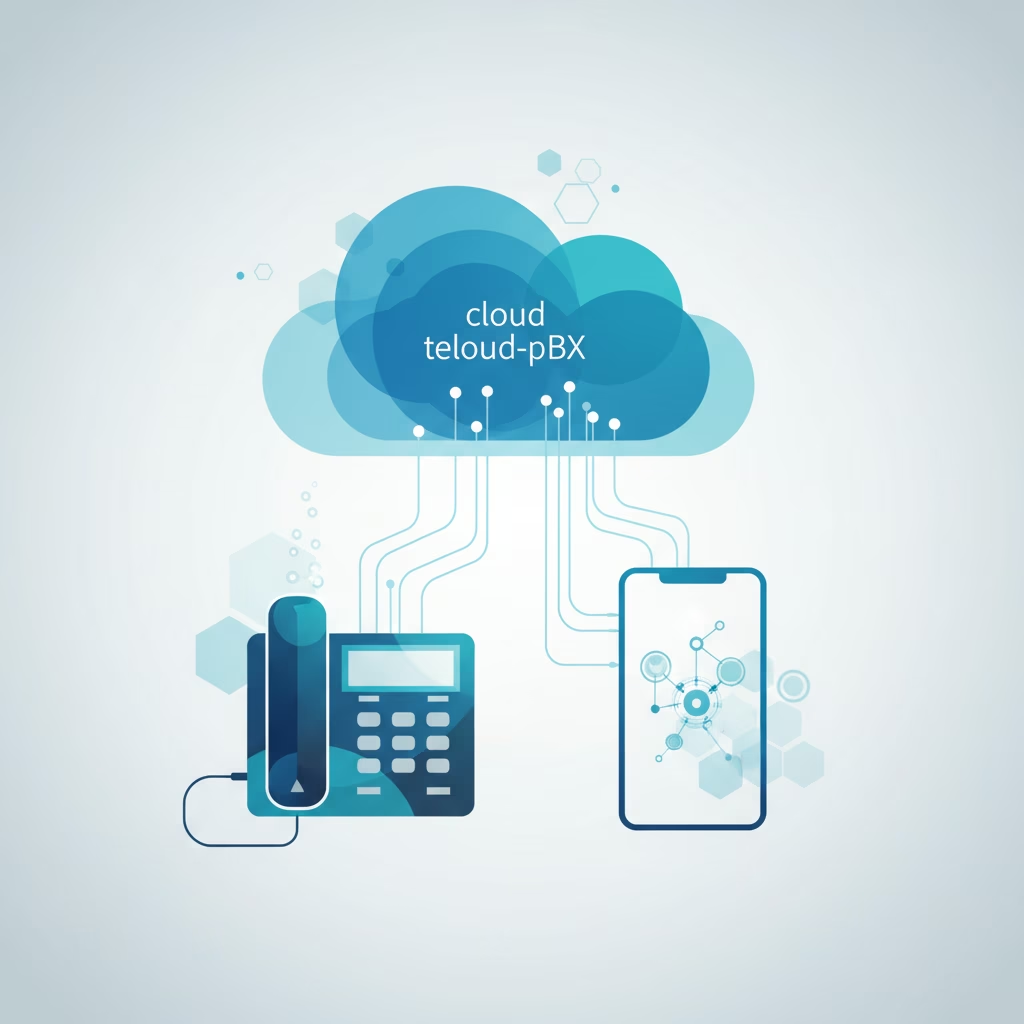
VoIP desk phones physically resemble traditional office phones but operate entirely over an internet connection. Instead of analogue lines, they use your existing network infrastructure to make and receive calls, often supporting HD audio for crystal-clear conversations. These devices come in various forms, from basic models to advanced executive phones with large colour screens, programmable buttons, and even video capabilities.
Pros of VoIP Desk Phones:
- Familiarity and Professionalism: Many employees are accustomed to physical handsets, offering a traditional, professional feel. This can reduce the learning curve, especially for staff less comfortable with technology.
- Reliability and Call Quality: Dedicated hardware often provides consistent, high-quality audio, less susceptible to conflicts with other applications running on a computer. They typically have built-in echo cancellation and noise reduction.
- Dedicated Device: A separate device means calls don't interfere with computer activities. Employees can continue working on their PCs while on a call.
- Advanced Features: High-end models offer sophisticated features like multiple line appearances, direct access to directories, speed dials, and often better speakerphone functionality than a typical laptop.
- Less Reliance on PC Performance: Unlike softphones, the desk phone's performance isn't dependent on the power or stability of a user's computer.
Cons of VoIP Desk Phones:
- Higher Initial Cost: Purchasing physical handsets for every employee can represent a significant upfront investment, especially for larger teams.
- Lack of Portability: Desk phones are stationary. They're ideal for fixed office environments but impractical for remote workers or staff who travel frequently.
- Physical Space: They occupy desk space and require Ethernet cabling (or Wi-Fi capability).
- Maintenance and Upgrades: Hardware requires occasional maintenance, and upgrades mean replacing physical units, which can be costly and disruptive.
Exploring Softphones: The Software Solution
A softphone (short for 'software phone') is an application installed on a computer, smartphone, or tablet that allows users to make and receive calls over the internet. It transforms your device into a fully functional phone, often integrated directly with your Cloud PBX system. Users typically need a headset with a microphone for optimal call quality, especially in busy environments.
Pros of Softphones:
- Exceptional Flexibility and Mobility: Softphones are incredibly portable. Users can work from the office, home, a café in Rome, or a client site, simply by logging into their application on their device. This is ideal for hybrid work models and travelling professionals.
- Cost-Effectiveness: Eliminating the need for dedicated hardware significantly reduces capital expenditure. Many softphone apps are included with VoIP service plans, and headsets are generally more affordable than desk phones.
- Seamless Integration: Softphones often integrate deeply with other business applications like CRM systems, email, and collaboration tools, enabling features like click-to-dial, call pop-ups with customer information, and unified communications.
- Rapid Deployment and Scalability: Deploying softphones is as simple as installing software. Scaling up or down is effortless, making it perfect for growing businesses or seasonal staffing fluctuations.
- Unified Communications (UC) Capabilities: Softphones are often central to UC platforms, combining voice calls with video conferencing, instant messaging, screen sharing, and presence management within a single interface.
Cons of Softphones:
- Reliance on Device and Internet: Performance is dependent on the device's processing power, RAM, and a stable, high-speed internet connection. A slow PC or weak Wi-Fi can degrade call quality.
- Headset Quality: A good quality headset is crucial for clear audio and comfort. Poor quality headsets can lead to muffled sound or background noise issues.
- Potential for Distractions: Using a computer or smartphone for calls can lead to multitasking distractions, although this can be mitigated with proper training and focus.
- Power Dependency: If the user's computer or smartphone loses power, so does their phone service.
Key Comparison Factors for Your Organisation
When making your decision, consider these critical factors:
- Cost: Softphones generally offer lower upfront costs due to minimal hardware requirements. Desk phones require an initial investment per unit.
- Mobility: Softphones are the undisputed champions for remote work, hybrid teams, and mobile staff. Desk phones are best for fixed office environments.
- Functionality & Features: Both offer core VoIP features. High-end desk phones provide physical buttons for advanced functions, while softphones excel in software integrations and UC capabilities.
- Reliability & Call Quality: Both can offer excellent quality. Desk phones may offer marginally more consistent audio due to dedicated hardware, while softphones rely on the user's device and headset.
- User Experience & Training: Desk phones offer familiarity. Softphones require users to be comfortable with software interfaces and potentially managing a headset.
- IT Management: Softphones can be easier to deploy and manage remotely, while desk phones require physical setup and potential troubleshooting of hardware.
Making the Right Choice for Your European Business
The optimal choice isn't about one being inherently 'better' than the other, but rather which aligns best with your specific business needs, budget, and work culture. Many organisations adopt a hybrid approach, leveraging both:
- For Office-Centric Teams: Call centres, reception areas, or employees who spend most of their day at a fixed desk may benefit from the dedicated reliability and traditional feel of a VoIP desk phone.
- For Hybrid & Remote Workers: Staff who regularly work from home, travel for business, or frequently move between different office locations will find softphones indispensable for their flexibility and cost-effectiveness.
- For Sales & Support Teams: Softphones, especially when integrated with CRM systems, can significantly boost productivity for sales and customer support professionals by providing instant access to client data during calls.
- For Executives & Power Users: Depending on preference, some executives may prefer a sophisticated desk phone, while others might favour the UC integration and mobility of a softphone.
At TheVoĉo, our Cloud PBX solutions are designed to support both desk phones and softphones seamlessly. This allows your organisation to mix and match endpoints across different departments or roles, ensuring every employee has the right tool for their communication needs.
Conclusion: Empower Your Workforce with TheVoĉo
Choosing between VoIP desk phones and softphones is a strategic decision that impacts your team's productivity, flexibility, and operational costs. By carefully evaluating your organisation's unique requirements – whether it's a bustling office in Manchester, a distributed team across the EU, or a mobile workforce – you can make an informed choice that enhances communication efficiency.
Ready to upgrade your business communication? TheVoĉo provides robust, secure, and scalable Cloud PBX solutions that fully support both desk phones and softphones, offering the ultimate flexibility. Contact TheVoĉo today to discuss your unique needs and find the perfect VoIP solution for your business. Empower your team with seamless, high-quality communication, no matter where they work.