Unified Communications (UC) is more than just combining phone calls and emails; it's about creating a cohesive, efficient, and flexible communication ecosystem. For European businesses navigating a dynamic global landscape, staying abreast of UC trends is not merely advantageous – it's crucial for sustained growth and competitive advantage. The digital workplace has evolved rapidly, driven by technological innovation and shifting work paradigms. Understanding these trends helps organisations optimise operations, enhance collaboration, and deliver superior customer experiences. From bustling city centres like London, Paris, and Berlin to distributed teams across the continent, businesses are recognising the power of integrated communication platforms to overcome geographical and operational barriers.
1. AI and Automation: The Intelligent Evolution of UC
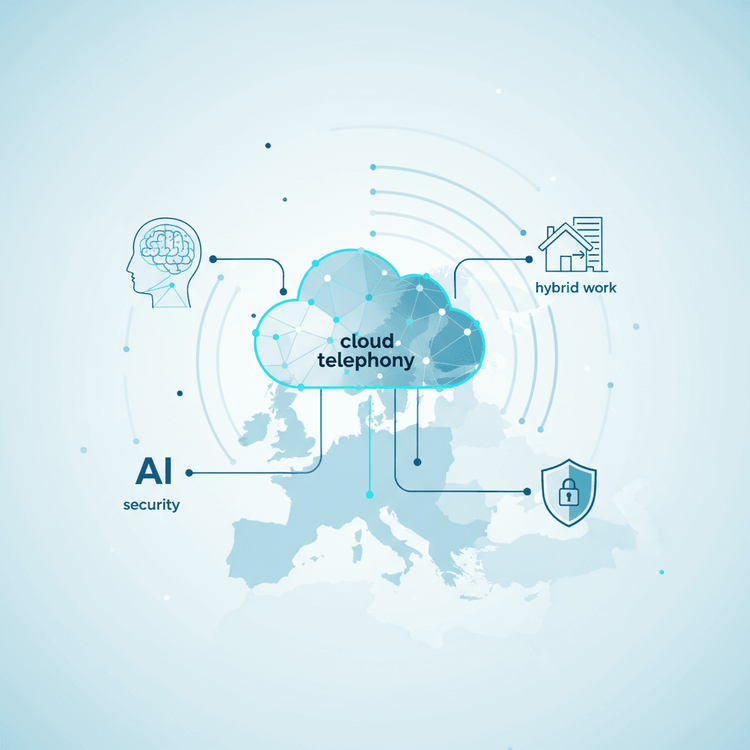
Artificial Intelligence (AI) is no longer a futuristic concept but a tangible, transformative force within Unified Communications. AI integration is revolutionising how businesses interact internally and externally, offering unprecedented levels of efficiency and personalisation.
- Intelligent Call Routing: AI-powered systems analyse caller intent and historical data to route calls to the most appropriate agent or department, reducing wait times and improving resolution rates. This is especially vital for multi-language contact centres common in Europe.
- Virtual Assistants and Chatbots: These tools provide instant support, answer FAQs, and handle routine queries, freeing up human agents for more complex tasks. Imagine a customer in Berlin getting immediate support from a bot in German, even outside typical business hours.
- Transcription and Translation Services: AI facilitates real-time transcription of meetings and even provides live translation, breaking down language barriers in international teams and client interactions. This is a game-changer for European organisations working across diverse linguistic regions.
- Predictive Analytics: AI analyses communication patterns to identify potential bottlenecks, suggest optimal communication channels, and even predict customer needs, enabling proactive engagement.
These AI capabilities allow businesses to streamline workflows, reduce operational costs, and enhance both employee productivity and customer satisfaction.
2. Hybrid Work Models: Flexible Collaboration Demands Adaptable UC
The shift towards hybrid and remote work is perhaps the most significant catalyst for UC evolution. European businesses, embracing flexibility post-pandemic, require communication tools that seamlessly bridge the gap between physical and virtual workspaces.
- Platform Agnosticism: UC solutions must integrate effortlessly across various devices (laptops, smartphones, tablets) and operating systems, allowing employees to connect from anywhere, anytime. A sales professional in Rome can join a team meeting with colleagues in Dublin and Madrid, whether they are in the office, at home, or on the go.
- Enhanced Video Conferencing: Beyond basic video calls, modern UC platforms offer features like virtual backgrounds, interactive whiteboards, screen sharing, and breakout rooms, making virtual meetings as engaging and productive as in-person ones.
- Persistent Collaboration Spaces: Tools that allow teams to share documents, messages, and project updates in dedicated, persistent channels ensure continuity, even when team members are working different hours or from different locations. This supports flexible working patterns common across different European time zones.
- Mobile-First Approach: With a significant portion of the workforce utilising mobile devices for business, UC solutions must offer robust mobile applications that replicate the full desktop experience, ensuring complete functionality on the go.
This adaptability ensures that collaboration remains fluid and effective, regardless of where employees are situated, fostering a more inclusive and productive work environment.
3. Robust Security and Compliance: Building Trust in a Digital World
As UC platforms handle vast amounts of sensitive data, robust security is paramount. For European businesses, this is inextricably linked with stringent data protection regulations and the imperative to maintain customer and stakeholder trust.
- End-to-End Encryption: Ensuring that all communications – voice, video, and messaging – are encrypted from sender to receiver protects against eavesdropping and data breaches. This is a non-negotiable feature for any organisation handling confidential information.
- Data Sovereignty and GDPR Compliance: European organisations must comply with the General Data Protection Regulation (GDPR), which dictates how personal data is collected, processed, and stored. Choosing a UC provider with data centres within the EU, like TheVoĉo, ensures data sovereignty and simplifies compliance, avoiding complex cross-border data transfer issues.
- Identity and Access Management (IAM): Secure authentication methods, multi-factor authentication (MFA), and granular access controls are essential to prevent unauthorised access to communication systems and sensitive data.
- Threat Detection and Prevention: Advanced security features, including real-time monitoring and anomaly detection, help identify and mitigate potential cyber threats before they can cause significant damage.
Prioritising security and compliance not only protects valuable data but also reinforces an organisation's reputation and trust with its clients and partners, especially critical in sectors like finance, healthcare, and legal services across Europe.
4. Experience-Centric UC: Personalisation and Seamless Integration
The modern workforce expects communication tools that are intuitive, personalised, and seamlessly integrated into their daily workflows. The focus is shifting from simply providing features to delivering an exceptional user experience (UX).
- Unified Dashboards: Employees want a single pane of glass to manage all their communication channels – chat, email, calls, video conferences – rather than toggling between multiple applications. This reduces context switching and boosts productivity.
- CRM and Business Application Integration: Integrating UC platforms with Customer Relationship Management (CRM) systems, Enterprise Resource Planning (ERP), and other core business applications streamlines operations. Imagine a sales agent in Milan receiving an incoming call and immediately seeing the caller's entire interaction history pop up from their CRM, enabling a more informed and personalised conversation.
- Customisation and Personalisation: Users should be able to customise their interfaces, notifications, and preferred communication methods to suit their individual roles and preferences.
- API-First Approach: Providers offering robust APIs allow businesses to tailor and extend their UC capabilities, creating bespoke integrations that meet unique operational demands. This flexibility is key for European businesses with highly specialised needs.
This drive for a superior user experience and deep integration enhances employee satisfaction, accelerates adoption, and ultimately leads to more effective and efficient communication across the entire organisation.
Conclusion
The Unified Communications landscape is evolving at an unprecedented pace, driven by technological innovation and the demands of a dynamic global workforce. For European businesses, embracing these trends – from AI-powered intelligence and flexible hybrid work support to stringent security and an experience-centric approach – is vital for remaining competitive and agile. By investing in modern UC solutions, organisations can foster stronger collaboration, boost productivity, and deliver exceptional customer and employee experiences.
Are you ready to future-proof your organisation's communication strategy? Discover how TheVoĉo's cloud-based PBX, VoIP, and AI-powered telecommunications solutions can empower your business to thrive amidst these evolving trends. Visit our website or contact us today for a personalised consultation and embark on your journey to truly unified, secure, and intelligent communications.