

Introduction to VoIP Security
In an era where remote work and cloud-based operations have become the standard for European businesses, protecting communication channels is no longer optional. For many organisations, the move to cloud-based phone systems brings immense flexibility, but it also introduces new security challenges. Among the most critical defences in your arsenal is Transport Layer Security (TLS). Understanding how TLS works and why it is indispensable for your VoIP infrastructure is essential for protecting your business intelligence and meeting strict data privacy standards.
What is TLS and How Does It Protect Voice Traffic?
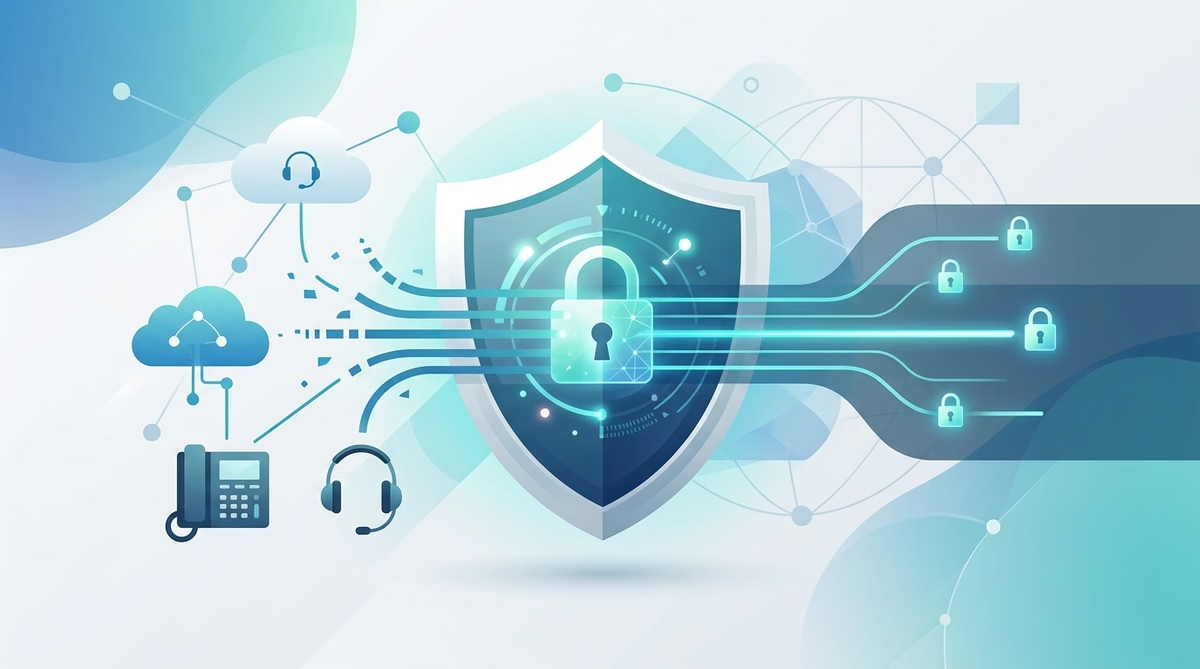
Transport Layer Security (TLS) is a cryptographic protocol designed to provide communication security over a computer network. When applied to VoIP, TLS creates a secure 'tunnel' for your SIP (Session Initiation Protocol) signalling. By encrypting the path between your IP phone or softphone and the cloud PBX, you prevent unauthorised parties from intercepting sensitive call metadata, such as phone numbers, call durations, and caller identities.
Key functions of TLS in telecommunications include:
- Encryption: Scrambling data so that even if intercepted, it remains unreadable.
- Authentication: Verifying that the server your phone is connecting to is legitimate, preventing man-in-the-middle attacks.
- Integrity: Ensuring that the data transmitted during a session has not been altered or tampered with by third parties.
The Role of TLS in GDPR and Data Sovereignty
For businesses operating within the European Union, compliance with the General Data Protection Regulation (GDPR) is a non-negotiable requirement. While many consider GDPR to focus primarily on websites and databases, it applies equally to voice communications and call metadata. Unencrypted voice traffic is a significant liability; should a data breach occur, failing to implement 'state of the art' security measures can lead to heavy fines under European law.
By implementing TLS alongside SRTP (Secure Real-time Transport Protocol) for the actual audio stream, your organisation demonstrates a commitment to 'Privacy by Design'. This approach not only keeps your customer interactions confidential but also ensures that you are meeting your legal obligations regarding the protection of personal data in transit.
Practical Steps for Implementing Secure Communication
Transitioning to a secure VoIP environment requires more than just enabling a toggle. To ensure your communication channels are truly robust, consider these actionable steps:
- Audit Your Hardware: Ensure your IP handsets and softphone applications explicitly support TLS and SRTP. Older, legacy hardware may not support modern encryption standards.
- Verify Certificate Management: TLS relies on digital certificates to establish trust. Work with your cloud provider to ensure that your communication paths are using trusted certificate authorities.
- Engage with Experts: Security is a dynamic field. Regularly consult with your IT department or your VoIP service provider to perform penetration tests and ensure your encryption protocols are up to date.
- Standardise Policies: Create internal guidelines for remote workers. Ensure that even employees working from home are using secure VPNs or enterprise-grade cloud systems that mandate TLS-encrypted signalling.
The Strategic Advantage of Secure Voice
Beyond compliance, there is a clear strategic advantage to prioritising encryption. Building trust with your clients is the foundation of any successful business relationship. Whether you are dealing with sensitive financial data, legal consultations, or private corporate strategy, knowing that your voice communications are shielded from eavesdropping provides peace of mind that resonates across your entire organisation. Security is not just a technical hurdle; it is a competitive edge that signals professionalism and reliability in a digital-first marketplace.
Conclusion
As cyber threats evolve, static security measures become obsolete. Implementing TLS for your voice communications is a fundamental step in securing your business infrastructure against modern threats while ensuring full compliance with European data mandates. At TheVoĉo, we prioritise the integrity of your voice data as a core feature of our platform, not an afterthought. Are you ready to upgrade your business communication security? Contact the TheVoĉo team today to learn how our secure, cloud-based systems can protect your organisation and ensure compliance across all your operations.