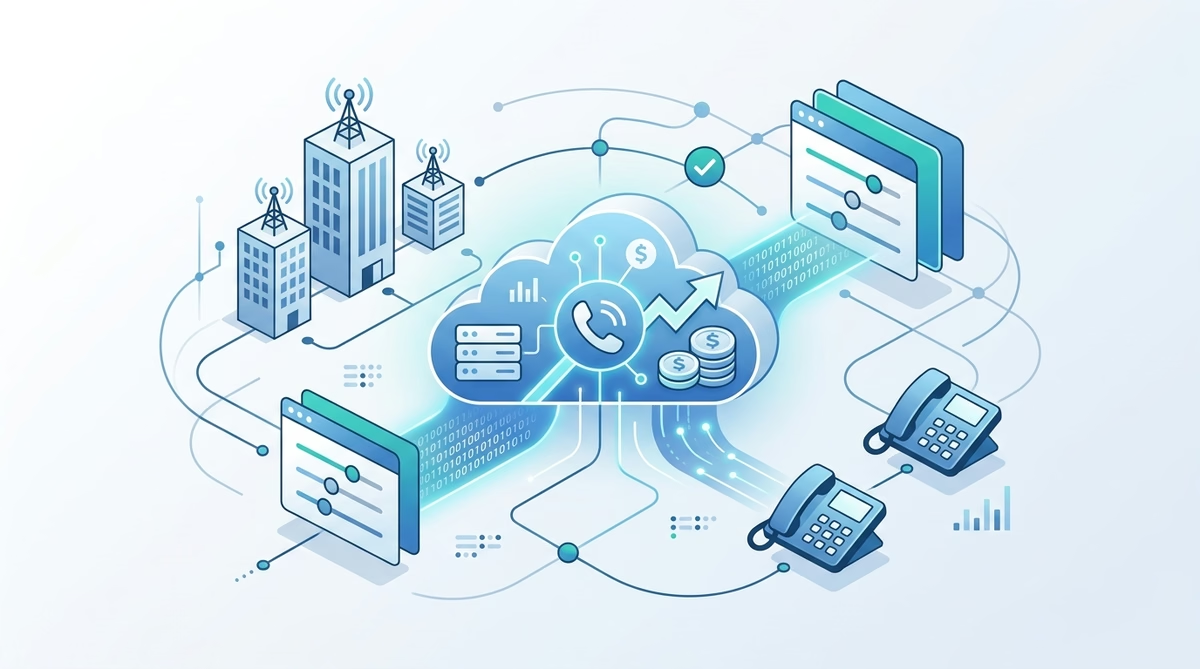
Introduction to Modern Business Telephony. Transitioning to a cloud-based PBX system is a strategic move for any European business looking to modernise its infrastructure. Unlike traditional on-premise hardware that requires significant upfront capital investment, cloud PBX solutions shift costs to operational expenditure (OpEx). At TheVoĉo, we understand that navigating diverse pricing models can feel overwhelming. This guide breaks down the common structures to help you make an informed decision for your team. ## Understanding Subscription Models. Most cloud phone providers operate on a recurring monthly or annual subscription basis. This predictability is ideal for cash flow management within an organisation. Common billing structures include: 1. Per-User Pricing: You pay a set fee for every staff member active on the system. This is highly scalable, allowing you to add or remove seats as your team fluctuates. 2. Tiered Feature Sets: Providers often offer Basic, Professional, and Enterprise tiers. Lower tiers might include core calling features, while higher tiers unlock advanced capabilities like AI-powered call analytics, CRM integrations, and multi-office management. 3. Usage-Based Pricing: While less common for domestic traffic, some providers charge based on actual call minutes or concurrent connections. This model can be cost-effective for seasonal businesses but harder to forecast. ## Hidden Costs and Scalability. When evaluating quotes, it is vital to look beyond the base seat fee. Many businesses fail to account for these ancillary expenses: * Hardware procurement: Do you need dedicated VoIP handsets, or will your team use softphones on existing laptops and mobile devices? * International calling rates: European businesses with global offices must scrutinise long-distance fees. Always check if the provider offers 'all-you-can-eat' domestic bundles versus per-minute international costs. * Implementation and Training: Initial setup fees may apply, particularly if you require extensive porting of legacy numbers from traditional carriers. * Support packages: Ensure your chosen tier includes the level of service your business requires, such as 24/7 technical support or dedicated account management. ## Calculating the ROI of Cloud PBX. To determine the true value, calculate the 'Total Cost of Ownership' (TCO) over a three-year period. Cloud PBX often wins on TCO because: * Reduced IT Maintenance: You no longer pay for on-site server repairs or local infrastructure upgrades. * Agility: You can spin up new virtual extensions for remote workers in any time zone instantly. * AI Efficiency: Leveraging AI-powered transcription and automated attendants saves hours of administrative time, directly impacting your bottom line. ## Choosing the Right Model for Your Organisation. Before committing, perform a brief audit of your communication patterns. Do your employees rely on desk phones, or are they mobile-first users? Does your organisation require advanced integrations with tools like Salesforce, Microsoft Teams, or Zendesk? High-growth companies should prioritise 'Elastic Scaling' plans that do not penalise you for adding users mid-billing cycle. Stability-focused organisations might prefer long-term annual contracts which frequently come with significant discounts. ## Conclusion and Next Steps. Moving to a cloud-based communication platform is about more than just reducing your telephone bill; it is about equipping your business with the tools to collaborate effectively across borders. By selecting a pricing model that aligns with your specific operational cadence, you can maximise your investment and future-proof your connectivity. Ready to find the perfect plan for your team? Contact TheVoĉo today for a transparent, tailored consultation to see how we can streamline your business communication strategy.