
Enhancing Connectivity in Modern Educational Institutions
The landscape of education is undergoing a radical digital transformation. From primary schools to sprawling university campuses, the need for seamless communication has never been more critical. Traditional landline infrastructure is increasingly proving to be a bottleneck—inflexible, costly, and difficult to manage across multiple sites. For educational organisations across Europe, moving to a cloud-based telephony system is not just a technological upgrade; it is a strategic shift towards a more connected and efficient learning environment.
Why Cloud Telephony is the Future of Education
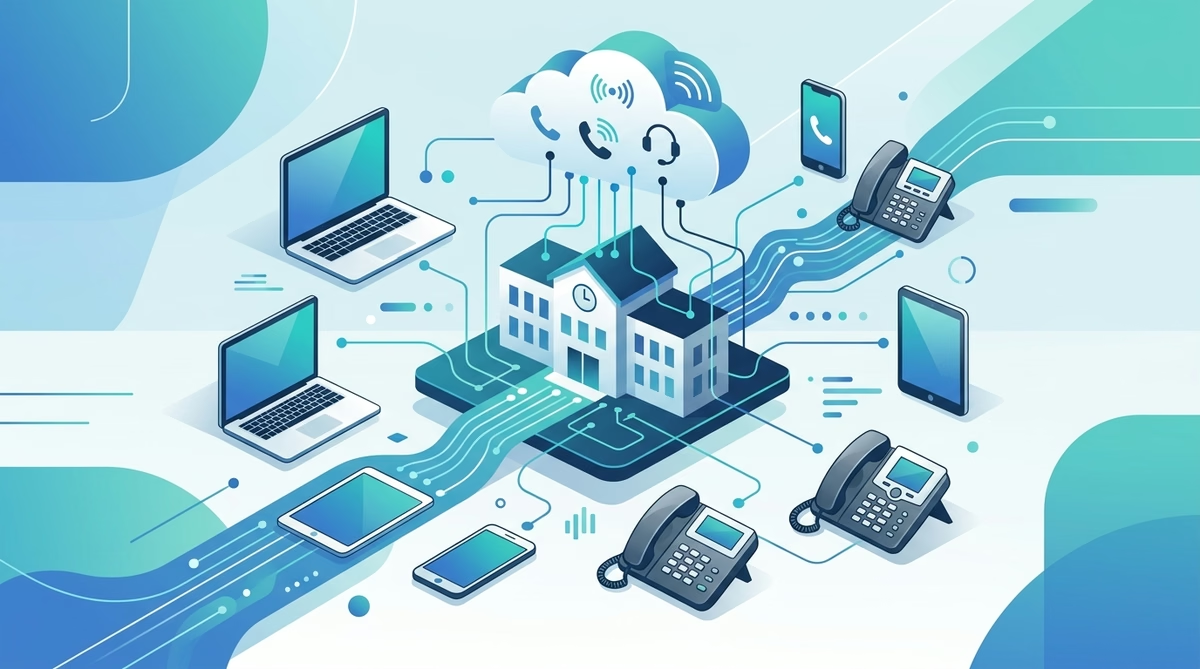
Cloud telephony, or VoIP, offers educational institutions a level of agility that legacy systems simply cannot match. By centralising communication through the cloud, schools and universities can break down the silos that often exist between departments, faculty, and administrative staff.
- Scalability: Easily add new lines for seasonal administrative staff or new campus departments without installing physical hardware.
- Cost Efficiency: Reduce operational expenditure by eliminating expensive legacy line rentals and long-distance call charges.
- Mobility: Faculty members can access the office phone system from their mobile devices, ensuring they remain reachable whether they are in the classroom, the office, or working remotely.
Improving Administrative Efficiency and Staff Collaboration
Administrative burdens in the education sector are significant. Registrars, admissions offices, and facility managers are often overwhelmed by inbound queries. Cloud PBX systems enable advanced routing features that streamline these interactions significantly.
For example, an automated attendant (IVR) can route callers to the correct department—such as student services, admissions, or accounts—without requiring human intervention. This saves hours of administrative time each week. Furthermore, integrations with CRM systems ensure that when a parent or student calls, their profile and history are instantly available to the staff member, leading to more personalised and efficient interactions.
Enabling Hybrid Learning and Remote Communication
Post-pandemic, the demand for hybrid communication has spiked. Education is no longer confined to the four walls of a lecture hall. Cloud telephony allows academic staff to communicate with colleagues, students, and parents from anywhere with an internet connection. By using a unified communications platform, staff can participate in voice calls, video meetings, and instant messaging from a single interface. This ensures that the professional image of the institution is maintained regardless of where the staff member is located, effectively bridging the gap between remote learners and physical campuses.
Data Security and Compliance in the European Context
When dealing with student data and academic records, compliance is paramount. European institutions must adhere strictly to GDPR (General Data Protection Regulation) and maintain data sovereignty. Choosing a cloud telephony provider that prioritises security is not optional. TheVoĉo ensures that all communication data is encrypted end-to-end, protecting sensitive information from interception. By hosting services on secure European data centres, institutions can guarantee that they remain compliant with local regulations while enjoying the benefits of cutting-edge technology.
Practical Steps to Transition to the Cloud
Transitioning from legacy infrastructure to the cloud does not need to be a disruptive experience. Here is a simplified approach to modernising your institutional communication:
- Audit your current usage: Identify how many lines are active and which are underutilised.
- Assess your network capability: Ensure your existing campus broadband can support high-quality voice traffic.
- Identify key integrations: Determine if your phone system needs to talk to your student management software.
- Pilot the system: Start with a single department to test usability and features before a campus-wide rollout.
Conclusion: Future-Proofing Your Institution
The education sector requires tools that are as forward-thinking as the students it serves. By adopting cloud telephony, educational institutions can foster a more collaborative environment, significantly lower communication costs, and ensure a secure, compliant infrastructure. If you are ready to streamline your school's communication strategy and embrace the flexibility of the cloud, contact the TheVoĉo Sales Team today to discuss your specific requirements and receive a tailored implementation plan.