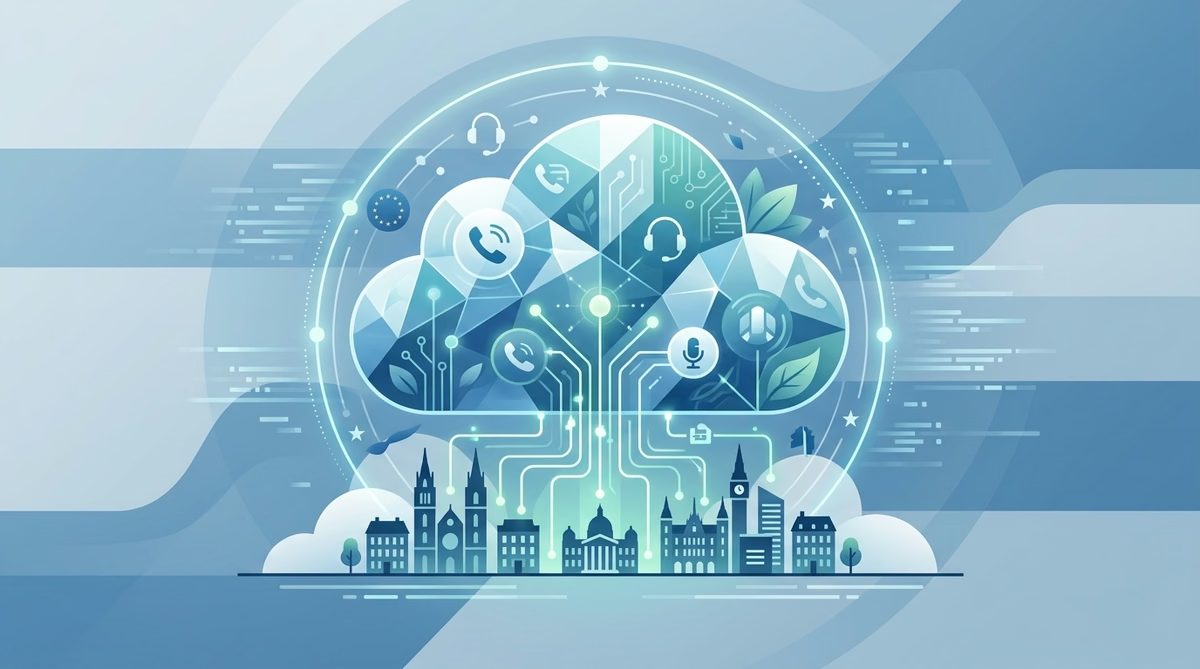
The Shift Towards Green Telecommunications In the modern European business landscape, sustainability is no longer an optional initiative; it is a core operational requirement. As organisations across the EU strive to meet ambitious carbon neutrality targets, every aspect of infrastructure is under scrutiny. While fleet management and office energy consumption are traditional focal points, IT and telecommunications often hide significant environmental costs. Traditional on-premise PBX hardware systems are notorious for their high energy consumption, cooling requirements, and limited lifespans. By migrating to a cloud-based communication suite, companies can significantly reduce their digital waste while improving operational efficiency. ## Reducing Physical Infrastructure Footprint The primary environmental benefit of moving to a cloud-based phone system is the elimination of legacy hardware. On-premise PBX systems require dedicated server rooms, constant climate control, and regular maintenance that involves shipping physical components across the continent. When you transition to a cloud-native provider like TheVoĉo, you transfer that resource burden to highly optimised, energy-efficient data centres. These facilities are designed for maximum power usage effectiveness (PUE), often operating at a fraction of the energy required to power a dispersed network of smaller, less efficient office server closets. By centralising these services, businesses can: * Remove the need for power-hungry hardware maintenance onsite. * Reduce the electronic waste (e-waste) associated with upgrading physical servers. * Extend the life of existing office devices through softphone applications. ## Maximising Efficiency Through Virtualisation Virtualisation is a cornerstone of sustainable cloud computing. Unlike physical hardware, which often runs well below capacity, virtualised instances allow for dynamic scaling. If your team is working remotely or across different European time zones—from Lisbon to Helsinki—your cloud phone system resources only ramp up when required. This on-demand allocation ensures that electricity is not being wasted on idle physical equipment. Furthermore, modern cloud providers leverage advanced load balancing to ensure that data centres run at peak efficiency, lowering the total gigawatt-hours consumed per user. This is a critical factor for European firms aiming to lower their Scope 3 emissions—the indirect emissions that occur in an organisation's value chain. ## Remote Work as an Environmental Catalyst The shift toward hybrid and remote working models is inherently linked to cloud telecommunications. By enabling your team to operate seamlessly from anywhere, you reduce the carbon footprint associated with daily commuting. However, this is only effective if the technology powering these remote teams is itself sustainable. A cloud-based PBX enables global communication without the need for traditional business travel, leveraging high-definition video conferencing and VoIP tools that replace face-to-face meetings that would otherwise require flights or train journeys. Consider these strategies for a more sustainable remote office: 1. Adopt softphone applications to eliminate the need for dedicated desk hardware. 2. Choose cloud vendors that are committed to using renewable energy sources for their data centres. 3. Consolidate communication channels into a single unified platform to reduce server load. ## Aligning Cloud Strategy with European Sustainability Standards European businesses are uniquely positioned to lead the global green transition. Many cloud providers operating in the EU are now prioritising data centres powered by wind, solar, and hydroelectric energy. When selecting a cloud partner, look for those that provide transparency regarding their energy mix and carbon offset programmes. Beyond energy, sustainability also intersects with longevity. By choosing a flexible, cloud-based platform, you avoid the 'hardware treadmill'—the cycle of replacing physical phones every few years as software updates outpace hardware capabilities. Cloud solutions are evergreen, receiving updates automatically without needing to replace the underlying infrastructure. This longevity is a key component of a circular economy approach to IT. ## Conclusion: Making the Move to Green Communications Sustainability is a journey, not a destination. For IT decision-makers and business owners, moving telecommunications to the cloud is one of the most effective ways to lower environmental impact while simultaneously increasing operational agility and performance. By reducing reliance on physical hardware, leveraging energy-efficient data centres, and empowering remote work, your organisation can contribute meaningfully to a greener future. Are you ready to modernise your infrastructure while reducing your environmental impact? Contact the team at TheVoĉo today to learn how our cloud-based communication solutions can align with your corporate sustainability goals.