
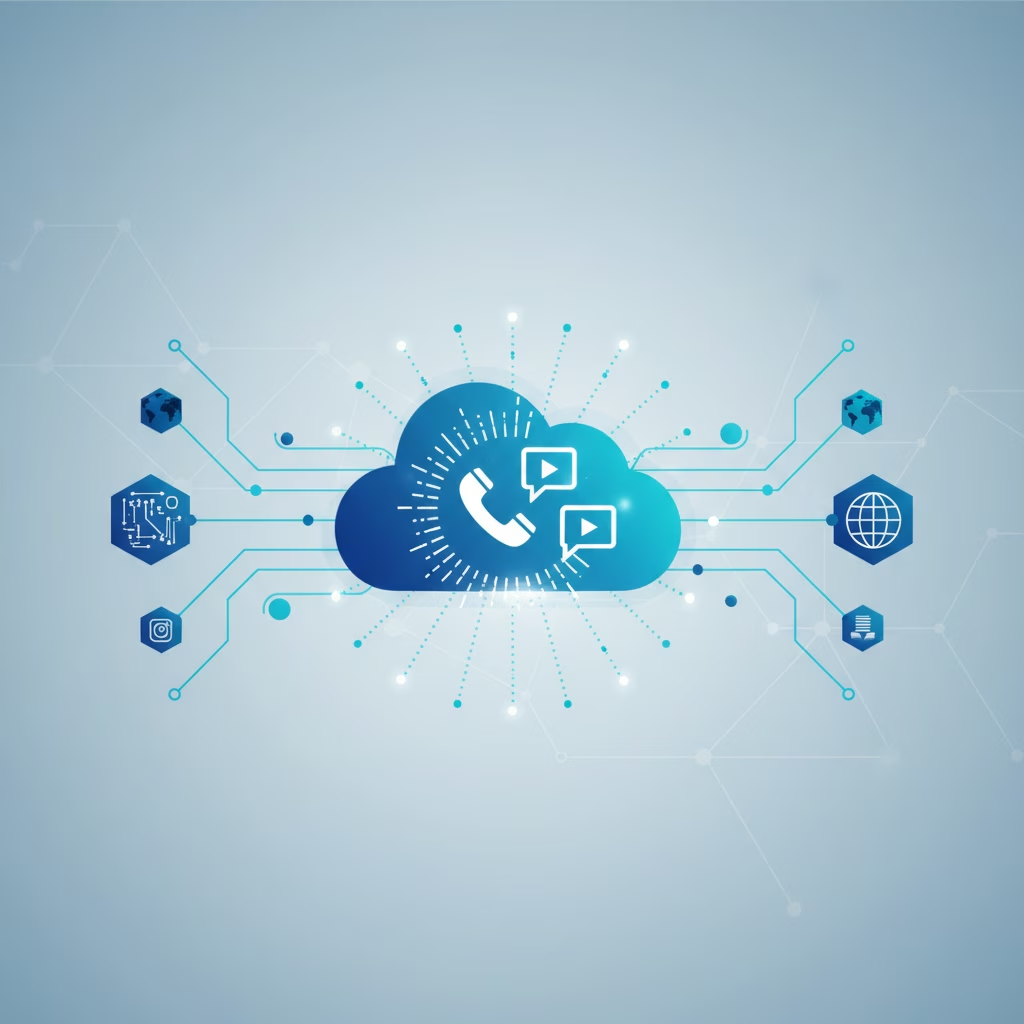
The landscape of business communication has undergone a radical transformation, moving from traditional landlines to dynamic, internet-powered solutions. At the heart of this revolution lies the Session Initiation Protocol (SIP). For any European organisation considering or already utilising a cloud-based phone system, understanding SIP is fundamental to harnessing the full potential of modern telecommunications. It's not just a technical detail; it's the engine driving the efficiency, flexibility, and cost savings that VoIP and Cloud PBX systems deliver.
Understanding SIP: The Language of Digital Calls
Imagine SIP as the universal translator and orchestrator for real-time digital communication. It's a signalling protocol used for establishing, modifying, and terminating multimedia sessions such as voice and video calls over Internet Protocol (IP) networks. Think of it as the digital equivalent of an old-fashioned telephone operator, but incredibly faster and more versatile, setting up connections for your calls, video conferences, and instant messages over the internet rather than traditional telephone lines.
While VoIP (Voice over Internet Protocol) is the general term for making phone calls over the internet, SIP is the specific protocol that enables these calls to happen. It defines the messages that are exchanged between endpoints (like your desk phone or softphone app) to initiate and manage a session. This separation of the signalling (SIP) from the actual media transmission (RTP – Real-time Transport Protocol) is what gives modern communication systems their immense power and flexibility.
How SIP Works: Key Players in the Conversation
To grasp SIP's mechanics, it helps to know the main components involved in setting up a communication session:
- SIP User Agents (UAs): These are the endpoints that initiate and receive calls. This could be your VoIP desk phone, a softphone application on your computer or mobile, or even a gateway device connecting to traditional phone lines. A UA acts as a User Agent Client (UAC) when it initiates a request and a User Agent Server (UAS) when it responds to a request.
- SIP Proxy Servers: These are intermediaries that help route SIP requests between user agents. They locate the destination user, forward requests, and can even authenticate users. Think of them as traffic controllers for your digital calls, ensuring messages get to the right place.
- SIP Registrar Servers: When a SIP User Agent starts up, it 'registers' its current location (IP address) with a SIP Registrar server. This allows the network to know where to find that user when a call comes in, much like updating your address with the post office.
- SIP Redirect Servers: Instead of forwarding a request, a redirect server tells the client where to send its request next, providing an alternative address.
When you make a call using a SIP phone, it sends an INVITE message. The SIP proxy server helps locate the recipient, which then responds. Once the connection is established, the actual voice or video data flows directly between the endpoints. When the call ends, a BYE message is sent to terminate the session.
The Business Advantages of SIP for European Organisations
Leveraging SIP brings a host of benefits that directly impact an organisation's bottom line and operational efficiency:
- Significant Cost Savings: By routing calls over the internet, businesses can drastically reduce telephone bills, especially for international calls within Europe and beyond. SIP eliminates the need for expensive traditional phone lines (ISDN/PRI), consolidating voice and data onto a single network.
- Unrivalled Flexibility and Scalability: SIP-based systems allow businesses to easily add or remove users, lines, and features as their needs change. This adaptability is crucial for growing companies or those with fluctuating staffing, enabling rapid expansion into new European markets or accommodating remote workers across different time zones.
- Enhanced Unified Communications: SIP is the backbone for integrating various communication channels – voice, video conferencing, instant messaging, and presence – into a single, cohesive platform. This fosters seamless collaboration and improves productivity, whether your team is in London, Berlin, or Paris.
- Geographic Independence: Maintain local phone numbers in various European countries without needing a physical presence there. This helps businesses project a local image and serve customers more effectively, regardless of their physical headquarters.
- Advanced Features: Cloud PBX systems built on SIP offer sophisticated features like Interactive Voice Response (IVR), call forwarding, voicemail-to-email, call recording, and advanced analytics, all designed to enhance customer service and internal operations.
SIP Trunking: Connecting Your Business to the World
SIP Trunking is a service that allows businesses to connect their on-premise PBX (Private Branch Exchange) or cloud PBX system to the public switched telephone network (PSTN) using SIP over an internet connection. Essentially, it replaces traditional analogue or digital lines with virtual phone lines delivered over the internet.
This technology is vital for organisations looking to modernise their existing phone infrastructure without completely overhauling their hardware. With SIP trunks, you get the benefits of VoIP – lower costs, scalability, and flexibility – while maintaining control over your internal PBX. It's a cost-effective and resilient way to manage high volumes of concurrent calls, making it ideal for contact centres and large enterprises.
Choosing a Reliable SIP Provider: What to Look For
Selecting the right SIP provider is crucial for ensuring reliable and high-quality communication. When evaluating options, especially for European operations, consider the following:
- Reliability and Uptime Guarantees: Look for providers with robust network infrastructure and clear Service Level Agreements (SLAs) to ensure your communication system is always available.
- Security Features: Enquire about encryption, fraud detection, and network security measures. While SIP itself is a protocol, the implementation by a provider is key to securing your conversations.
- Scalability and Feature Set: Ensure the provider can scale with your business needs and offers the specific features (e.g., call routing, integrations) that are important to your organisation.
- Local and International Coverage: For European businesses, a provider with extensive coverage and competitive rates for both domestic and international calls is essential.
- Customer Support and Expertise: Reliable 24/7 support, ideally with experience in the European market, can be invaluable for troubleshooting and optimising your system.
Conclusion
SIP is more than just a technical acronym; it's the foundational protocol that empowers modern businesses with flexible, cost-effective, and feature-rich communication solutions. By understanding its basics, European organisations can make informed decisions about their telecommunication infrastructure, moving towards a future of seamless connectivity and enhanced collaboration. Embrace the power of SIP to transform your business communications and stay ahead in today's dynamic global marketplace.
Ready to experience the benefits of a cutting-edge SIP-powered Cloud PBX? Explore TheVoĉo's solutions today and discover how we can elevate your organisation's communication capabilities.