
Introduction to VoIP Security in a Connected Europe
In the modern digital workplace, the telephone system has evolved from a simple copper-wire utility into a sophisticated cloud-based asset. As European organisations transition to remote and hybrid working models, the reliance on Cloud PBX and VoIP infrastructure has never been greater. However, this shift introduces new vulnerabilities. Protecting your voice data is not just about operational continuity; it is a fundamental requirement under the General Data Protection Regulation (GDPR). At TheVoĉo, we prioritise the integrity of your communications, ensuring that your business remains secure in an increasingly complex threat landscape.
The Critical Nature of Data Sovereignty and Compliance
For European businesses, security is inextricably linked to data sovereignty. When choosing a VoIP provider, you must ensure that your data—including call recordings, metadata, and user information—is processed and stored in compliance with EU regulations.
- GDPR Adherence: Ensure your provider offers explicit data processing agreements (DPAs) and keeps data within European data centres where possible.
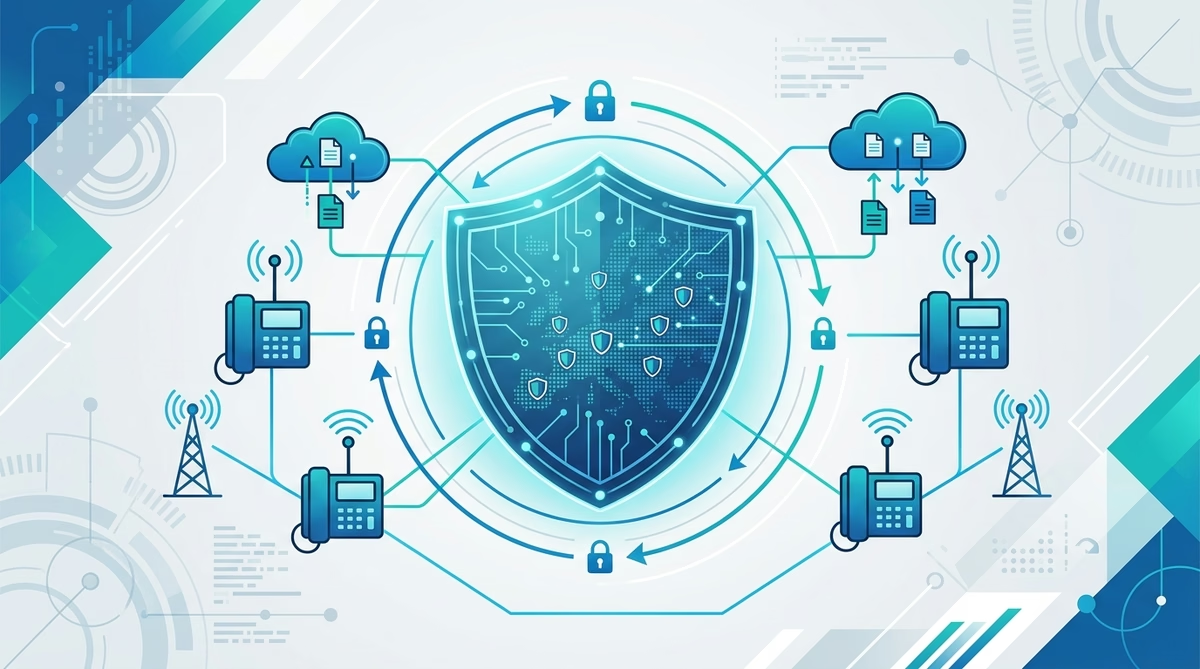
- Encryption Standards: Always utilise end-to-end encryption for both signalling (SIP) and media (RTP) traffic. If your packets are not encrypted, they are vulnerable to packet sniffing, a common technique used by attackers to intercept private business conversations.
- Regulatory Transparency: Your provider should clearly define their security certifications, such as ISO 27001, which demonstrates a rigorous approach to information security management systems.
Protecting Against VoIP-Specific Threats
VoIP systems are not just susceptible to general network attacks; they face specific threats designed to exploit telecommunications architecture. Understanding these threats is the first step towards mitigation:
- Toll Fraud: This is perhaps the most dangerous threat to your bottom line. Attackers gain unauthorised access to your PBX and make high-cost international calls, leaving your organisation with a massive, unexpected invoice. Implement strict geographic call blocking and rate-limiting features immediately.
- DDoS Attacks: Distributed Denial of Service attacks can flood your VoIP servers with traffic, causing your business phones to go offline. A robust cloud provider uses edge-protection and traffic scrubbing to filter out malicious packets before they reach your infrastructure.
- SIP Phishing (Vishing): Just as email phishing exploits user trust, vishing uses VoIP to impersonate internal employees or bank officials. Employee training on these social engineering tactics is as vital as the technical firewalls you deploy.
Best Practices for Network Hardening
Securing your VoIP infrastructure requires a multi-layered approach. Beyond the software protections provided by your cloud partner, there are several internal steps your IT team should implement:
- Segment Your Network: Do not run your VoIP traffic on the same subnet as your general office Wi-Fi or guest networks. Use a dedicated Voice VLAN (Virtual Local Area Network) to prioritise quality of service (QoS) and isolate voice traffic from potential breaches in other network segments.
- Enforce Strong Authentication: If you are using IP desk phones or softphone applications, move beyond simple passwords. Implement Multi-Factor Authentication (MFA) for every user account associated with your Cloud PBX.
- Regular Audits: Conduct quarterly reviews of your call logs. Look for anomalous activity, such as calls placed during non-business hours or spikes in long-distance traffic to high-risk regions.
Choosing the Right Partner for Security
Security is a collaborative effort between your IT team and your communication provider. A reliable provider acts as a partner, providing you with the transparency and tools necessary to maintain control. When evaluating a platform, look for features like:
- Automated fraud alerts that trigger when unusual patterns are detected.
- Granular permission controls that allow administrators to limit access based on roles.
- Real-time monitoring dashboards that give visibility into network health and security incidents.
By selecting a provider that treats security as a core product feature rather than an afterthought, you insulate your business from the risks that plague less secure, legacy systems.
Conclusion: Taking Control of Your Communications
Securing your VoIP network is an ongoing process rather than a one-time configuration. By integrating robust encryption, strictly enforcing access policies, and ensuring your provider meets stringent European compliance standards, you can enjoy the benefits of cloud-based telephony without compromising your data privacy. At TheVoĉo, we believe that secure communication is the foundation of business trust. Are you ready to audit your current infrastructure? Contact our team today for a comprehensive security review of your business communication setup.