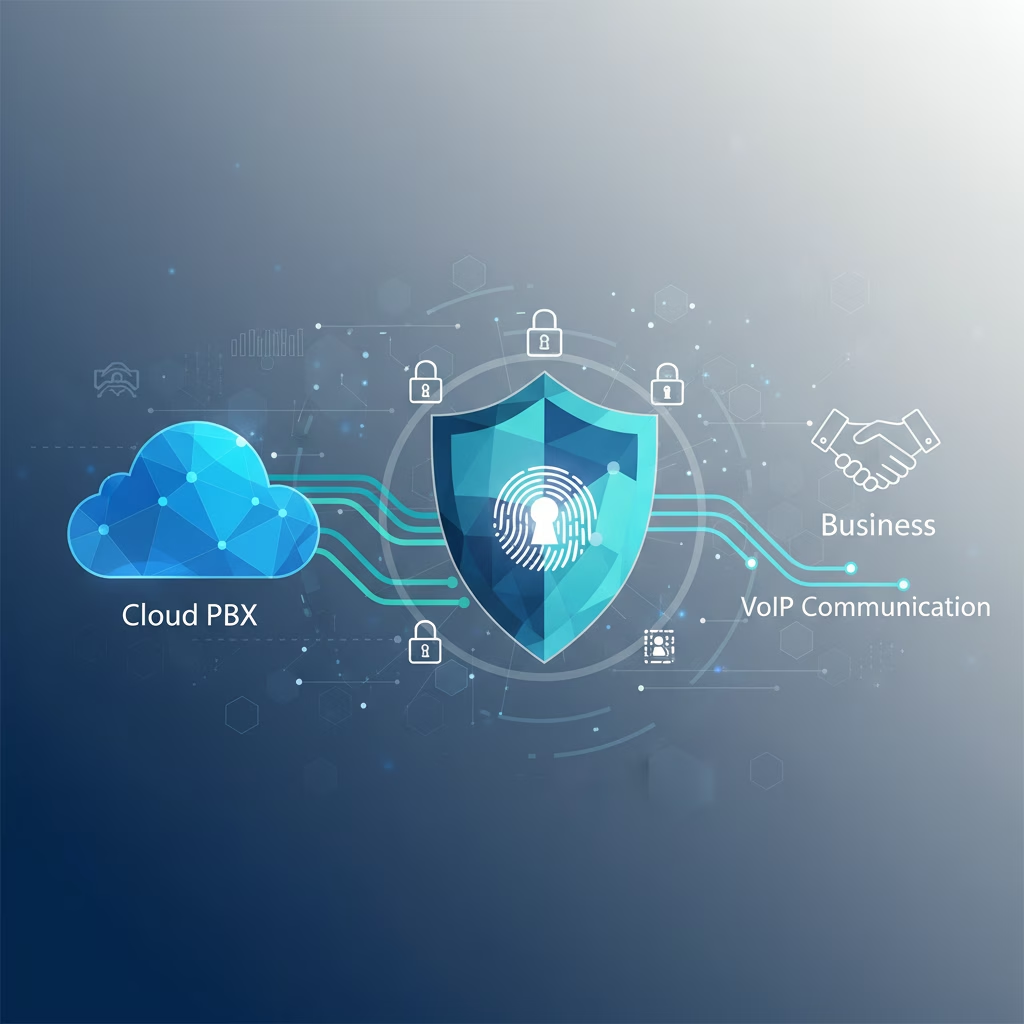
In today's interconnected digital landscape, the security of your business communications is paramount. For European organisations increasingly relying on cloud PBX and VoIP systems, traditional password-based authentication simply isn't enough. Cyber threats are more sophisticated than ever, making robust, next-generation authentication methods a crucial defence.
The Evolving Threat Landscape and the Need for Better Security
Passwords, despite their ubiquity, are the weakest link in many security infrastructures. They can be guessed, phished, stolen, or brute-forced, leading to unauthorised access, data breaches, and significant reputational damage. With employees accessing cloud communication tools from various devices and locations – a common scenario for many European businesses – the attack surface expands dramatically.
Next-generation authentication moves beyond simple 'something you know' to incorporate 'something you have' and 'something you are'. This multi-layered approach creates a far more resilient barrier against cyber criminals, safeguarding sensitive business conversations, customer data, and internal operations.
Key Next-Generation Authentication Methods
Modern authentication encompasses a range of technologies designed to be both more secure and more user-friendly.
Multi-Factor Authentication (MFA): The foundation of modern security, MFA requires users to provide two or more verification factors to gain access. This could involve:
- Knowledge Factor: A password or PIN.
- Possession Factor: A one-time code from an authenticator app, an SMS code, or a hardware token.
- Inherence Factor: A fingerprint scan, facial recognition, or voice recognition.
Even if a password is compromised, the attacker still needs the second factor, drastically reducing the risk of a breach. MFA is becoming a standard expectation for secure access.
Passwordless Authentication: This innovative approach eliminates passwords entirely, streamlining the login process while enhancing security. Methods include:
- Biometrics: Using fingerprints, facial recognition, or iris scans to verify identity.
- Magic Links: Secure, one-time links sent to a registered email or phone number for login.
- FIDO (Fast Identity Online): An open standard for strong authentication using cryptographic keys instead of passwords, often leveraging biometrics or hardware tokens.
Adaptive/Risk-Based Authentication (RBA): RBA continuously analyses user behaviour and contextual data – such as device type, location, IP address, and time of day – to assess the risk level of an access attempt. If an anomaly is detected (e.g., a login from an unusual location), it can dynamically prompt for additional verification, adding an intelligent layer of security without inconveniencing legitimate users.
Single Sign-On (SSO): While not a direct authentication method itself, SSO allows users to log in once with a single set of credentials and gain access to multiple interconnected applications. When combined with strong next-generation authentication (like MFA), SSO not only improves user experience but also centralises security, making it easier to manage and enforce policies across an organisation's entire digital ecosystem, including cloud PBX platforms.
Benefits for European Businesses
Adopting next-generation authentication offers a multitude of advantages for businesses across Europe.
- Enhanced Security Posture: Significantly reduces the risk of unauthorised access, data breaches, and cyber-attacks, protecting critical business communications and sensitive data.
- Improved User Experience: Passwordless and SSO solutions simplify the login process, saving employees time and reducing frustration associated with forgotten passwords, leading to higher productivity.
- Strengthened Regulatory Compliance: For European businesses, adhering to regulations like GDPR is non-negotiable. Robust authentication methods are crucial for demonstrating due diligence in protecting personal data. By implementing strong access controls, organisations can better safeguard the confidentiality and integrity of communication data, aligning with GDPR's principles of 'security by design and by default'. Providers like TheVoĉo often utilise EU-based data centres, further aiding data sovereignty compliance.
- Reduced Operational Costs: Fewer password reset requests mean less burden on IT support teams, freeing them to focus on more strategic initiatives. Proactive security also mitigates the potentially enormous costs associated with recovering from a data breach.
Integrating Next-Gen Authentication with Your Cloud PBX
For a cloud-based business phone system provider like TheVoĉo, integrating next-generation authentication is fundamental. Our Cloud PBX and VoIP solutions are designed with security at their core, offering:
- Seamless SSO Integration: Connect your existing identity provider (e.g., Microsoft Azure AD, Okta) to TheVoĉo for a unified login experience, leveraging your established MFA policies.
- MFA for Admin and User Portals: Ensure that access to critical configurations and personal settings always requires multiple verification factors.
- Secure Endpoint Registration: Guarantee that only authorised devices and users can connect to your communication network, preventing rogue access.
- End-to-End Encryption: While authentication secures access, encryption protects the communication itself, ensuring that all calls and messages within the Cloud PBX system remain private and secure.
By choosing a provider that prioritises advanced authentication, you ensure your communication infrastructure is resilient against modern threats.
Looking Ahead: The Future of Identity Verification
The evolution of authentication continues. We are seeing advancements in behavioural biometrics, which analyse unique user patterns (typing rhythm, mouse movements) to verify identity passively. Decentralised identity solutions, using blockchain technology, also promise greater control for individuals over their digital identities. Organisations must remain vigilant and adaptable, continually reviewing and upgrading their authentication strategies to stay ahead of emerging risks.
Conclusion
Next-generation authentication is not just a technical upgrade; it's a strategic imperative for any European business operating in the cloud. By moving beyond outdated password practices and embracing solutions like MFA, passwordless, and adaptive authentication, organisations can significantly bolster their security, enhance user experience, and ensure compliance with critical data protection regulations. Protecting your cloud PBX and VoIP communications with these advanced methods is crucial for maintaining trust and operational continuity in a digital-first world.
Speak to TheVoĉo experts today to discover how our secure cloud communication solutions can integrate seamlessly with your organisation's advanced authentication strategy and safeguard your business communications.