Introduction: Elevating Business Communication with Integration
In today's fast-paced business landscape, efficient communication and robust customer relationship management (CRM) are paramount. For European businesses seeking to gain a competitive edge, simply having a cloud Private Branch Exchange (PBX) and a CRM system is no longer enough. The real power lies in their seamless integration. At TheVoĉo, we recognise that connecting your cloud-based phone system with your CRM is not just a technical enhancement; it's a strategic move to revolutionise how you interact with customers, optimise workflows, and drive growth. This comprehensive guide will explore the profound benefits and practical aspects of integrating your cloud PBX with your CRM.
What is Cloud PBX-CRM Integration?
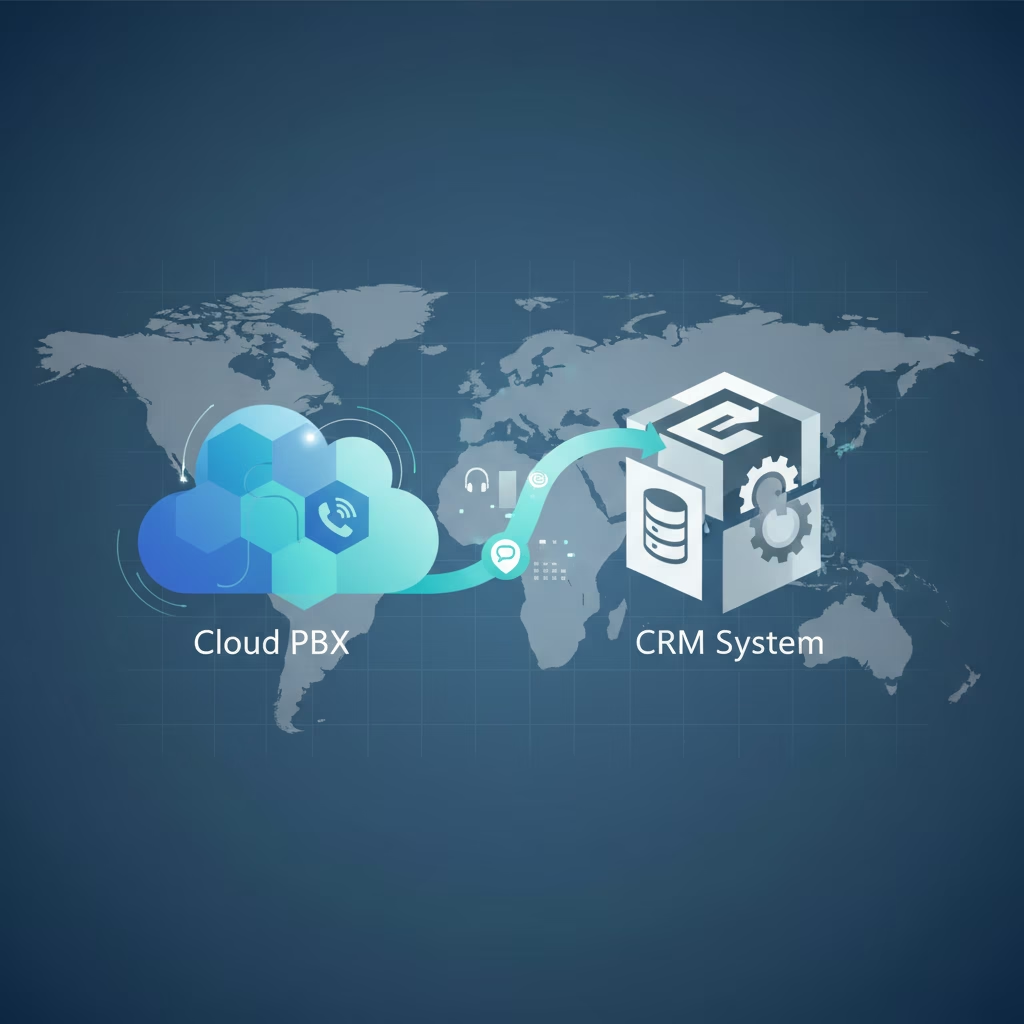
At its core, cloud PBX-CRM integration connects your business phone system directly with your customer relationship management platform. Imagine every incoming and outgoing call automatically linking to a customer's profile, providing your team with instant, context-rich information. This integration typically involves using Application Programming Interfaces (APIs) or pre-built connectors that allow the two systems to 'talk' to each other, sharing crucial data in real-time. Whether you're using Salesforce, HubSpot, Microsoft Dynamics, or a bespoke CRM, the goal is to create a unified communication and data environment.
This synergy means that when a customer calls, their details – purchase history, previous interactions, support tickets – are instantly accessible. For outbound calls, sales or support agents can initiate calls directly from the CRM with a single click. The result is a more informed, efficient, and personalised communication experience, crucial for businesses operating across diverse European markets and time zones.
Key Benefits for Your Business
Integrating your cloud PBX with your CRM offers a multitude of advantages that directly impact your bottom line and customer satisfaction:
- Enhanced Customer Experience: Your team has immediate access to caller information, allowing for personalised and proactive service. Imagine a customer calling from Berlin; your agent in London instantly sees their previous queries and preferences, leading to quicker resolutions and a more satisfying interaction.
- Boosted Productivity and Efficiency: Agents spend less time manually searching for customer data or logging call details. This frees up valuable time, enabling them to handle more calls, focus on problem-solving, and provide better service. Click-to-call functionality alone can save hours across a large sales team.
- Improved Data Accuracy and Reporting: All call activities, including duration, time, agent, and even call recordings, are automatically logged against the customer's CRM record. This eliminates manual data entry errors and provides accurate, comprehensive data for reporting and analysis, vital for understanding customer trends and team performance.
- Streamlined Workflows: Integration reduces friction between communication and data management. Tasks like scheduling follow-ups or creating support tickets can be automated post-call, ensuring no lead is missed and no issue goes unaddressed.
- Better Sales and Marketing Alignment: Sales teams can track leads more effectively, personalise outreach, and understand customer journeys. Marketing teams can segment audiences based on communication history, leading to more targeted and effective campaigns across European regions.
- Scalability and Flexibility: Cloud-based systems are inherently scalable. As your business grows, adding new users or expanding your communication capabilities is straightforward, and the integration maintains its integrity across your expanding operations.
Core Features of Integrated Systems
When evaluating integration solutions, look for these critical features that maximise value:
- Caller ID Pop-ups (Screen Pops): When an incoming call arrives, the CRM automatically displays the caller's profile and relevant history on the agent's screen before they even answer. This allows for an informed and personal greeting, setting a positive tone for the call.
- Click-to-Call/Click-to-Dial: Agents can initiate calls directly from the CRM interface with a single click, eliminating manual dialling errors and saving time. This is particularly useful for sales and customer service teams making numerous outbound calls daily.
- Automatic Call Logging: Every call – inbound and outbound – is automatically logged against the corresponding customer or lead record in the CRM, including call duration, date, time, and agent. This ensures a complete communication history for every contact.
- Call Recording Integration: Access call recordings directly from the CRM, allowing for easy review of conversations for training, quality assurance, or compliance purposes. This is invaluable for refining customer service strategies and ensuring consistent messaging.
- Integrated Call Notes: Agents can quickly add notes during or immediately after a call, which are then saved directly to the CRM record. This maintains real-time context and ensures important details are never lost.
- Advanced Analytics and Reporting: Gain deeper insights into call volumes, agent performance, customer interactions, and sales conversions through combined data from your PBX and CRM. This enables data-driven decision-making for optimising communication strategies.
Choosing the Right Solution and Implementation Tips
Selecting the right cloud PBX and CRM integration requires careful consideration. Here are some tips for European businesses:
- Assess Your Current Systems: Determine the compatibility of your existing cloud PBX and CRM platforms. Many modern systems offer native integrations or support third-party connectors. TheVoĉo, for instance, is designed for seamless integration with leading CRMs.
- Define Your Needs: What are your primary goals? Is it improving customer service, boosting sales efficiency, or gaining better insights? Tailor your integration strategy to meet specific business objectives.
- Prioritise Data Security and Privacy: Ensure your chosen provider adheres to high data security standards. For European businesses, this is crucial, especially concerning where data is stored and processed, ensuring compliance with relevant data protection regulations.
- Consider Scalability: Choose a solution that can grow with your business. As your team expands or your communication needs evolve, your integration should effortlessly adapt.
- Look for Ease of Use: The interface should be intuitive for your team. A complex system will lead to lower adoption rates and negate the benefits of integration.
- Vendor Support and Training: Opt for a provider that offers comprehensive support and training resources to ensure a smooth transition and maximise user adoption. A reliable European support presence can be a significant advantage.
- Pilot Programme: Consider running a pilot programme with a small team before a full-scale rollout to identify any challenges and fine-tune the integration process.
Conclusion: Unlock New Levels of Performance
Integrating your cloud PBX with your CRM system is no longer a luxury but a necessity for businesses aiming for operational excellence and superior customer engagement. It empowers your teams with context, automates repetitive tasks, and provides invaluable insights, ultimately leading to higher productivity and stronger customer relationships. For European businesses navigating diverse markets, this unified approach is a game-changer.
Are you ready to transform your customer interactions and supercharge your team's efficiency? Explore TheVoĉo's advanced cloud PBX solutions and discover how our seamless integration capabilities can help your organisation thrive. Contact us today for a personalised consultation and take the first step towards a more connected and productive future.