

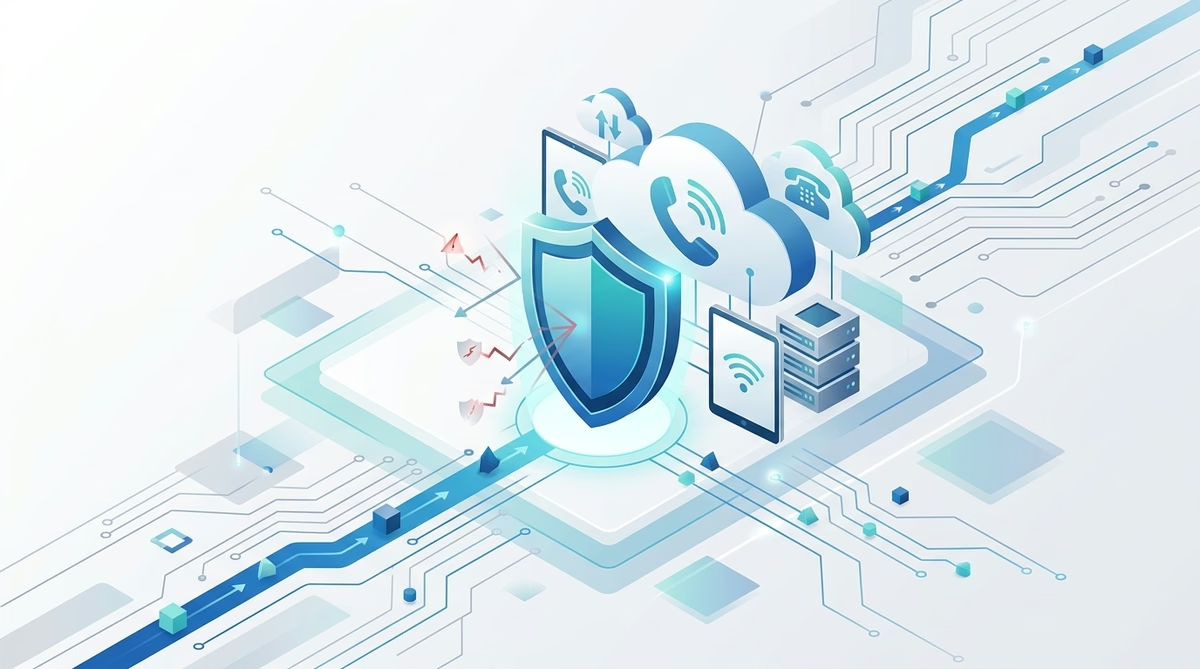
Understanding the Reality of VoIP Threats
In today's digital workplace, Voice over IP (VoIP) is the lifeblood of business communication. However, as cloud-based systems become more prevalent, they also become prime targets for cybercriminals. VoIP hacking is not just about eavesdropping on calls; it often leads to toll fraud, where attackers hijack your system to make international calls at your expense, leading to massive, unexpected bills. Furthermore, in the context of GDPR, any unauthorised access to call logs or metadata constitutes a severe data breach.
Common VoIP Vulnerability Patterns
To effectively defend your organisation, you must understand the common entry points used by malicious actors. Most VoIP hacking attempts rely on the following:
- Weak Authentication: Using default passwords or predictable credentials for admin portals and SIP trunks.
- Exposed SIP Ports: Leaving SIP (Session Initiation Protocol) ports open to the public internet without a firewall.
- Outdated Firmware: Running legacy PBX software that contains unpatched security vulnerabilities.
- Phishing Attacks: Tricking employees into revealing credentials for cloud phone systems.
- Toll Fraud: Exploiting misconfigured call forwarding rules to route calls through expensive international premium-rate numbers.
Practical Steps for Detecting Intrusions
Early detection is the most effective way to minimise damage. If you suspect an anomaly, monitor your system for these red flags:
- Unusual Call Volume: A sudden, unexplained spike in international call traffic, especially during off-hours or weekends when your office is closed.
- Performance Degradation: Persistent call quality issues or jitter that may indicate unauthorised traffic routing through your network.
- Administrative Alerts: Multiple failed login attempts or unexpected changes to system settings, such as updated call forwarding destinations.
- Inbound Call Patterns: An influx of calls originating from countries where your business has no customers or partners.
Implementing a Robust Defence Strategy
Preventing a breach is significantly easier than mitigating its consequences. At TheVoĉo, we recommend a multi-layered approach to security that aligns with European best practices for data protection:
- Implement Strong Access Controls: Enforce multi-factor authentication (MFA) for all administrative accounts. Ensure that every staff member uses complex, unique passwords that are rotated regularly.
- Secure Your Network: Utilise a dedicated VLAN for voice traffic to isolate it from general internet browsing. Deploy robust firewalls with session border controllers (SBCs) to inspect incoming traffic.
- Geo-Blocking: If your business operations are primarily within the EU, consider implementing geo-blocking to restrict outgoing calls to high-risk regions where you have no business requirements.
- Continuous Monitoring: Audit your call detail records (CDRs) weekly. Automate alerts for any usage that deviates from your normal business patterns.
- Encryption Standards: Always use Transport Layer Security (TLS) and Secure Real-time Transport Protocol (SRTP) to encrypt both your signalling and your voice traffic, ensuring data sovereignty compliance.
Compliance and GDPR Considerations
For European businesses, VoIP security is not just an IT concern—it is a legal obligation. GDPR mandates that you implement appropriate technical measures to protect personal data. Because call metadata and voice recordings contain sensitive information, securing your Cloud PBX is a prerequisite for regulatory compliance. Failure to protect your system can lead to substantial fines and loss of client trust. By partnering with a provider that prioritises security and local data hosting, you ensure your business remains compliant while maintaining high-quality communication channels.
Conclusion: Take Action Today
VoIP security is an ongoing process of vigilance. By moving away from default configurations and adopting a zero-trust approach to network access, you can mitigate the vast majority of threats facing modern businesses. Do not wait for a fraudulent bill to arrive before evaluating your infrastructure. Review your current security posture with your IT team today. If you need assistance in auditing your setup or ensuring your Cloud PBX is fully hardened against external threats, contact the TheVoĉo team. Let us help you secure your communications while you focus on growing your business.