
The Evolution of Intelligent Call Management
For decades, traditional business phone systems relied on static Interactive Voice Response (IVR) menus—those frustrating 'press one for sales' systems that often led callers into an endless loop of frustration. In the modern European business landscape, where efficiency and personalisation are paramount, these legacy systems are no longer sufficient. Today, machine learning (ML) is revolutionising how organisations manage incoming traffic, transforming simple routing into intelligent conversation pathways.
At TheVoĉo, we have integrated advanced AI models into our cloud-based infrastructure to ensure that every caller is directed to the most appropriate agent the first time they call. By leveraging historical data and real-time analytics, machine learning shifts the burden from the caller to the system, creating a seamless experience that respects the customer's time and your team's resources.
Understanding Machine Learning in Call Routing
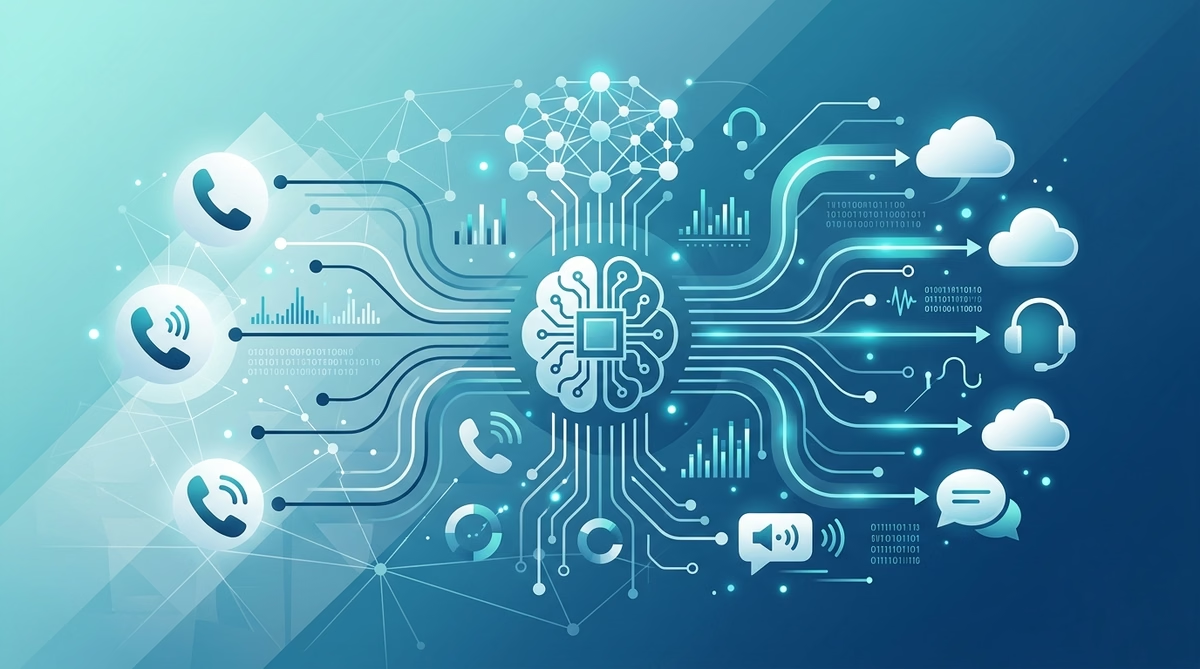
Unlike rule-based systems that follow a strict, rigid script, machine learning algorithms learn from patterns. They analyse vast amounts of data points—such as call duration, customer history, time of day, and even the sentiment of the caller's initial query—to make informed routing decisions.
Consider the following advantages of an ML-driven approach:
- Dynamic Skill-Based Routing: The system identifies which agent has the highest success rate with specific types of queries or complex technical issues.
- Reduced Abandonment Rates: By predicting peak periods, the system can dynamically adjust routing paths to balance workloads across global teams, ensuring that no department is overwhelmed.
- Predictive Intent: Advanced natural language processing can determine if a caller is reporting a critical system outage versus making a routine billing enquiry before they even finish their first sentence.
Improving Customer Satisfaction in a Digital Market
In markets such as the DACH region or the Nordics, customers value precision and speed. If a client from a boutique consultancy in Berlin calls your support line, they expect their specific account manager or a specialist fluent in their industry terminology to answer. Machine learning enables this level of hyper-personalisation at scale.
By analysing the caller ID and CRM data integration, the system can instantly recognise a VIP client and prioritise them in the queue, or redirect a recurring issue to a specialist who has previously resolved similar cases. This reduces 'time-to-resolution' significantly, which is a key performance indicator for customer retention. When callers feel understood immediately, their perception of your organisation's professionalism grows exponentially.
Optimising Operations and Workforce Management
For IT managers and business owners, the benefits extend far beyond customer experience. Machine learning provides deep insights into your operational bottlenecks. If the system observes that a specific product enquiry is consistently being routed to the wrong department, it will flag this pattern for the management team, allowing for proactive adjustments to the IVR structure.
Furthermore, ML helps with workforce management by forecasting call volumes with high accuracy. This ensures that you have the right amount of staff logged in during peak hours without the risk of overstaffing during quiet periods. This operational efficiency is vital for maintaining lean, cost-effective communication structures in a competitive global economy.
Implementing Intelligence in Your Organisation
Transitioning to an AI-powered cloud PBX is more accessible than most businesses realise. Unlike hardware-heavy upgrades of the past, TheVoĉo's cloud-based solutions allow for a modular implementation of machine learning features. You can start with basic intelligent routing and slowly introduce predictive analytics as your team becomes comfortable with the data outputs.
When choosing to implement these technologies, ensure your provider focuses on transparent data handling. Even when using ML for routing, keeping your internal processes aligned with high-level efficiency standards is key to gaining a competitive advantage in the European marketplace.
Conclusion: The Future of Your Business Communications
Artificial intelligence and machine learning are not just buzzwords; they are the backbone of modern telecommunications. By moving away from static routing and embracing the predictive power of machine learning, your organisation can deliver superior service, optimise its internal workflows, and foster long-term loyalty with your clients.
Ready to see how intelligent routing can transform your business? Contact our team at TheVoĉo today to schedule a demo and learn how our cloud PBX solutions can be customised for your unique organisational needs. Let us help you take the first step towards a smarter, faster, and more efficient future.