In today's dynamic business landscape, choosing the right tools for communication is paramount. For organisations transitioning to or already utilising cloud-based phone systems, the decision between mobile VoIP applications and dedicated desktop clients can significantly impact productivity, flexibility, and user experience. At TheVoĉo, we understand that a modern Cloud PBX system offers incredible versatility, but optimising its deployment involves understanding the nuances of how your team connects. Let's delve into the strengths of each option to help you make an informed choice for your European – and global – operations.
The Agility of Mobile VoIP Apps
Mobile VoIP apps offer unparalleled flexibility, empowering your team to communicate effectively regardless of their physical location. This is particularly vital for today's hybrid and remote workforces, as well as for employees who are frequently on the go, such as sales representatives, field technicians, or project managers attending external meetings. Key advantages include:
- Unrestricted Mobility: Make and receive business calls from any location with an internet connection (Wi-Fi or mobile data). Your business number travels with you, maintaining professionalism.
- Business Continuity: Even during power outages or office closures, employees can remain connected and productive via their smartphones.
- Cost Efficiency: Leverage existing employee smartphones (BYOD - Bring Your Own Device) to reduce hardware costs for the organisation, while separating personal and business communications within the app.
- Faster Response Times: Sales teams can respond to leads instantly, and support staff can assist clients without being tied to a desk, improving customer satisfaction.
- Integrated Features: Many mobile apps offer features like instant messaging, presence status, call history, and voicemail access directly from the smartphone interface.
Consider a European sales manager based in Berlin, frequently travelling to client sites in Paris, London, and Rome. A mobile VoIP app ensures they can consistently communicate using their business number, access their contacts, and manage calls seamlessly across different time zones without incurring hefty roaming charges or missing important updates.
The Power and Stability of Desktop VoIP Clients
While mobile apps excel in flexibility, desktop VoIP clients – often software installed directly on a computer or accessed via a web browser – bring their own set of powerful advantages, especially for office-based roles or those requiring extensive call handling. These clients are designed for sustained use and provide a robust, feature-rich environment.
- Enhanced Call Quality & Reliability: Desktop clients often benefit from stable wired internet connections and dedicated CPU resources, leading to superior audio quality and fewer dropped calls.
- Ergonomics and Comfort: Integration with professional headsets and larger screens make long calls more comfortable and efficient, reducing strain on users.
- Advanced Features & Integrations: Desktop clients typically offer deeper integration with other business applications like Customer Relationship Management (CRM) systems, Enterprise Resource Planning (ERP), and productivity suites. This allows for click-to-dial functionality, automatic call logging, and screen pops with customer information.
- Multitasking Efficiency: The ability to manage calls, check emails, update documents, and access multiple applications simultaneously on a larger screen significantly boosts productivity for administrative staff, call centre agents, or IT support teams.
- Centralised Management: For IT departments, managing and updating desktop clients across an organisation can sometimes be more streamlined and secure, especially in regulated environments.
An IT support team in Manchester handling inbound technical queries benefits immensely from a desktop client. They can be on a call, simultaneously accessing diagnostic tools, knowledge bases, and logging tickets in their CRM, all from a unified, stable interface.
Key Factors for Your Organisation's Decision
Choosing between mobile and desktop isn't always an either/or scenario, but understanding your specific needs is crucial. Here are key factors to consider:
- Employee Roles & Workflows: Do your employees work primarily at their desks, or are they constantly moving? Field-based staff will favour mobile, while administrative roles may prefer desktop.
- Required Features: Evaluate which advanced features (e.g., call recording, CRM integration, advanced call queue management, screen sharing) are essential. Some are more robust on desktop.
- Network Infrastructure: Assess the reliability of your internet connectivity. A stable wired connection is ideal for desktop clients, while reliable Wi-Fi or 4G/5G is crucial for mobile apps.
- Device Strategy: Are you a BYOD-friendly organisation, or do you provide company-issued devices? This impacts cost and management.
- User Preference: Conduct internal surveys or pilot programmes to gauge user preferences. Adoption rates are higher when employees feel comfortable with their tools.
- Security Posture: Ensure your chosen solution offers robust encryption and security features for both mobile and desktop, protecting your communications and data, which is especially pertinent in Europe with regulations like GDPR.
Embracing the Hybrid Approach: Unlocking Full Potential
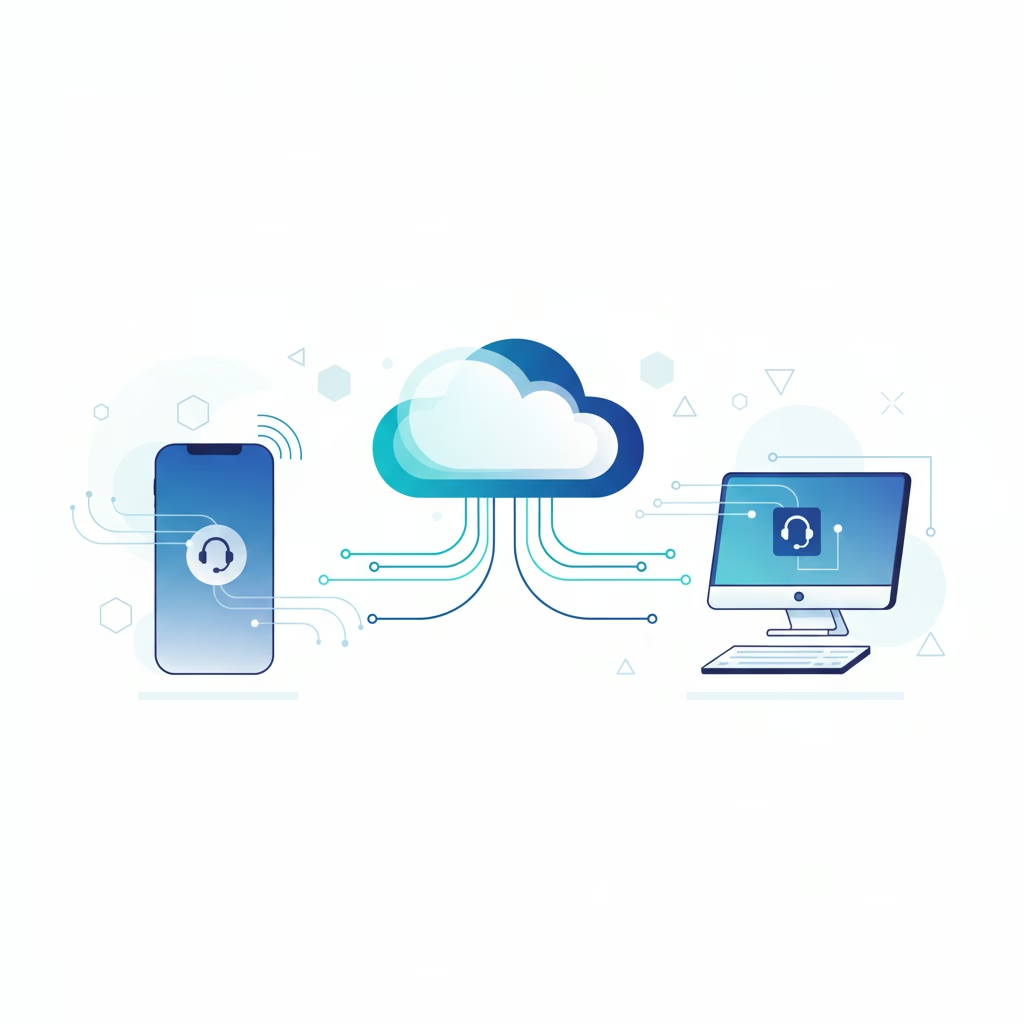
For many European businesses, the most effective strategy involves a hybrid approach, leveraging the strengths of both mobile apps and desktop clients. TheVoĉo's Cloud PBX system is designed for unified communications, allowing users to seamlessly transition between devices. A sales executive might start a call on their desktop in the office, then switch to their mobile app as they leave for an appointment, ensuring uninterrupted communication. This approach offers:
- Maximum Flexibility: Cater to diverse work styles and roles within the same organisation.
- Business Continuity: A primary desktop client can be backed up by a mobile app for continuity during travel or unexpected disruptions.
- Optimised Productivity: Employees can choose the most appropriate tool for the task at hand, maximising efficiency.
- Consistent User Experience: A well-integrated Cloud PBX ensures that contact lists, call history, and voicemails are synchronised across all devices.
Conclusion: Your Communication, Your Choice
Ultimately, the choice between mobile VoIP apps and desktop clients depends on your organisation's unique operational needs, employee workflows, and strategic goals. Whether you prioritise the agility of mobile communication for a distributed workforce or the robust functionality of a desktop client for office-based power users, TheVoĉo's Cloud PBX system provides the foundational technology to support either – or both – with seamless integration.
Ready to optimise your business communications? Explore TheVoĉo's flexible Cloud PBX solutions today and empower your team to connect, collaborate, and succeed, no matter where they are.