

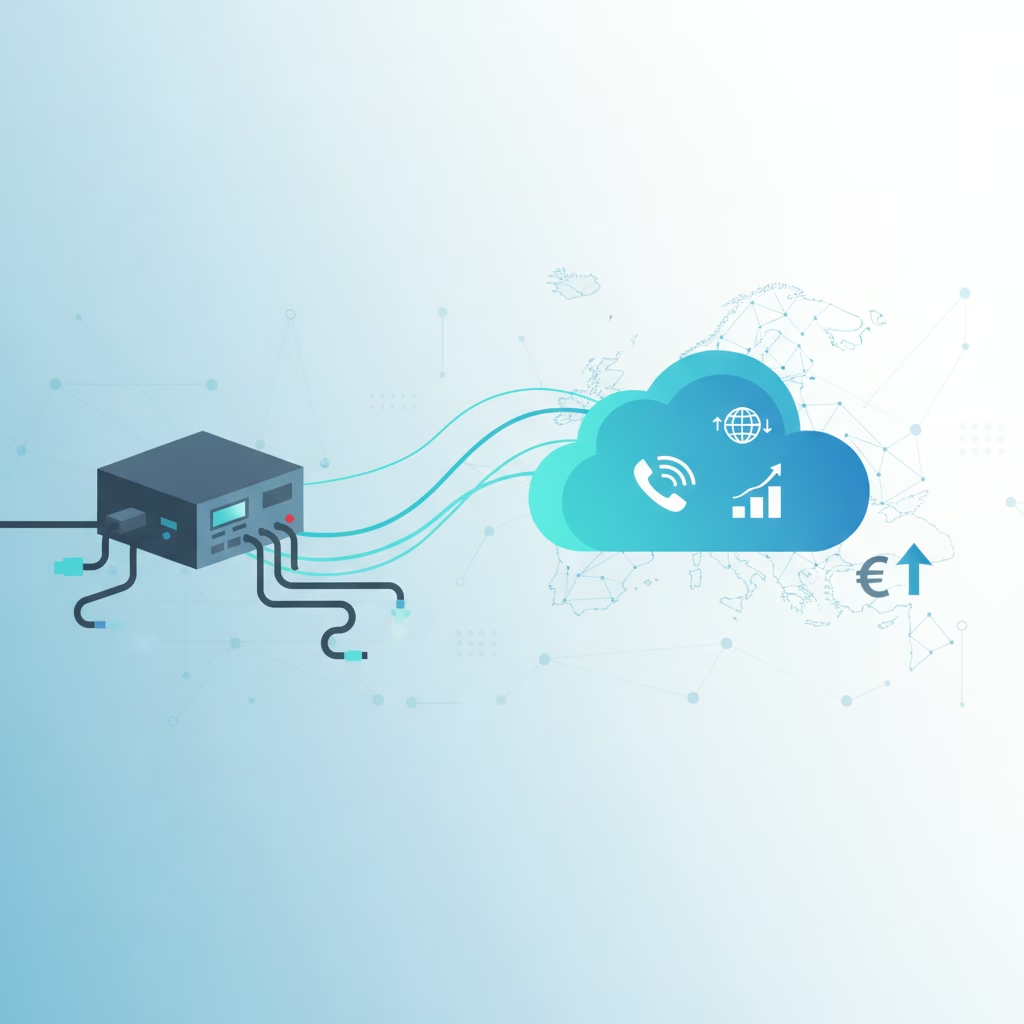
The world of business communications is constantly evolving. For many European organisations, the familiar traditional Private Branch Exchange (PBX) system has long been the backbone of their voice infrastructure. However, as the digital landscape transforms, a growing number of businesses are recognising the unparalleled advantages of migrating to a Cloud PBX system. This comprehensive guide will walk you through the journey from your legacy PBX to a modern, flexible, and feature-rich Cloud PBX solution.
Why Now? The Compelling Case for Cloud PBX Migration
The decision to move from a traditional PBX to a Cloud PBX is driven by a host of strategic and operational benefits that align with modern business demands, particularly within the dynamic European market. Legacy systems often involve significant upfront capital expenditure, ongoing maintenance, and lack the agility needed in today's fast-paced environment. Cloud PBX, in contrast, offers a transformative approach to communication.
- Unrivalled Flexibility and Remote Work Capability: In an era where hybrid and remote work models are standard across Europe, Cloud PBX offers unparalleled flexibility. Employees can make and receive calls from anywhere, on any device (desktop, laptop, mobile), using softphones or IP handsets. This ensures seamless communication, regardless of physical location, a critical advantage for businesses spanning multiple offices or operating across different European time zones.
- Significant Cost Efficiency and ROI: Traditional PBX systems demand hefty investment in hardware, installation, and dedicated IT support. Cloud PBX operates on a predictable monthly subscription model, eliminating capital expenditure and reducing operational costs. Businesses save on maintenance, electricity, and even long-distance call charges, leading to a clear return on investment over time.
- Advanced Features and Integrations: Beyond basic call routing, Cloud PBX systems offer a rich suite of advanced features. These include unified communications (voice, video, messaging, conferencing), CRM integrations, call recording, intelligent call routing, interactive voice response (IVR), and powerful analytics. TheVoĉo's AI-powered telecommunications, for instance, can automate tasks, improve customer service, and provide deeper insights, giving businesses a competitive edge.
- Scalability for Growth: Whether you're a burgeoning startup or an established enterprise, Cloud PBX scales effortlessly. Adding or removing users, lines, or features is simple and quick, without the need for hardware upgrades or complex reconfigurations. This agility is vital for businesses experiencing rapid growth or seasonal fluctuations, allowing them to adapt their communication infrastructure on demand.
- Enhanced Reliability and Business Continuity: Cloud PBX solutions are typically hosted in secure, redundant data centres, offering superior uptime compared to on-premise systems vulnerable to local power outages or hardware failures. In an emergency, calls can be seamlessly rerouted, ensuring your business remains contactable, a crucial element for maintaining customer trust and operational stability.
Strategic Planning: Laying the Groundwork for Success
A successful migration isn't about simply flicking a switch; it requires meticulous planning. This strategic phase ensures a smooth transition with minimal disruption to your daily operations.
- Assess Your Current System and Needs: Begin by auditing your existing PBX. How many lines do you use? What features are essential? What pain points are you trying to solve? Document your current call flows, extension numbers, and user requirements. Consider future growth and evolving communication needs.
- Evaluate Your Network Infrastructure: Cloud PBX relies heavily on a stable internet connection. Assess your current broadband speed and reliability. VoIP requires sufficient bandwidth, especially for concurrent calls and additional services like video conferencing. A network assessment will identify potential bottlenecks and ensure your network can support the transition.
- Select the Right Cloud PBX Provider: This is a critical step. Look for a provider with a proven track record, robust features, excellent customer support, and specific experience with European businesses. TheVoĉo, for example, offers specialised Cloud PBX solutions tailored for modern organisations, with a focus on security and reliability. Consider their service level agreements (SLAs), data centre locations, and support availability for your time zone.
- Define Your Migration Timeline and Budget: Establish realistic timelines for each phase of the migration. Account for number porting, hardware procurement, installation, and user training. Create a detailed budget that includes subscription costs, any new hardware (IP phones, headsets), and potential professional services.
The Migration Journey: Key Steps for a Seamless Transition
Once your planning is complete, you can embark on the practical steps of migrating your communication system.
- Number Porting and Call Routing Configuration: This is often the first technical step. Your chosen provider will assist in porting your existing business phone numbers to the new Cloud PBX system. Simultaneously, you'll work with them to configure call routing rules, auto-attendants, IVR menus, and voicemail settings to match your business's specific needs.
- Hardware and Software Deployment: Decide on your endpoint strategy. Will you primarily use softphones on computers and mobile devices, or do you require new IP desk phones? TheVoĉo supports both, offering flexibility. Deploy and configure the chosen devices or software for each user. This might involve installing softphone applications or connecting new IP phones to your network.
- User Training and Adoption: The success of any new system hinges on user adoption. Provide comprehensive training to all employees on how to use the new Cloud PBX features. Create simple guides and conduct workshops. Highlight the benefits for them, making the transition feel empowering, not daunting. Consider a phased rollout if your organisation is large, starting with a pilot group.
- Testing and Quality Assurance: Before going live, thoroughly test every aspect of the new system. Make calls internally and externally, test voicemail, call forwarding, conferencing, and any integrated features. Ensure call quality is excellent and all functionalities work as expected. Address any issues promptly with your provider.
- Go-Live and Post-Migration Support: Once testing is complete, make the official switch. Your provider should offer dedicated support during and immediately after the cutover to swiftly resolve any unforeseen issues. Maintain open communication with your team to gather feedback and make any necessary adjustments.
Addressing Common Challenges and Maximising Benefits
While the migration to Cloud PBX offers immense advantages, being aware of potential challenges and how to mitigate them will ensure a smoother journey.
- Internet Connectivity and Bandwidth: As mentioned, a robust internet connection is paramount. Ensure you have sufficient bandwidth and consider redundant internet connections for critical operations. Quality of Service (QoS) settings on your network can prioritise voice traffic, preventing call quality degradation during peak usage.
- Ensuring Business Continuity: Have a contingency plan. What happens if your internet goes down temporarily? Cloud PBX providers often have failover options, such as diverting calls to mobile phones. Discuss these options with your provider to ensure maximum uptime.
- Data Security and Compliance: For European businesses, data security and compliance with regulations like GDPR are paramount. Ensure your chosen Cloud PBX provider adheres to stringent security protocols, including encryption for calls and data storage, and has data centres located within regions that meet your regulatory requirements. TheVoĉo prioritises enterprise-grade security to protect your communications.
- Managing Change and User Adoption: Change can be unsettling. Communicate clearly and transparently with your employees about the benefits of the new system. Involve key users in the planning and testing phases to foster a sense of ownership and champion the new technology.
- Ongoing Optimisation: A Cloud PBX system isn't a 'set it and forget it' solution. Regularly review usage patterns, gather user feedback, and explore new features offered by your provider. Continuously optimise your system to ensure it's meeting your evolving business needs and maximising your investment.
Embracing Cloud PBX is more than just upgrading your phone system; it's a strategic move towards a more agile, cost-effective, and future-proof communication infrastructure. By carefully planning and executing your migration, your European business can unlock the full potential of modern telecommunications.
Ready to transform your business communications? Contact TheVoĉo today for a personalised consultation and discover how seamless your migration to Cloud PBX can be. Our experts are ready to guide you every step of the way.