The backbone of any effective business communication strategy is a robust Private Branch Exchange (PBX) system. Traditionally, this meant an on-site hardware installation, but the advent of cloud technology has introduced a powerful alternative: Hosted PBX. For businesses across Europe and beyond, deciding between these two pivotal options can significantly impact operational efficiency, cost, and future scalability. This guide will help you navigate the complexities and determine which solution aligns best with your organisation's unique needs.
Understanding the Basics: On-Premise vs. Hosted PBX
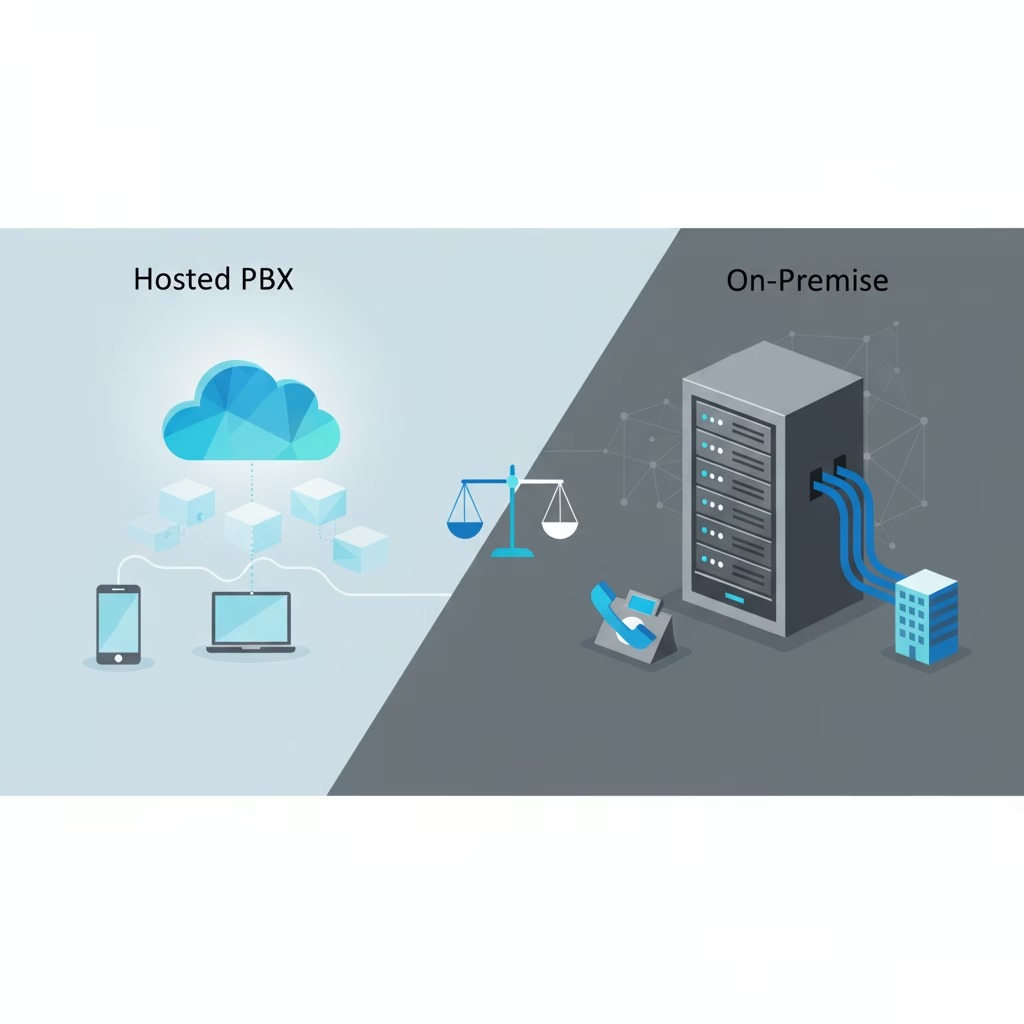
Before delving into the comparison, let's briefly define each. An On-Premise PBX system involves purchasing and maintaining all the necessary hardware and software directly within your business premises. You own the equipment, and your IT team is responsible for its installation, configuration, updates, and ongoing maintenance. This is the traditional model that many organisations have utilised for decades.
Conversely, a Hosted PBX (also known as Cloud PBX or VoIP PBX) system operates entirely in the cloud. A third-party provider, like TheVoĉo, hosts and manages all the necessary equipment and software off-site. Your business accesses the service over an internet connection, paying a subscription fee for its use. This model leverages Voice over Internet Protocol (VoIP) technology to route calls, offering unparalleled flexibility.
Cost Implications: Capital Expenditure vs. Operational Expenditure
One of the most significant differentiators lies in the financial models:
- On-Premise PBX: This typically involves a substantial upfront capital expenditure (CapEx). You're buying physical hardware, licensing software, and often paying for professional installation. While you own the assets, these costs can be prohibitive for smaller organisations or those with limited capital. Ongoing costs include maintenance, repairs, energy consumption, and eventual hardware upgrades or replacements.
- Hosted PBX: This operates on an operational expenditure (OpEx) model, meaning lower upfront costs. You pay a predictable monthly or annual subscription fee per user, which covers the hardware, software, maintenance, and support provided by the vendor. This allows for easier budgeting and frees up capital that can be invested elsewhere in your business. For many European SMEs, this predictable cost structure is highly appealing.
Scalability and Flexibility: Adapting to Change
Businesses, especially in dynamic European markets, need to adapt quickly to growth or contraction:
- On-Premise PBX: Scaling an on-premise system often means purchasing and installing additional hardware, which can be time-consuming and expensive. Downsizing can result in underutilised and costly equipment. It's less agile, making it challenging for businesses with fluctuating staffing or seasonal demands.
- Hosted PBX: This solution excels in scalability. You can easily add or remove users, lines, and features with a few clicks through a web portal, often in real-time. This elasticity is invaluable for growing organisations, project-based teams, or those navigating economic shifts. Need to quickly onboard 50 new remote employees in Berlin or expand to a new office in Lisbon? Hosted PBX makes it seamless.
Maintenance, Management, and Reliability
Who takes care of the system when things go wrong?
- On-Premise PBX: Your internal IT team or a contracted third party is responsible for all maintenance, troubleshooting, security updates, and system upgrades. This requires dedicated resources, expertise, and time. In the event of a power outage or hardware failure, your business faces the full burden of recovery, potentially leading to significant downtime.
- Hosted PBX: The provider manages all the technical heavy lifting, including hardware maintenance, software updates, security patches, and disaster recovery. This frees up your IT team to focus on core business initiatives. Reputable providers offer robust infrastructure with redundancies, ensuring high availability and business continuity, even during unforeseen events. TheVoĉo, for example, prioritises uptime and resilient network architecture, a critical factor for businesses operating across diverse European time zones.
Advanced Features and European Business Needs
Modern businesses demand more than just basic call functionality:
- On-Premise PBX: While capable, advanced features often come at an additional cost and require complex integration. Unified Communications (UC) features like video conferencing, team messaging, and CRM integration can be more challenging to implement and manage.
- Hosted PBX: Cloud-based systems are inherently designed for modern UC. They typically offer a rich suite of features out-of-the-box, including virtual receptionists, call routing, voicemail-to-email, mobile app integration, video conferencing, and seamless CRM integration. This enhances productivity for remote teams dispersed across Europe, allowing them to collaborate effectively regardless of location. The ease of deploying these features makes them highly accessible to organisations keen on optimising their communication workflow.
Security and Compliance: A Shared Responsibility
For European businesses, data security and compliance, particularly GDPR, are paramount. Both systems have security considerations:
- On-Premise PBX: You have complete control over your data and infrastructure. However, this also means you bear full responsibility for implementing and maintaining all security measures, including firewalls, intrusion detection, and regular patching. Any lapse can expose your organisation to significant risks.
- Hosted PBX: Reputable cloud providers invest heavily in enterprise-grade security, including encryption, secure data centres, and robust firewalls. They often comply with various industry standards and certifications. However, it's crucial for European businesses to choose a provider that understands and adheres to GDPR. Enquire about data residency – where your call data is stored – and ensure it remains within the EU if that's a regulatory requirement for your organisation. TheVoĉo ensures its infrastructure and practices are aligned with European data protection regulations, giving you peace of mind.
Which is Right for You?
The choice between hosted and on-premise PBX ultimately depends on your specific business context:
- Choose Hosted PBX if: You want lower upfront costs, predictable monthly expenses, easy scalability, minimal IT overhead, advanced UC features, and support for a mobile or remote workforce. This is often the ideal choice for SMEs, growing companies, and organisations prioritising agility and cost-efficiency.
- Choose On-Premise PBX if: You have significant existing IT infrastructure, a large dedicated IT team, specific legacy system integration requirements that are complex to migrate, or strict regulatory mandates demanding absolute physical control over hardware (though cloud solutions are increasingly meeting even these stringent demands).
The trend in Europe and globally clearly points towards cloud-based solutions due to their inherent flexibility, cost-effectiveness, and advanced capabilities. Modern businesses need communication systems that empower their teams, not burden their IT departments.
Make an Informed Decision for Your Organisation
Both hosted and on-premise PBX systems have their merits, but for most forward-thinking businesses today, the benefits of a cloud-based solution are compelling. With lower total cost of ownership, unparalleled scalability, robust feature sets, and reduced IT strain, Hosted PBX represents the future of business communication.
Ready to explore how a tailored Hosted PBX solution can transform your business communications? Contact TheVoĉo today for a personalised consultation and discover the perfect fit for your organisation's success.