
Protecting Your Communications in a Digital Landscape
In an era where remote work and digital transformation are the norms, your business phone system is no longer just a utility; it is a critical node in your network security perimeter. As businesses transition from legacy on-premise hardware to sophisticated Cloud PBX solutions, the responsibility for securing sensitive voice data and metadata shifts. Choosing a provider is not just about feature sets or call quality; it is fundamentally about trust. For European organisations, this trust must be underpinned by internationally recognised security certifications and strict adherence to regional data regulations.
The Gold Standard: Why ISO 27001 Matters
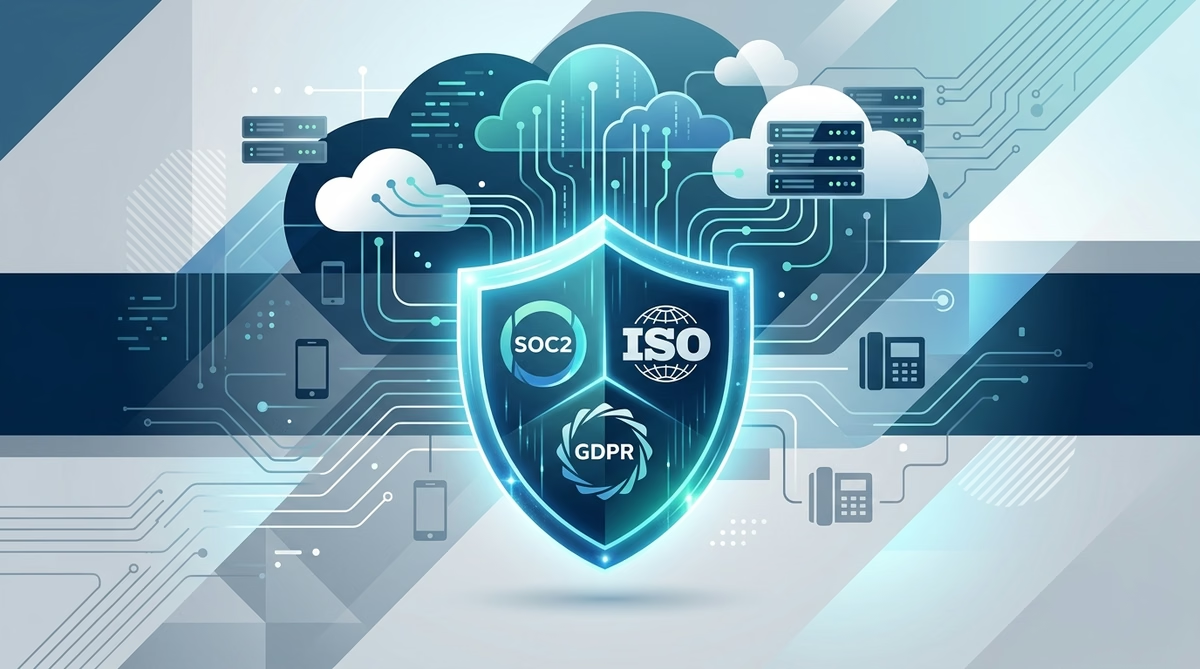
ISO 27001 is the global benchmark for an Information Security Management System (ISMS). When a VoIP provider holds this certification, it signifies that they have implemented a systematic approach to managing sensitive company information so that it remains secure. For European business owners, this provides an assurance that the provider has:
- Conducted rigorous risk assessments to identify potential vulnerabilities.
- Established comprehensive documentation and internal policies for handling data breaches.
- Integrated physical and logical security measures to protect infrastructure.
- Committed to continuous improvement through annual audits.
Working with an ISO 27001-certified provider means that your telephony infrastructure is backed by a framework designed to minimise human error and systemic failure.
SOC 2 and the Importance of Operational Integrity
While ISO 27001 focuses on the management system, SOC 2 (Service Organisation Control 2) reports focus on the actual operational effectiveness of a provider. For IT professionals evaluating cloud phone systems, a SOC 2 Type II report is invaluable. It assesses a service provider's systems based on five 'trust service principles': security, availability, processing integrity, confidentiality, and privacy.
For a Cloud PBX provider, this means verifying that call logs, voice recordings, and user metadata are encrypted in transit and at rest. If a provider cannot produce a recent SOC 2 audit, they lack the verified transparency required to host enterprise-grade business communications.
Navigating GDPR and Data Sovereignty in Europe
For businesses operating within the EU or EEA, GDPR (General Data Protection Regulation) compliance is non-negotiable. Cloud-based telephony involves the processing of personal data, including caller IDs, contact lists, and recorded conversations.
Key considerations for your provider include:
- Data Sovereignty: Does the provider store your data within the EU? Using local data centres reduces the risk of third-country data transfer legal complexities.
- Data Processing Agreements (DPAs): Your provider must offer a clear, transparent DPA that outlines their obligations as a data processor on your behalf.
- Right to Erasure: Does the platform allow for the systematic deletion of call recordings and user data in compliance with the 'Right to be Forgotten'?
Partnering with a provider that treats GDPR not as a hurdle, but as a core design principle, is essential for maintaining your organisation's legal and ethical standing.
How to Audit Your Potential VoIP Provider
When reviewing potential vendors, do not simply take their marketing claims at face value. Use this checklist to ensure your telecommunications stack meets your security standards:
- Request their latest ISO 27001 certificate and ask for the scope of the certification (it should include the VoIP infrastructure).
- Ask for a redacted version of their latest SOC 2 Type II report to review their control environment.
- Verify their data centre locations to ensure compliance with your company's data residency policies.
- Confirm the use of industry-standard encryption protocols such as SRTP (Secure Real-time Transport Protocol) for voice and TLS (Transport Layer Security) for signalling.
By following this rigorous vetting process, you protect your organisation from the risks of eavesdropping, unauthorised access, and non-compliance fines.
Conclusion: Prioritise Security as a Competitive Advantage
Security is not a static destination; it is a continuous journey. By selecting a Cloud PBX partner like TheVoĉo that prioritises robust security certifications and rigorous regulatory compliance, you are doing more than just buying a phone system—you are building a secure foundation for your business's future growth. Do not compromise on the safety of your communications. Contact our security team today to learn more about our commitment to protecting your data and to request our compliance documentation.