
Elevate Security: End-to-End Encryption for Business Communications
In today's interconnected business world, effective communication is paramount. Yet, equally critical is the security of those communications. From confidential client discussions to proprietary internal strategies, the data exchanged across your business phone system is a goldmine for cybercriminals. This is where End-to-End Encryption (E2EE) becomes not just a feature, but an indispensable pillar of your security strategy, particularly for modern cloud-based solutions like TheVoĉo's Cloud PBX and VoIP systems.
Organisations globally are realising that traditional security measures may no longer suffice against sophisticated threats. Protecting sensitive information from interception, tampering, or espionage is a continuous challenge. For European businesses navigating stringent data protection laws such as GDPR, the stakes are even higher. Understanding and implementing E2EE is therefore not just good practice, but a regulatory and reputational imperative.
What is End-to-End Encryption (E2EE)?
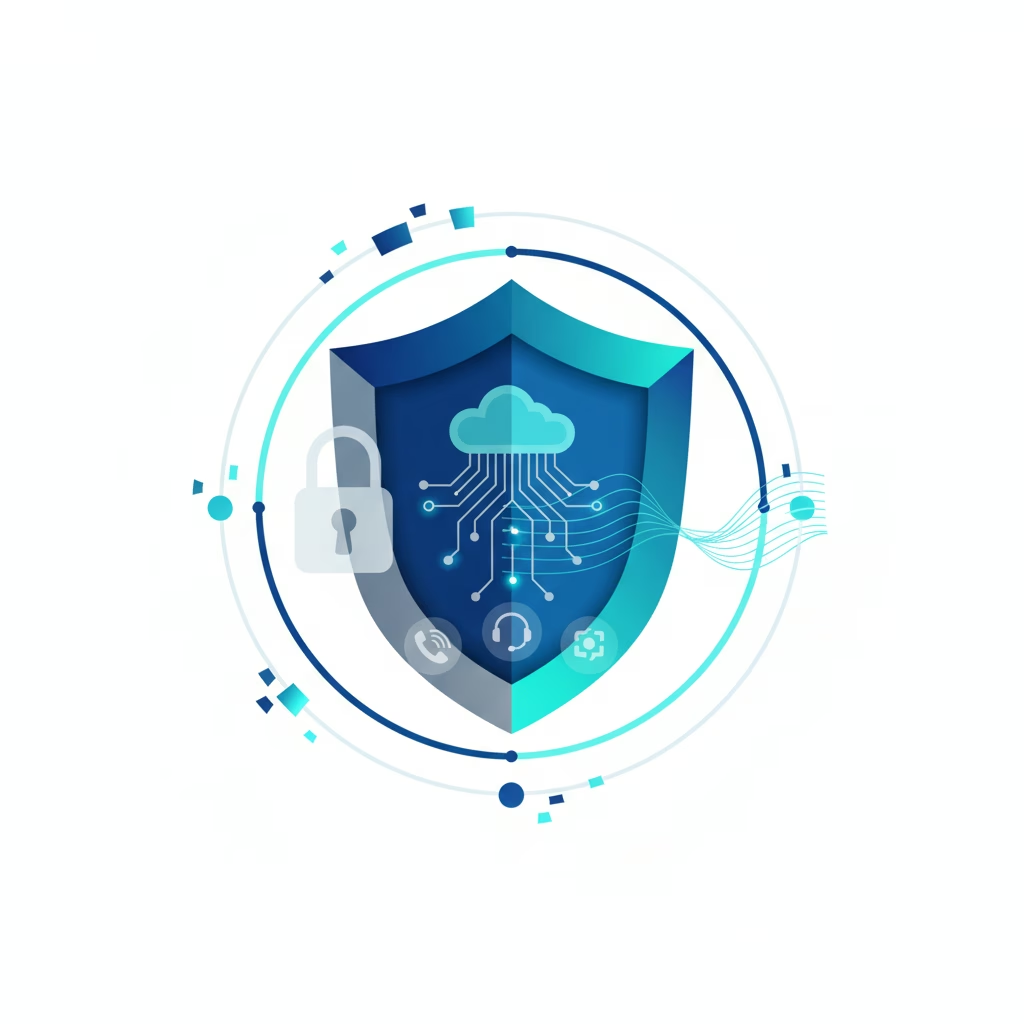
At its core, End-to-End Encryption is a communication system where only the communicating users can read the messages. In essence, it encrypts data at the sender's device and decrypts it only at the recipient's device. No one in between – not even the service provider (like TheVoĉo) – can access the unencrypted content. This creates a secure tunnel for your conversations and data, ensuring privacy and integrity from point A to point B.
To illustrate, consider a traditional phone call: Your voice travels through various network points, potentially accessible to intermediaries. With E2EE, your voice is scrambled into an unreadable format before it leaves your phone and remains scrambled until it reaches the recipient's phone, where it's unscrambled. If intercepted mid-route, the data is useless.
This differs significantly from 'in-transit' encryption, which only secures data as it moves between network points, or 'at-rest' encryption, which protects stored data. While valuable, these methods still leave data vulnerable at various decryption points within the service provider's infrastructure. E2EE closes these potential gaps, offering a comprehensive shield for your communications.
Why E2EE is Critical for Your Business
The adoption of E2EE brings a multitude of benefits that directly impact a business's operational resilience, reputation, and competitive edge:
- Data Protection and Privacy: The most obvious benefit. E2EE ensures that sensitive information – customer data, financial details, intellectual property, strategic plans – remains confidential. A data breach involving unencrypted communications can be catastrophic, leading to financial losses, legal liabilities, and irreparable reputational damage.
- Mitigation of Cyber Threats: With E2EE, even if a cybercriminal manages to breach a server or intercept data packets, the information remains encrypted and unreadable. This significantly reduces the impact of man-in-the-middle attacks, eavesdropping, and other forms of cyber espionage.
- Building Trust and Confidence: Customers and partners are increasingly aware of privacy concerns. Demonstrating a commitment to E2EE signals that your organisation takes data security seriously, fostering trust and loyalty. This is particularly crucial in sectors dealing with highly sensitive information, such as healthcare, finance, and legal services.
- Protecting Competitive Advantage: In an increasingly competitive landscape, protecting trade secrets and proprietary information discussed over calls or messages is vital. E2EE ensures that your innovations and strategies remain within your organisation, out of reach of competitors.
- Ensuring Business Continuity: A security incident can disrupt operations, leading to downtime and loss of productivity. By preventing such incidents through robust encryption, E2EE contributes to greater business continuity and resilience.
E2EE and European Regulations (GDPR)
For businesses operating within the European Union or dealing with EU citizens' data, the General Data Protection Regulation (GDPR) imposes strict requirements on data protection and privacy. E2EE is a powerful tool in achieving GDPR compliance.
- Data Minimisation and Security by Design: GDPR Article 25 advocates for 'data protection by design and by default'. E2EE inherently supports this principle by ensuring data is protected from the moment of creation to its final destination, without requiring manual intervention from users.
- Protection Against Unauthorised Access: Article 32 of GDPR mandates appropriate technical and organisational measures to ensure a level of security appropriate to the risk, including 'the pseudonymisation and encryption of personal data'. E2EE directly addresses this by making personal data unintelligible to unauthorised parties.
- Breach Notification: In the event of a data breach (Article 34), organisations must notify supervisory authorities and affected individuals unless the data is 'rendered unintelligible to any person who is not authorised to access it', for example, through encryption. E2EE can significantly mitigate the impact and notification requirements of a breach, provided the encryption keys are secure and not compromised.
By implementing E2EE, European businesses not only safeguard their data but also strengthen their legal standing and reduce the risks associated with non-compliance, which can include hefty fines and legal action.
Implementing E2EE in Cloud Communications
Integrating E2EE into your business communications doesn't require complex in-house infrastructure. Modern cloud-based phone systems, like those offered by TheVoĉo, are designed with security at their core, often incorporating E2EE as a standard or optional feature for VoIP calls and messaging.
- Select a Secure Provider: Prioritise providers that openly discuss their security protocols, including their use of E2EE. Look for certifications and compliance with relevant industry standards.
- Understand Implementation: In a Cloud PBX or VoIP setup, E2EE typically works by encrypting the audio streams (SRTP for secure real-time transport protocol) and signalling information (TLS for transport layer security). This means your conversations are protected from your handset or softphone application, across the internet, to the recipient's device.
- Regular Updates: Ensure all communication software, applications, and devices are kept up-to-date. Software updates often include security patches that are vital for maintaining the integrity of encryption.
- User Education: While E2EE works silently in the background, educating your employees on its importance and how to use E2EE-enabled tools correctly is crucial. This includes best practices for device security and password management.
Choosing an E2EE-Enabled Provider
When evaluating a cloud-based communication provider, particularly for European operations, consider the following:
- Explicit E2EE Support: Does the provider offer E2EE as a standard or easily configurable option for calls, messages, and video conferencing?
- Data Centre Locations: For GDPR and data sovereignty, inquire about the geographical location of data centres. Providers with EU-based data centres can offer additional assurance.
- Transparency in Security Practices: A reputable provider will be transparent about their encryption methods, key management practices, and overall security architecture.
- Compliance Certifications: Look for certifications like ISO 27001, which demonstrate a commitment to information security management.
- Scalability and Reliability: Ensure the E2EE solution doesn't compromise the reliability or scalability of your communication system.
TheVoĉo offers robust Cloud PBX and VoIP solutions built with security in mind, providing the peace of mind that your business communications are protected from start to finish.
Conclusion
End-to-End Encryption is no longer a niche technical concept; it is a fundamental requirement for secure business communications in the digital age. For European organisations, it's a vital component of GDPR compliance and a testament to your commitment to data privacy. By choosing a cloud-based communication provider that champions E2EE, you not only safeguard your sensitive data and intellectual property but also build a stronger foundation of trust with your clients and partners.
Ready to secure your business communications with industry-leading encryption? Explore TheVoĉo's secure Cloud PBX and VoIP solutions today and ensure your conversations remain private and protected.