

The Shift to Edge Architecture in Modern Telephony
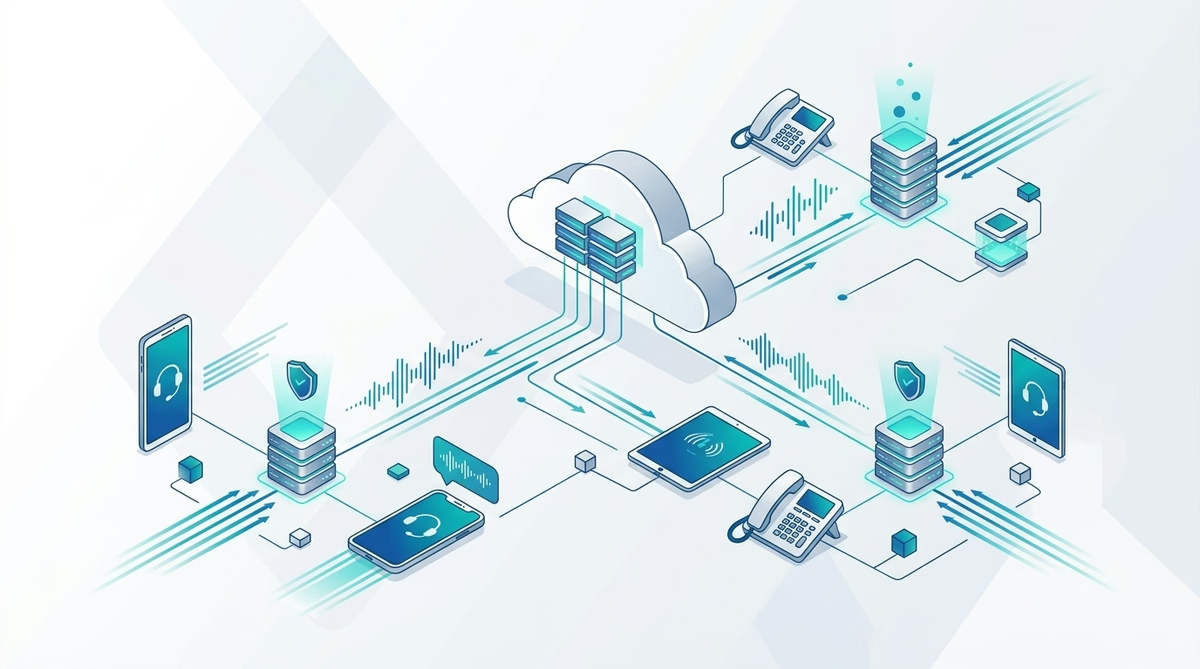
For many years, the standard approach for cloud-based phone systems has been to centralise processing within massive, distant data centres. While this model served its purpose, the rise of real-time applications like high-definition voice and AI-driven transcription has highlighted a critical bottleneck: latency. Edge computing changes the paradigm by moving processing power physically closer to the user. Instead of routing voice packets across the globe to a central server, edge nodes process data at the network's perimeter, significantly reducing the distance information must travel.
Minimising Latency for Crystal-Clear Calls
Latency is the greatest enemy of high-quality business communications. Even a delay of a few hundred milliseconds can lead to unnatural conversational pauses, 'talking over' colleagues, and frustrated clients. By leveraging edge computing, TheVoĉo can process voice traffic at regional nodes scattered across Europe. This creates several key advantages:
- Real-time jitter buffer optimisation.
- Accelerated packet prioritisation for high-bandwidth traffic.
- Elimination of backhaul delays that occur when traversing multiple international gateways.
- Improved stability for remote teams working outside standard office network environments.
For businesses operating across European time zones, this means a Frankfurt-based support team can connect to a London office with performance that feels as instantaneous as an internal intercom system.
Strengthening Data Sovereignty and Compliance
Operating within the European market necessitates strict adherence to GDPR and other national data privacy regulations. Edge computing is not merely a performance upgrade; it is a powerful tool for compliance. By processing and storing metadata locally at the edge, organisations can exert greater control over where sensitive call logs and voice data reside.
Key considerations for compliance include:
- Data Residency: Keeping voice metadata within specific EU jurisdictions to meet corporate governance requirements.
- Reduced Exposure: Minimising the transit of PII (Personally Identifiable Information) across non-EU server clusters.
- Enhanced Security Posture: Localised processing reduces the attack surface compared to a single, centralised target.
Our architecture at TheVoĉo utilises edge nodes to ensure that your business remains compliant without sacrificing the agility of a global cloud-based PBX system.
The Role of AI at the Edge
As we integrate AI-powered features into our platform, the benefits of edge computing become even more pronounced. Real-time features such as live call sentiment analysis, automated transcription, and language translation require significant computational overhead. Performing these tasks on a central server creates a lag that renders 'real-time' tools useless. Edge computing allows for:
- Localised AI inferencing, meaning transcription appears on screen the moment a word is spoken.
- Reduced server load on central cloud infrastructure, leading to lower operating costs.
- High availability, ensuring that if one central hub experiences downtime, local edge nodes can continue to handle basic call routing and internal traffic.
Implementing Edge-Ready VoIP Strategies
Transitioning to an edge-enhanced telecommunications strategy requires careful planning. Businesses should assess their current geographical distribution and identify where their staff spend the most time. If your organisation relies heavily on international collaboration, choosing a provider like TheVoĉo—which invests in distributed infrastructure—is essential.
To optimise your current setup, consider the following steps:
- Audit your network: Ensure your office routers are configured for low-latency QoS (Quality of Service) to complement edge performance.
- Assess your requirements: Define which branches require high-speed AI integration versus standard VoIP capabilities.
- Partner with experts: Work with providers who prioritise local peering and regional edge distribution to keep traffic within national boundaries.
Conclusion: Future-Proofing Your Business Communications
Edge computing represents the next logical evolution in cloud telecommunications. By reducing the physical distance between your users and the voice processing infrastructure, you unlock superior call quality, enhanced AI responsiveness, and robust compliance management. As business requirements continue to scale in a distributed, remote-first world, edge-ready platforms will define the next generation of industry leaders.
Are you ready to experience the difference that localised, high-speed telecommunications can make for your organisation? Contact the TheVoĉo team today to discuss how our edge-enhanced cloud PBX solutions can optimise your business communications.