
Introduction to Edge Computing in Voice Applications
In the rapidly evolving world of telecommunications, businesses are constantly seeking ways to improve the clarity, reliability, and security of their communications. As cloud-based phone systems become the standard for modern enterprises, a new paradigm is emerging to take performance to the next level: edge computing. For European businesses using platforms like TheVoĉo, edge computing represents a significant leap forward from traditional centralised cloud models.
While traditional cloud VoIP relies on data being sent to a distant central data centre for processing, edge computing brings that processing power closer to the source of the data—in this case, the user's handset or office network. This shift is particularly crucial for voice applications, where even a few milliseconds of delay can disrupt a conversation. In this post, we explore how edge computing is reshaping voice technology and why it is a game-changer for the European market.
Reducing Latency and Jitter for Crystal-Clear Audio
The most immediate benefit of edge computing for voice applications is the drastic reduction in latency. Latency is the delay between a person speaking and the other party hearing the sound. In a standard cloud setup, voice packets might travel across several international borders to reach a central server before being routed back to their destination. For a business in Berlin communicating with a client in Madrid, this 'tromboning' effect can introduce noticeable lag.
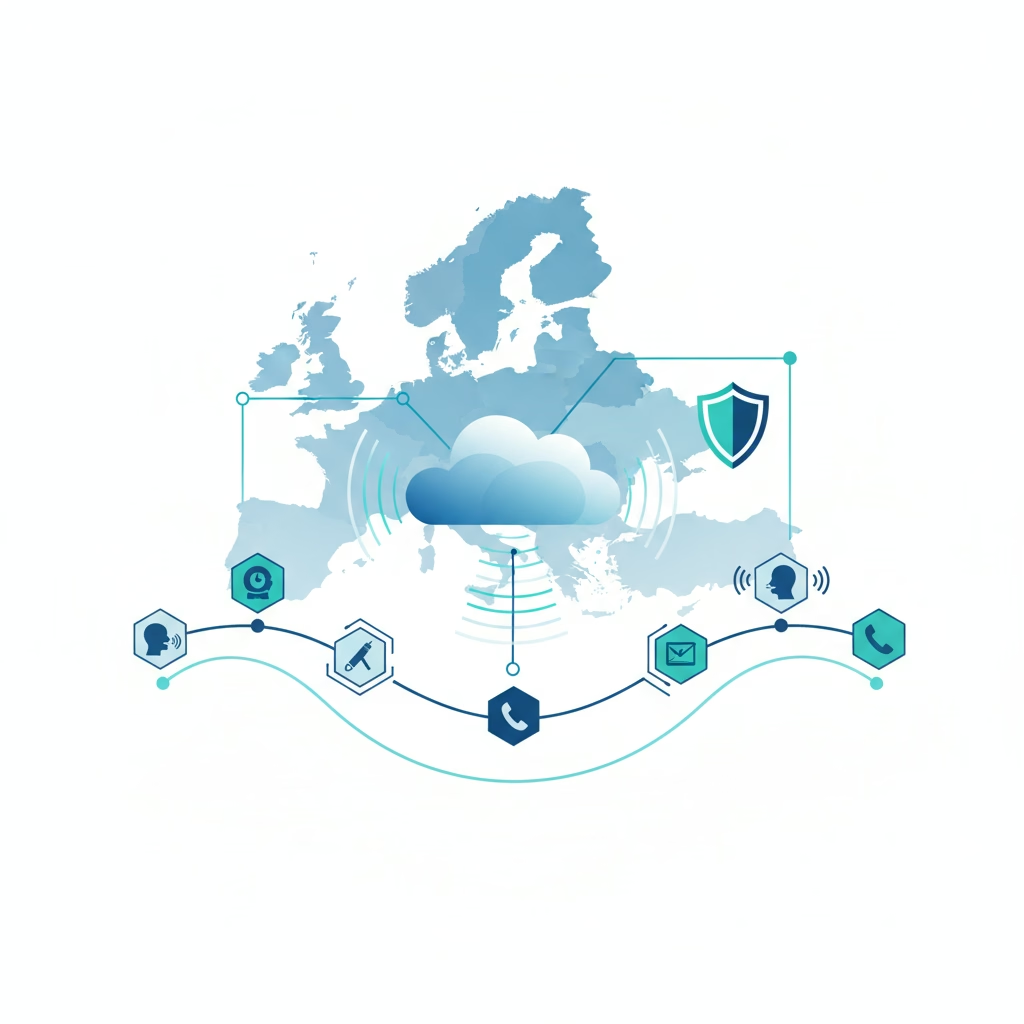
By deploying edge nodes in local points of presence (PoPs) across Europe, voice traffic is processed at the 'edge' of the network. This proximity ensures:
- Lower Round-Trip Time (RTT): Voice packets travel shorter distances, reducing the time it takes for data to move between users.
- Elimination of Jitter: Jitter occurs when packets arrive in the wrong order or at irregular intervals. Localised processing helps maintain a steady flow of data, ensuring smooth audio.
- Enhanced QoS (Quality of Service): Edge computing allows for smarter traffic prioritisation at the local level, ensuring voice data isn't slowed down by less critical web traffic.
For European organisations operating across multiple time zones, this infrastructure ensures that a call from London to Warsaw feels as instantaneous as a face-to-face conversation.
Data Sovereignty and GDPR Compliance at the Edge
For any European business, data protection is a top priority. The General Data Protection Regulation (GDPR) mandates strict controls over how personal data, including voice recordings and metadata, is handled and stored. Edge computing provides a robust solution for data sovereignty by allowing data to be processed within specific geographic boundaries.
When voice processing occurs at the edge, sensitive information can be filtered, encrypted, or anonymised before it ever reaches a central cloud. This 'local-first' approach means:
- Data Residency: Businesses can ensure that call logs and recordings remain within the EU or even within a specific country, simplifying compliance audits.
- Reduced Exposure: By processing data locally, there is less opportunity for intercepting data during long-distance transit.
- Enhanced Privacy: AI-driven features like automated transcription can be performed at the edge, meaning the content of private conversations doesn't necessarily need to be stored in a centralised global database.
TheVoĉo leverages these edge capabilities to provide European clients with the peace of mind that their communications adhere to the highest standards of digital sovereignty.
Powering AI and Real-Time Analytics
The integration of Artificial Intelligence (AI) into telecommunications is one of the most exciting trends in the industry. However, running complex AI algorithms—such as real-time translation, sentiment analysis, or noise cancellation—requires significant computational power. If this processing happens in a distant cloud, the delay makes real-time applications impossible.
Edge computing enables 'AI at the Edge', which allows these features to function seamlessly during a live call:
- Real-Time Noise Suppression: Edge nodes can filter out background noise from a busy Parisian cafe or a London construction site before the audio even enters the main network.
- Instant Transcription: For legal or medical professionals, having an accurate, real-time transcript of a consultation is invaluable. Edge processing makes this possible without the lag associated with central servers.
- Sentiment Analysis: Sales teams can receive live prompts based on the caller's tone of voice, helping them navigate difficult conversations more effectively.
By moving the heavy lifting of AI to the edge, businesses can enjoy advanced features without compromising the fundamental quality of the voice call.
Reliability and Business Continuity
Network reliability is the backbone of business operations. Traditional centralised systems have a 'single point of failure' risk; if the main data centre goes offline, every user is affected. Edge computing introduces a distributed architecture that enhances the resilience of the entire phone system.
In an edge-enabled network, if one node experiences an issue, traffic can be instantly rerouted to the next nearest edge PoP. Furthermore, many edge solutions allow for 'Local Survivability.' If a business loses its primary internet connection to the wider world, an edge gateway on-site or nearby can keep internal calls and emergency services functioning. This is particularly vital for critical infrastructure, healthcare providers, and emergency services across Europe who cannot afford even a minute of downtime.
Conclusion: The Future of Voice is at the Edge
As European businesses continue to embrace digital transformation, the demand for high-quality, secure, and intelligent communication tools will only grow. Edge computing is no longer a futuristic concept; it is a practical necessity for organisations that refuse to compromise on voice quality or data security. By decentralising processing and bringing it closer to the user, we are entering an era of unprecedented clarity and functionality in business telecoms.
At TheVoĉo, we are committed to staying at the forefront of this technological shift. Our infrastructure is designed to provide the benefits of edge computing to businesses of all sizes, ensuring your voice applications are faster, smarter, and more secure than ever before.
Ready to upgrade your business communications? Contact TheVoĉo Product Team today to learn how our edge-integrated Cloud PBX solutions can transform your organisation's connectivity.