Introduction to Modern Business Communication
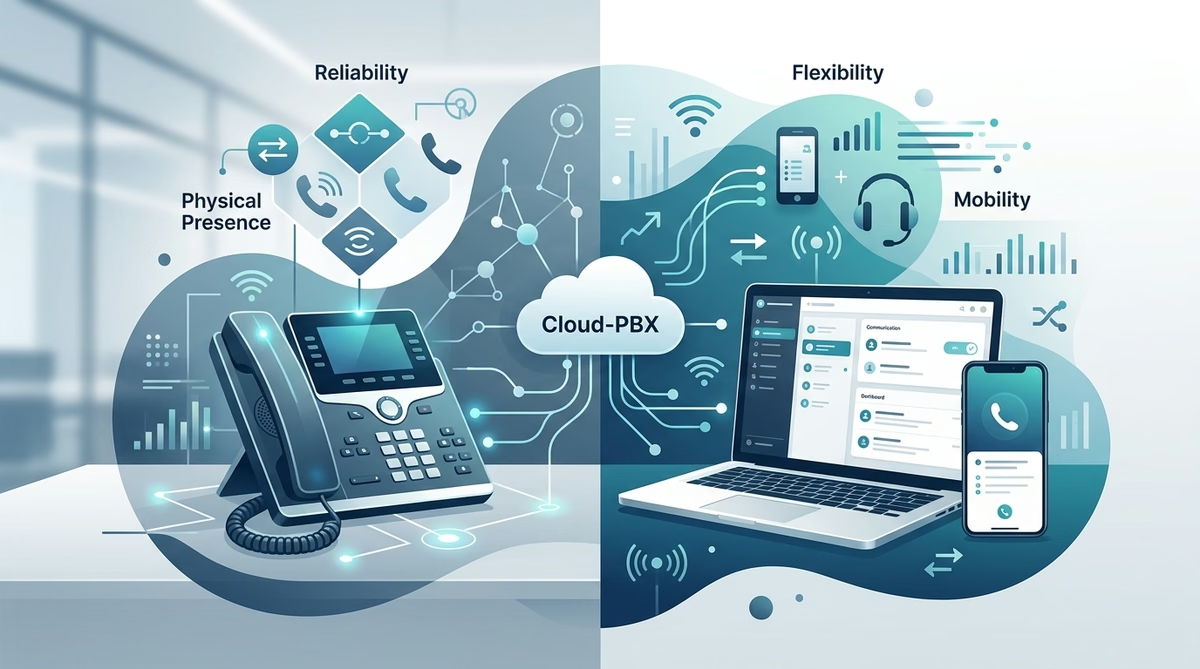
In the rapidly evolving landscape of telecommunications, businesses across Europe are shifting away from traditional PSTN lines in favour of cloud-based VoIP systems. As you transition to a modern Cloud PBX, one of the most significant architectural decisions involves your hardware strategy: should your organisation invest in physical desk phones or transition to softphones? Both offer distinct advantages depending on your specific operational requirements, budget, and workforce flexibility.
The Case for Softphones: Flexibility and Remote Productivity
Softphones are software applications that allow users to make and receive calls using their existing computers, laptops, tablets, or smartphones. They turn any internet-connected device into a fully functional business phone.
Key benefits include:
- Cost Efficiency: Eliminate the capital expenditure associated with purchasing hardware for every single employee.
- Mobility: Ideal for the remote or hybrid work culture common across European tech hubs. Staff can stay reachable from anywhere with an internet connection.
- Integration: Seamlessly connects with your CRM, email, and project management tools, enabling click-to-dial functionality.
- Updates: Since it is software, your IT team can push updates centrally, ensuring everyone has the latest features and security patches without manual intervention.
For a distributed team in London, Berlin, or Paris, softphones remove the physical tethering to an office desk, allowing for a truly global, agile working environment.
The Case for Desk Phones: Reliability and Professionalism
Despite the digital shift, physical VoIP desk phones remain a staple in many organisations. These devices are designed specifically for voice traffic, providing a dedicated user experience that software often cannot replicate.
Advantages of desk phones include:
- Dedicated Audio Quality: High-definition handsets often provide superior noise cancellation and acoustic clarity compared to laptop microphones.
- Reliability: By having a separate device dedicated to communication, you avoid issues like conflicting system sounds or operating system updates interfering with an active call.
- Ease of Use: For receptionists, call centre agents, or managers accustomed to traditional telephony, the dedicated buttons and tactile interface offer a lower learning curve.
- Zero Reliance on Computer State: Even if a user's laptop is frozen or undergoing a restart, their desk phone remains operational and ready to receive calls.
Making the Decision for Your Organisation
Choosing between these two options does not necessarily have to be an 'either-or' scenario. At TheVoĉo, we often recommend a hybrid strategy. You might equip your front-of-house staff with high-end executive desk phones while providing mobile-first sales teams with softphone applications. Consider the following when deciding:
- User Role: Does the employee stay at a desk all day or are they moving between departments and travelling for meetings?
- Infrastructure: Do you have robust Wi-Fi and network bandwidth to support consistent VoIP traffic across multiple devices?
- Training: Will your team benefit from a tactile interface, or are they digital natives comfortable navigating a desktop application?
- Budget: Consider the lifecycle cost. While desk phones involve initial hardware costs, they are durable and often last for years, whereas softphones are included in your recurring monthly subscription.
Conclusion: Optimising Your Communication Stack
Whether you choose the portable versatility of softphones or the robust reliability of physical desk phones, the most important step is choosing a provider that supports both with equal proficiency. TheVoĉo offers a seamless integration layer that allows your team to switch between devices effortlessly, ensuring your business stays connected regardless of the hardware in front of them.
Are you ready to modernise your business communications? Contact our sales team today to discuss how we can tailor a VoIP deployment strategy that fits your unique operational needs.