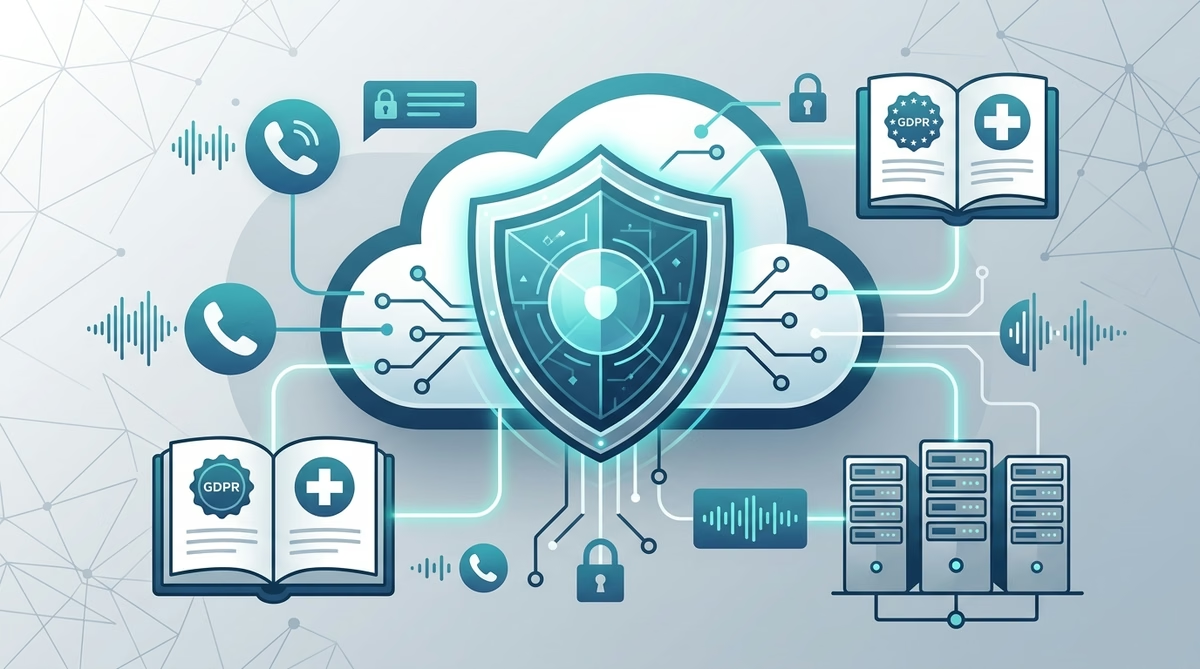
Navigating the Compliance Landscape in Cloud Telephony. In an era where remote work and digital transformation define the modern workplace, cloud telephony has become the backbone of business communication. However, shifting your voice infrastructure to the cloud introduces significant responsibilities regarding data privacy and security. For European organisations, the General Data Protection Regulation (GDPR) sets the gold standard for handling personal information, while global healthcare providers must align with the Health Insurance Portability and Accountability Act (HIPAA). At TheVoĉo, we believe that compliance should be a competitive advantage, not a hurdle. ## Understanding GDPR and Data Sovereignty. GDPR is not merely a legal requirement; it is a fundamental shift in how businesses handle customer information. When using a Cloud PBX, your voice data, call logs, and transcripts are subject to strict processing rules. 1. Data Residency: Ensure your provider stores data within the European Economic Area (EEA). 2. Right to Erasure: Your telephony system must allow for the secure deletion of call metadata upon user request. 3. Data Processing Agreements (DPAs): Always insist on a signed DPA that outlines how your provider processes voice traffic. By selecting a provider that prioritises data sovereignty, you mitigate the risk of cross-border data transfer issues that have tripped up many international enterprises. ## HIPAA Compliance for Telehealth and Beyond. While HIPAA is a US-centric regulation, its principles regarding the protection of Protected Health Information (PHI) are universally applicable to healthcare entities. If your organisation transmits patient information via VoIP, you must ensure that your telecommunications stack supports: * End-to-end encryption (E2EE) for voice traffic. * Robust access controls and multi-factor authentication (MFA) for administrative panels. * Audit logs that track who accessed specific call data and when. Even for businesses outside the US, adopting HIPAA-adjacent standards can significantly improve your overall data posture and patient trust. ## The Pillars of Secure Cloud Communications. Security is the foundation upon which compliance is built. Modern cloud telephony must move beyond legacy standards to include: * SRTP (Secure Real-time Transport Protocol): This ensures that your voice streams are encrypted in transit, preventing eavesdropping and man-in-the-middle attacks. * TLS (Transport Layer Security): Encrypting the signalling layer between your desk phone, softphone, and our servers ensures that authentication data remains private. * Fraud Prevention: AI-driven anomaly detection can identify suspicious calling patterns, helping you comply with internal security policies and protecting your organisation from toll fraud. ## Actionable Steps for Compliance. To ensure your business telephony remains compliant, start with these three steps: 1. Audit your current vendors: Request current ISO 27001 certifications or SOC 2 Type II reports. 2. Implement strict identity management: Use Single Sign-On (SSO) to enforce password policies across your entire communication suite. 3. Review your retention policies: Do not keep call recordings longer than necessary. Automate your purging schedule to reduce your digital footprint and limit exposure in the event of a breach. ## Conclusion: Building a Secure Future. Security and compliance are not static goals; they are ongoing processes that require vigilance. By partnering with a provider like TheVoĉo, you gain access to a secure, compliant infrastructure designed to evolve with global regulations. Whether you are dealing with GDPR, HIPAA, or local industry standards, we provide the tools necessary to protect your voice data. Are you ready to upgrade your communication system to meet the highest security standards? Contact our Security Team today to schedule a compliance audit of your current setup.