
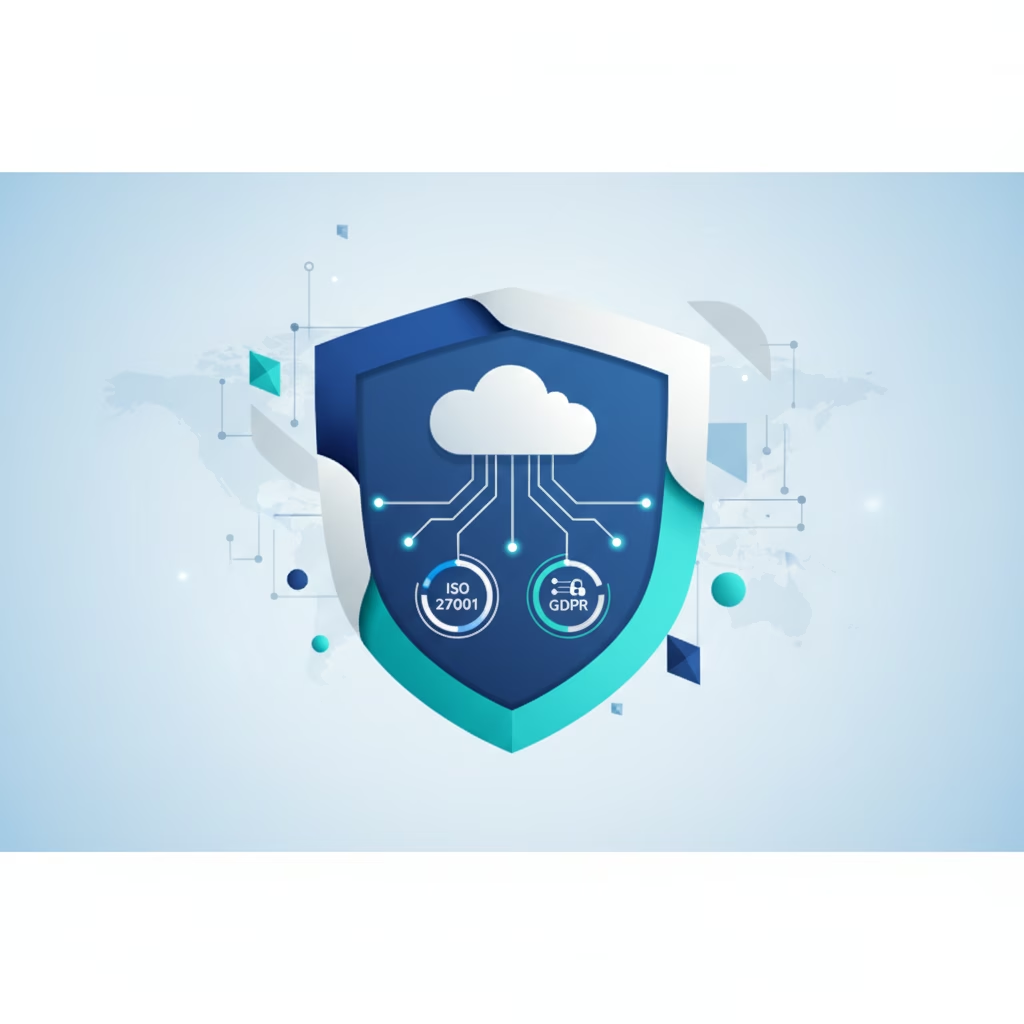
The Critical Role of Security in Cloud Communications In today's interconnected business landscape, cloud phone systems like those offered by TheVoĉo have become indispensable for seamless communication. They offer unparalleled flexibility, scalability, and cost-efficiency, transforming how organisations operate. However, this shift from traditional on-premise Private Branch Exchanges (PBXs) to Cloud PBX also introduces new security considerations that cannot be overlooked. For European businesses, in particular, the imperative to protect sensitive data, maintain data sovereignty, and comply with stringent regulations is paramount. When your business communications – including customer interactions, internal discussions, and sensitive information exchanges – traverse the cloud, the security posture of your cloud phone provider is no longer just a technical detail; it's a fundamental business concern. The risks range from data breaches and unauthorised access to call recordings and voicemails, to service disruptions and compliance failures. Understanding the security measures in place, particularly through recognised certifications, is therefore crucial for mitigating these potential threats and safeguarding your organisation's reputation and operational integrity.
Essential Security Certifications for Cloud Phone Providers
Choosing a cloud phone provider requires due diligence, and a key indicator of a provider's commitment to security is their adherence to internationally recognised standards and certifications. These certifications aren't merely badges; they represent a rigorous framework of processes, technologies, and policies designed to protect your data.
ISO 27001: The Global Benchmark for Information Security
ISO 27001 is perhaps the most widely recognised international standard for Information Security Management Systems (ISMS). Achieving this certification means that a provider has established, implemented, maintained, and continually improved a system to manage information security risks effectively. For a cloud phone provider, this translates to:
- Comprehensive Risk Management: A structured approach to identifying, assessing, and treating information security risks.
- Robust Controls: Implementation of physical, technical, and administrative controls covering areas like access management, cryptography, operational security, and incident response.
- Continuous Improvement: A commitment to regular reviews and updates of their security practices to adapt to evolving threats.
- Independent Validation: An annual audit by an accredited third-party body, providing an objective assessment of their security posture. Partnering with an ISO 27001 certified provider offers assurance that your communication data is handled with the highest level of care and professionalism.
GDPR Compliance: A Must for European Businesses
For any business operating within or serving the European Economic Area (EEA), the General Data Protection Regulation (GDPR) is non-negotiable. While not a