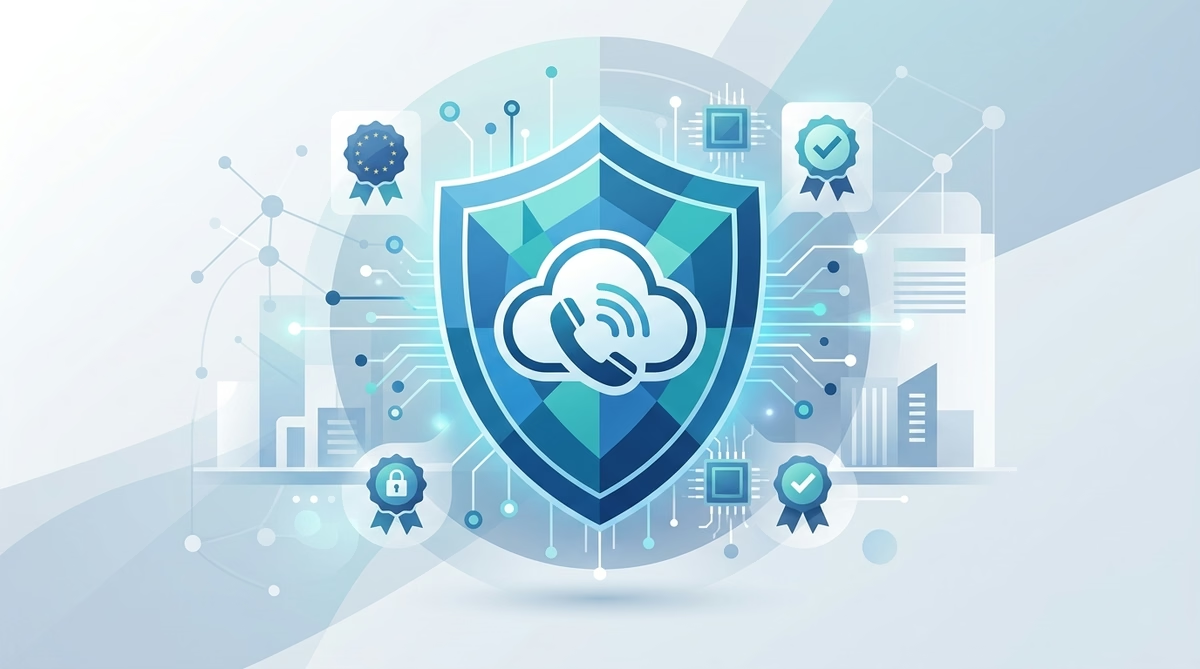
Securing Your Communications: Why Certifications Matter In the modern era of hybrid work and digital transformation, the security of your business telecommunications is non-negotiable. As companies transition from legacy on-premises hardware to Cloud PBX and VoIP solutions, the attack surface for data breaches, eavesdropping, and service disruption shifts to the provider. For European businesses, this transition is governed by strict regulatory frameworks. Choosing a cloud phone provider is not just a technological decision; it is an act of trust. To mitigate risk, organisations must prioritize providers that hold internationally recognised security certifications. These standards provide an objective benchmark for verifying that a provider implements robust controls to protect sensitive business data. ## The Gold Standard: ISO/IEC 27001 When evaluating potential VoIP partners, ISO/IEC 27001 is the cornerstone of information security management systems (ISMS). This international standard specifies the requirements for establishing, implementing, maintaining, and continually improving an ISMS. For a European organisation, a provider with this certification demonstrates: * Systematic examination of information security risks. * Consistent design and implementation of security controls. * A commitment to evolving security policies in the face of new threats. If a provider cannot produce a valid ISO/IEC 27001 certificate, it should raise an immediate red flag regarding their maturity in handling enterprise-grade voice data. ## Compliance with GDPR and Data Sovereignty In Europe, security is inseparable from the General Data Protection Regulation (GDPR). Cloud phone providers act as data processors, meaning they hold a significant responsibility for the personal data of your employees and customers. A secure provider will offer: * Data Sovereignty: The ability to host and process call logs, recordings, and metadata within the European Economic Area (EEA), ensuring that sensitive information remains subject to EU legal protections. * Data Processing Agreements (DPAs): Transparent, legally binding documentation that outlines exactly how your data is handled, stored, and protected. * Right to Erasure: Mechanisms to easily delete call records and associated metadata upon request, ensuring compliance with Article 17 of the GDPR. Providers that ignore these requirements expose your business to severe financial penalties and reputational damage. Always confirm where your data rests before signing a contract. ## SOC 2 Type II: Continuous Assurance While ISO standards focus on management systems, SOC 2 (Service Organisation Control 2) focuses on the actual operational effectiveness of security controls over time. Specifically, a SOC 2 Type II report provides an independent auditor's assessment of how well a service provider's systems are designed and how effectively they operate over a period (usually 6-12 months). This is critical for cloud services because it proves the provider is not just 'secure' for a single audit day, but maintains high standards daily. Look for providers that audit for: * Security: Protecting data against unauthorised access. * Availability: Ensuring the system remains operational for your business needs. * Confidentiality: Restricting access to authorised personnel only. ## Actionable Checklist for IT Decision-Makers Before selecting a cloud-based business phone system, use this checklist to audit your shortlist: 1. Verify the ISO/IEC 27001 certificate: Ensure it covers the specific services you are procuring, not just a parent company's office. 2. Request the DPA: Review the provider's standard Data Processing Agreement to ensure it aligns with your internal legal policies. 3. Confirm Data Residency: Ask explicitly for the geographical location of the servers hosting your call data. 4. Enquire about Encryption: Ensure the provider supports TLS (Transport Layer Security) and SRTP (Secure Real-time Transport Protocol) for all voice traffic. 5. Ask for their most recent SOC 2 Type II report: A transparent provider will be happy to share a redacted version or provide an executive summary of their audit findings. ## Conclusion: Building a Secure Future Security certifications are more than just badges on a website; they are proof of a provider's commitment to protecting your organisation's most vital asset: communication. By demanding rigorous compliance, you protect your business from the growing threat of cybercrime while ensuring you meet the stringent requirements of European data privacy laws. At TheVoĉo, we believe that security is the foundation of innovation. If you are ready to upgrade your business communications with a provider that prioritises compliance, data sovereignty, and robust encryption, contact our team today for a comprehensive security briefing tailored to your organisation's needs.