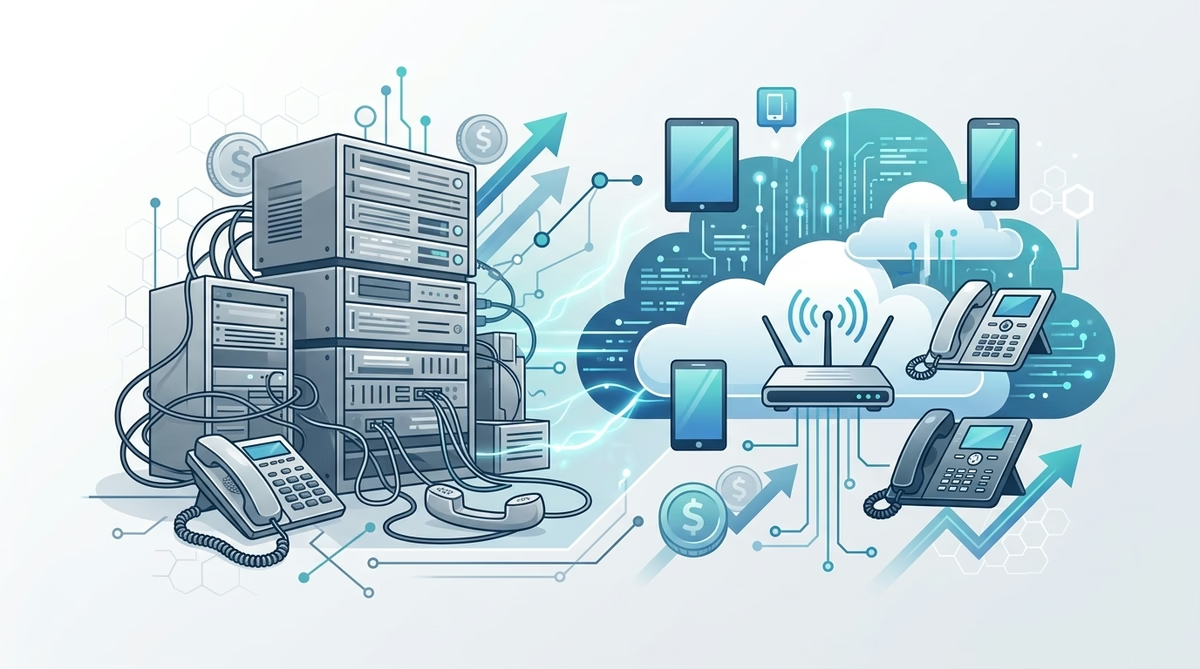
Introduction to Telephony Evolution In the modern European business landscape, communication is the lifeblood of every organisation. As remote and hybrid work models become the standard across hubs like London, Berlin, and Amsterdam, the limitations of traditional hardware-based PBX systems are becoming increasingly apparent. Moving to a cloud-based solution is no longer just a technological upgrade; it is a financial imperative. When evaluating Cloud PBX versus traditional PBX, the cost comparison goes far beyond the initial purchase price. ## Understanding the Capital Expenditure of Traditional PBX Traditional phone systems, often referred to as on-premise PBX, require a significant upfront financial commitment. For many small to medium-sized enterprises (SMEs), this capital expenditure (CapEx) model can be prohibitive. Key cost drivers include: * Physical hardware: Servers, desk phones, and proprietary cabling infrastructure. * Installation and setup: Professional services required to wire and configure physical hardware. * Maintenance contracts: Recurring fees for third-party technicians to repair legacy equipment. * Limited scalability: Expanding your system often requires purchasing additional line cards or complete hardware modules, which can lead to expensive 'over-provisioning'—paying for capacity you rarely use. ## The Shift to Operational Expenditure with Cloud PBX Cloud PBX systems operate on an operational expenditure (OpEx) model. By leveraging VoIP technology, your phone system lives in the cloud, removing the need for local hardware. The financial advantages include: * Predictable monthly billing: Costs are typically bundled per-user, allowing for precise budget forecasting. * Zero maintenance fees: Updates, patches, and security enhancements are handled automatically by the provider. * Hardware flexibility: Use existing IP phones or transition entirely to softphones on laptops and mobile devices, drastically reducing capital outlays. * Scalability on demand: Add or remove users instantly through a web portal, ensuring you only pay for what you actually use. ## Comparing Long-Term Total Cost of Ownership (TCO) When looking at the TCO over a five-year period, the gap between cloud and traditional systems widens significantly. Traditional PBX systems depreciate quickly and often require a 'rip and replace' cycle every few years as software support wanes. Conversely, a Cloud PBX at TheVoĉo evolves with your business. Consider these comparative factors: 1. International connectivity: Traditional systems often incur high costs for long-distance and international calls. Cloud PBX providers leverage global VoIP routing to offer competitive, flat-rate, or inclusive international calling packages. 2. IT Resource Allocation: On-premise PBX systems require dedicated IT time for troubleshooting and manual configuration. Cloud systems allow your IT team to focus on strategic business goals rather than physical infrastructure maintenance. 3. Disaster Recovery: If an on-premise server fails, your business communication stops. The cost of downtime in terms of lost productivity and reputation can be immense. Cloud PBX systems offer built-in redundancy, ensuring that even if your office loses internet or power, calls are automatically routed to mobile devices. ## Making the Transition for Your Business Making the switch is a strategic move that aligns your communication costs with your actual growth. If your organisation currently spends a disproportionate amount of time and money managing legacy phone lines, it is time to calculate your savings. Start by auditing your current invoices: identify the number of active lines, the cost of maintenance contracts, and the fees associated with international calling. Once you have these figures, compare them against a scalable cloud plan. Most European businesses find that moving to a cloud-based model yields a return on investment within the first 12 months. At TheVoĉo, we help businesses transition seamlessly, ensuring your team remains connected without the burden of legacy hardware costs. Ready to modernise your infrastructure and reduce your monthly overheads? Contact our Sales Team today for a personalised cost-benefit analysis and discover how much your business could save by switching to TheVoĉo Cloud PBX.