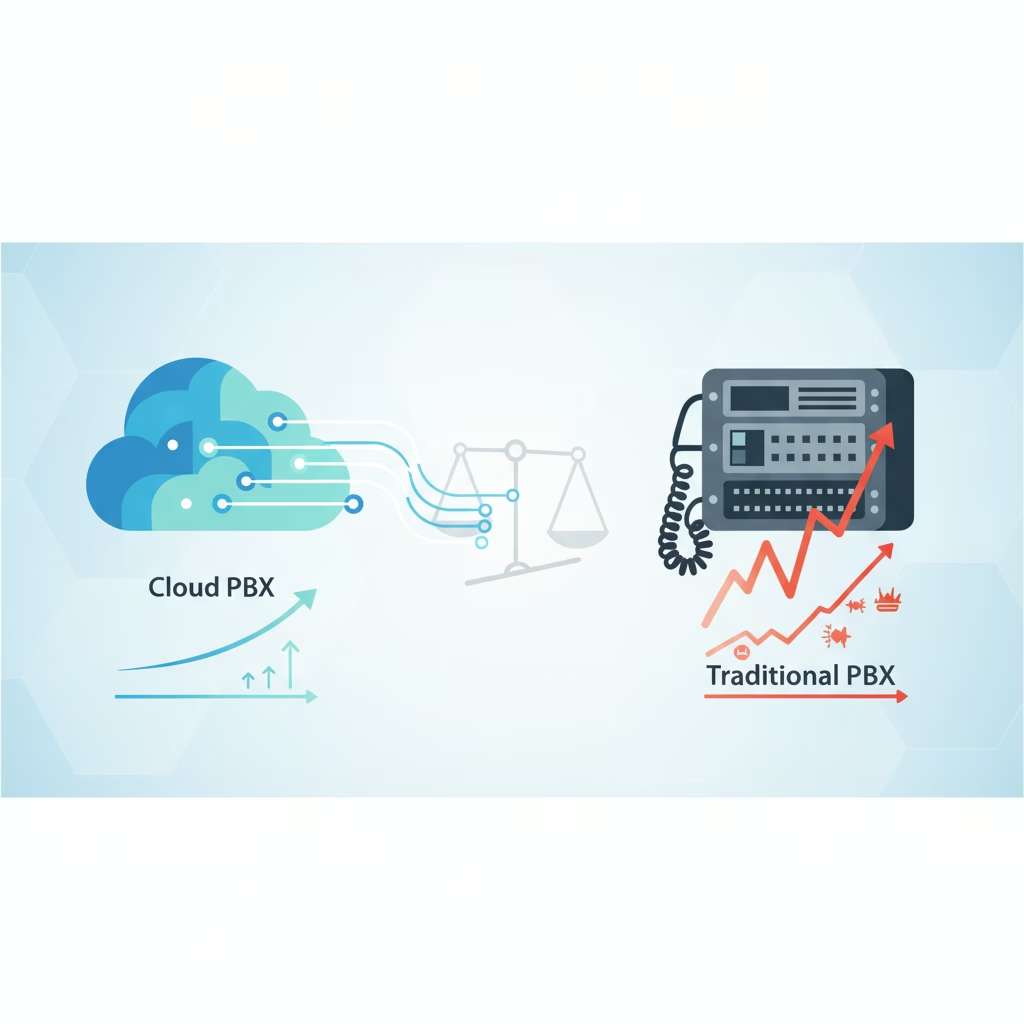
For any modern European business, choosing the right telecommunications system is a critical decision that impacts not only daily operations but also the bottom line. Two primary contenders stand out: the enduring Traditional PBX and the increasingly popular Cloud PBX. While both facilitate essential voice communication, their underlying architectures and, crucially, their cost implications differ dramatically. This guide delves into a comprehensive cost comparison to help organisations like yours make an informed choice.
Initial Investment: A Stark Contrast
The first major divergence between Cloud PBX and Traditional PBX lies in the initial outlay required to get your system up and running.
Traditional PBX (On-Premise): This system demands a significant upfront capital expenditure (CapEx). You are responsible for purchasing and owning all the necessary hardware, which typically includes:
- The PBX unit itself (a physical server or appliance).
- Specialised cabling and wiring throughout your office.
- Proprietary desk phones and other endpoints.
- Dedicated server racks and environmental controls (cooling, power backup).
- Licensing fees for the software and specific features.
- Professional installation services, which can be complex and time-consuming, requiring skilled technicians to configure the hardware and integrate it with your existing network infrastructure. This can run into thousands, or even tens of thousands, of euros depending on the scale.
Cloud PBX (Hosted PBX or VoIP PBX): In stark contrast, a Cloud PBX operates on an operational expenditure (OpEx) model. The vast majority of the infrastructure is owned and managed by the service provider (like TheVoĉo). Your initial investment is minimal, often limited to:
- Standard IP phones, which are significantly cheaper and more flexible than proprietary PBX hardware, or simply using softphones on existing devices (computers, smartphones).
- A reliable internet connection (which most businesses already have).
- Potentially, a modest setup fee from the provider, though many offer free setup.
This fundamental difference means traditional systems require a substantial initial budget allocation, while cloud solutions allow businesses to conserve capital and invest it elsewhere.
Ongoing Expenses: Predictability vs. Hidden Surprises
Beyond the initial setup, the ongoing costs of managing and maintaining each system present another critical area of comparison.
Traditional PBX: The operational costs associated with traditional systems can be substantial and, at times, unpredictable.
- Maintenance: Regular maintenance, hardware repairs, and component replacements are your responsibility. This often requires hiring dedicated IT staff with specialised PBX knowledge or engaging third-party contractors.
- Upgrades: Software updates and hardware upgrades are typically expensive, often involving further capital outlay to keep the system current and secure. Many organisations delay these, leading to security vulnerabilities or outdated features.
- Energy Consumption: A physical PBX unit and associated infrastructure consume power, contributing to your electricity bills.
- Line Rental: Traditional systems often still rely on ISDN lines, incurring separate rental charges per line.
- Support: If issues arise, you're responsible for troubleshooting or paying for external support services.
Cloud PBX: Cloud solutions offer a much more predictable and often lower ongoing cost structure.
- Subscription Fees: You pay a predictable monthly or annual subscription fee per user or per line, which typically includes:
- All software updates and feature enhancements.
- System maintenance and hardware upkeep performed by the provider.
- Reliable customer support and technical assistance.
- Often, a bundle of inclusive calls.
- Reduced IT Overhead: Your internal IT team is freed from managing the phone system, allowing them to focus on core business initiatives. The provider handles all the complex backend management.
- Scalability: You only pay for what you use. Adding or removing users is quick and often just a matter of adjusting your monthly subscription, without additional hardware purchases.
- Subscription Fees: You pay a predictable monthly or annual subscription fee per user or per line, which typically includes:
This translates into a clear operational expenditure model for Cloud PBX, making budgeting significantly easier and more transparent.
Scalability and Flexibility: Adapting to Your Business Growth
Modern European businesses need agile communication systems that can grow and adapt with them. This is where the cost implications of scalability become apparent.
Traditional PBX: Scaling a traditional system up or down is often a costly and cumbersome process. Expanding capacity typically means purchasing more hardware, installing additional lines, and reconfiguring the system. This can lead to over-provisioning (paying for capacity you don't use) or under-provisioning (lacking capacity when you need it), both of which incur costs or lost opportunities. Businesses with seasonal fluctuations find this particularly challenging.
Cloud PBX: Cloud PBX systems are inherently scalable and flexible. You can effortlessly add or remove users, lines, and features as your business demands change, often with just a few clicks in an online portal. This elasticity is cost-effective because you only pay for the resources you actively consume. For organisations with remote workers across Europe or those expanding into new territories, a cloud solution provides seamless communication without the need for additional physical infrastructure at each location.
Hidden Costs and Unexpected Savings
Beyond the obvious line items, there are often less apparent costs and savings that can significantly sway the overall financial picture.
Traditional PBX Hidden Costs:
- Downtime: If your on-premise system fails, your business operations can grind to a halt. The cost of lost productivity, missed calls, and damaged customer relations during downtime can be immense.
- Obsolescence: Traditional hardware can become obsolete quickly, forcing premature replacement cycles.
- Security Vulnerabilities: Maintaining robust security for an on-premise system requires constant vigilance and investment. Outdated systems are prime targets for cyber threats.
Cloud PBX Unexpected Savings:
- Enhanced Features: Many Cloud PBX systems, like TheVoĉo, come packed with advanced features that improve productivity and customer service, such as CRM integrations, call analytics, video conferencing, and unified communications. These often come at no additional cost or a minimal add-on, whereas they would be expensive bespoke integrations for a traditional system.
- Business Continuity: In the event of an office power outage or disaster, a Cloud PBX system continues to operate, as it's hosted off-site. Calls can be rerouted to mobile phones or other locations, ensuring uninterrupted communication and preventing revenue loss.
- Reduced Travel Costs: Features like video conferencing and presence information can reduce the need for business travel, especially for organisations with distributed teams across different European time zones.
Conclusion: Which is Right for Your Organisation?
While a Traditional PBX might appeal to a large organisation with existing infrastructure and a substantial CapEx budget, the financial landscape overwhelmingly favours Cloud PBX for most modern European businesses. The minimal upfront costs, predictable operational expenses, inherent scalability, and a wealth of advanced features make Cloud PBX a financially astute choice.
By embracing a Cloud PBX solution, organisations can reallocate significant capital and operational expenditure towards growth initiatives, benefit from enhanced flexibility, and ensure future-proof communication. Realise the true cost savings and operational efficiencies a modern Cloud PBX can offer. Explore TheVoĉo's Cloud PBX solutions today and discover how we can transform your business communications.