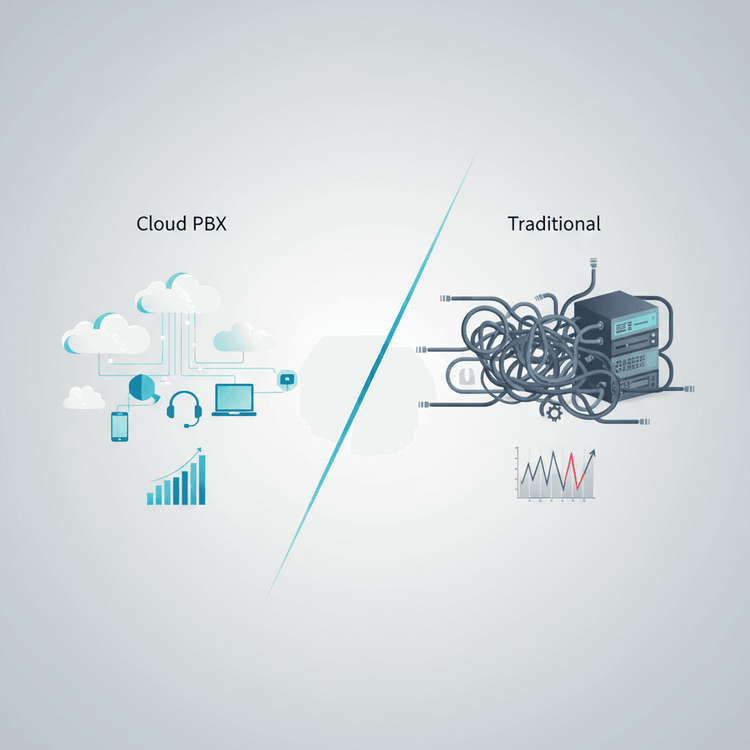
Choosing the right business phone system is a critical decision, directly impacting your operational efficiency and, perhaps most importantly, your budget. For many European businesses, the debate often boils down to two primary contenders: traditional PBX (Private Branch Exchange) and its modern counterpart, Cloud PBX. While both facilitate internal and external communication, their cost structures and long-term value propositions differ significantly, especially when viewed through a European lens.
At TheVoĉo, we understand the nuances of telecommunications in a dynamic market. This comprehensive guide will dissect the costs associated with each system, helping you make an informed choice that aligns with your financial objectives and operational needs.
Traditional PBX: High Upfronts and Hidden Expenses
A traditional PBX system typically involves significant capital expenditure (CapEx) from the outset. This on-premise solution requires physical hardware installed within your business premises, often taking up valuable server room space. The initial investment can be substantial and includes:
- Hardware Purchase: PBX server, dedicated phone lines, handsets, and networking equipment.
- Installation Costs: Professional installation and configuration by technicians.
- Licensing Fees: Software licenses, which may require ongoing renewals.
- Infrastructure Requirements: Potential upgrades to your existing wiring or network infrastructure to support the system.
Beyond the initial CapEx, traditional PBX systems are notorious for their hidden operational expenditures (OpEx) and ongoing maintenance. These can quickly accumulate, catching many businesses off guard:
- Maintenance & Repairs: Regular servicing, troubleshooting, and repairs of physical components, often requiring specialised technicians.
- Software Upgrades: Manual updates and patches, which can be costly and disruptive.
- Dedicated IT Staff: The need for internal IT personnel or external consultants to manage and maintain the system.
- Energy Consumption: Significant power usage to keep the hardware running 24/7.
- Scalability Challenges: Expanding or reducing capacity often means purchasing more hardware and incurring additional installation costs, making it inflexible for growing or contracting businesses. For a fast-evolving SME in Berlin or Dublin, this rigidity can be a major disadvantage.
Cloud PBX: The Predictable Subscription Model
In stark contrast, Cloud PB PBX, also known as Hosted PBX or VoIP (Voice over Internet Protocol) PBX, operates on a service-based, subscription model. This eliminates the vast majority of upfront costs and shifts telecommunications from a capital expenditure to a predictable operational expense. Key cost components include:
- Per-User Monthly Fees: A clear, predictable fee per user or extension, often including a range of features.
- Minimal Setup Costs: No expensive hardware to buy, beyond potentially some VoIP-compatible handsets or softphone licenses. Setup is often quick and remote.
- Included Maintenance & Upgrades: The provider handles all system maintenance, software updates, and security patches, included in your subscription.
- Reduced IT Overhead: Your internal IT team is freed from managing phone systems, allowing them to focus on core business initiatives.
- Lower Energy Costs: No on-site servers mean no significant power consumption for your phone system.
- Scalability & Flexibility: Easily add or remove users as your business evolves, paying only for what you need. This agility is perfect for businesses expanding into new European markets or adapting to seasonal demands.
Providers like TheVoĉo integrate a comprehensive suite of features into their Cloud PBX offerings, such as advanced call routing, voicemail-to-email, conferencing, and unified communications, often at no extra cost.
Beyond Direct Costs: Total Cost of Ownership (TCO)
When comparing phone systems, it's crucial to look beyond the immediate price tag and consider the Total Cost of Ownership (TCO) over several years. This holistic view reveals where true long-term value lies.
Cloud PBX typically offers a lower TCO due to:
- Disaster Recovery: Built-in redundancy and failover mechanisms ensure business continuity even if your office faces an outage, a crucial consideration for any business, particularly in adverse weather conditions often seen across Europe.
- Enhanced Security: Reputable Cloud PBX providers, like TheVoĉo, invest heavily in securing their infrastructure, offering robust encryption and compliance measures, which can be more challenging and expensive for individual businesses to replicate with traditional systems. This is particularly vital in adhering to stringent EU data protection standards.
- Productivity Gains: Advanced features like CRM integration, AI-powered call analytics, and seamless mobile access empower your workforce, boosting efficiency and customer satisfaction. Imagine a sales team in Paris or Rome instantly accessing customer history during a call.
- Future-Proofing: Cloud PBX platforms are continuously updated with the latest technological advancements, including AI and security enhancements, ensuring your communication system remains cutting-edge without further capital investment.
- Geographical Reach: Effortlessly connect teams across different European countries or global locations with a unified system, maintaining local presence with international numbers without complex infrastructure.
European Market Perspective & Compliance
For European businesses, the cost comparison also extends to regulatory compliance and market specificities. Data sovereignty and privacy, particularly under GDPR, are paramount. Cloud PBX providers with EU-based data centres, like those partnered with TheVoĉo, offer peace of mind, ensuring your communication data is stored and processed in compliance with European regulations.
Furthermore, the flexibility of Cloud PBX supports modern European work models, from remote work in the Nordic countries to hybrid setups in Germany. Employees can connect securely from any location, reducing travel costs and physical office space requirements while maintaining seamless communication quality.
Traditional PBX systems can also struggle with the complexities of international calling rates and number portability across various European countries, often requiring expensive add-ons or separate contracts. Cloud PBX streamlines these processes, typically offering competitive international rates and simpler management.
Conclusion: Investing in Future-Proof Communication
While traditional PBX systems might initially appear cheaper on paper, their high upfront costs, ongoing maintenance, and lack of flexibility often lead to a higher Total Cost of Ownership. Cloud PBX, with its predictable subscription model, inherent scalability, advanced features, and built-in security, presents a far more cost-effective and future-proof solution for modern European businesses.
By choosing Cloud PBX, you're not just buying a phone system; you're investing in a resilient, efficient, and compliant communication infrastructure that supports growth and innovation. Ready to explore a communication solution that aligns with your budget and empowers your business? Contact TheVoĉo today for a personalised consultation and discover how our Cloud PBX can transform your telecommunications.