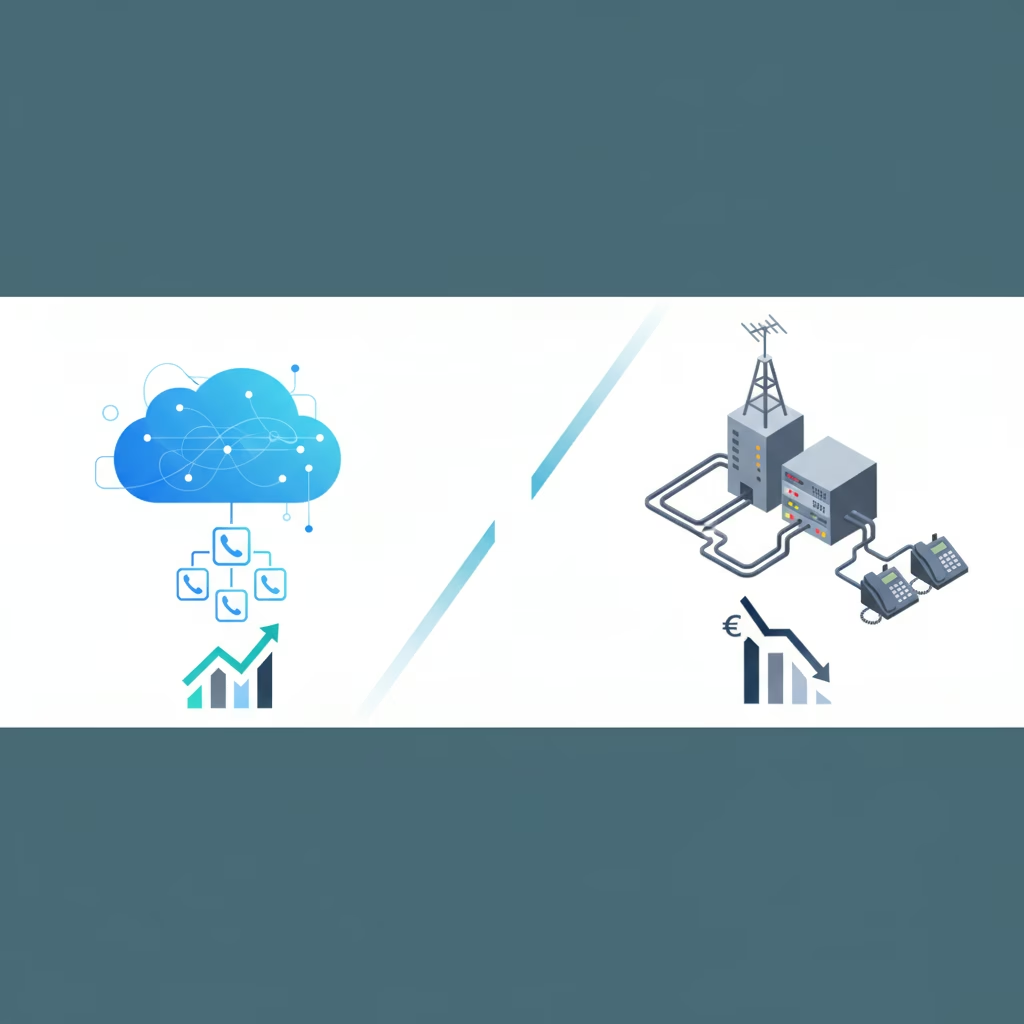
Choosing the right business phone system is a critical decision for any modern organisation, impacting not just daily operations but also the bottom line. For decades, the Traditional Private Branch Exchange (PBX) was the standard, a robust on-premise hardware solution. However, the advent of Cloud PBX has revolutionised business communications, offering a digital alternative that promises flexibility and cost-efficiency. But how do these two systems truly compare when it comes to expense? Let's delve into a comprehensive cost comparison, specifically tailored for European businesses.
The Financial Footprint of Traditional PBX
Traditional PBX systems, often referred to as on-premise PBX, involve significant upfront capital expenditure. When evaluating the costs, consider the following:
- Hardware Investment: This is typically the largest initial outlay. You need to purchase the PBX server itself, which can range from a few thousand to tens of thousands of Euros, depending on the system's capacity and features. You'll also need physical phone handsets for every user, which adds up.
- Installation and Cabling: Setting up a traditional PBX requires specialised technicians to install the hardware, run dedicated cabling throughout your office, and configure the system. This labour-intensive process incurs substantial installation fees.
- Maintenance and Support: Once installed, the system needs ongoing maintenance. This includes regular servicing, software updates, and repairs. Many businesses either hire dedicated IT staff with PBX expertise or contract external service providers, both of which are recurring operational costs.
- Upgrades and Expansion: As your business grows, scaling a traditional PBX can be costly and disruptive. Adding more lines or features often means purchasing additional hardware modules, re-cabling, and more installation work. Furthermore, major software upgrades can sometimes feel like buying a new system entirely.
- Power Consumption and Space: Don't overlook the environmental and financial cost of powering and cooling a dedicated server room. Traditional PBX hardware consumes electricity and requires a secure, temperature-controlled physical space, both of which are ongoing expenses.
- Licence Fees: While not always obvious, many traditional PBX systems come with per-user or feature-based licence fees that must be renewed periodically.
For a mid-sized European company, the initial investment for a traditional PBX could easily exceed €10,000 to €20,000, with ongoing maintenance and upgrade costs adding thousands more annually.
Unpacking the Costs of Cloud PBX
Cloud PBX, also known as Hosted PBX or VoIP PBX, operates differently, shifting capital expenditure to operational expenditure. Here's a breakdown of its cost structure:
- Subscription Model: The most significant difference is the pricing model. Cloud PBX typically involves a monthly or annual subscription fee per user. This covers the PBX service, maintenance, software updates, and often a bundle of features. This predictable, scalable cost simplifies budgeting.
- Minimal Hardware Investment: With Cloud PBX, the server resides in the provider's data centre. Your organisation only needs internet-connected devices – existing computers, smartphones, or basic IP phones. This drastically reduces upfront hardware costs. Many organisations choose to re-use existing devices, further saving costs.
- No Installation or Maintenance Fees: Since the system is cloud-based, there's no complex on-site installation of core hardware. The provider handles all maintenance, upgrades, and technical support. This eliminates the need for specialised in-house IT staff dedicated to the phone system.
- Scalability at No Extra Cost: Adding or removing users is usually a simple process of adjusting your subscription, often done through an online portal. There are no hardware purchases or re-cabling needed, making it incredibly flexible for growing or seasonal businesses, or those with remote workers across different European time zones.
- Included Features: Many advanced features that would be costly add-ons for a traditional PBX (e.g., auto-attendant, call forwarding, voicemail-to-email, video conferencing, CRM integration) are often included in standard Cloud PBX packages.
- Reduced Energy Consumption: Your organisation is no longer responsible for powering and cooling a dedicated PBX server, leading to lower electricity bills and a smaller carbon footprint.
A typical Cloud PBX solution for a mid-sized European business might start from €15-€30 per user per month, with no major upfront costs, offering clear and predictable expenditure.
The True Total Cost of Ownership (TCO) and Hidden Expenses
While the initial sticker price might seem lower for one system over the other, it's crucial to consider the Total Cost of Ownership (TCO) over a 3-5 year period. This is where Cloud PBX often shines, especially for dynamic European businesses.
- Flexibility and Agility: Cloud PBX offers unparalleled flexibility. It supports remote work, multi-site operations (e.g., offices in London, Berlin, and Paris), and easy integration with other business tools. The cost of not having this flexibility in a rapidly changing market can be significant.
- Downtime and Business Continuity: A traditional PBX is a single point of failure. If the hardware fails or your office experiences a power outage, your entire communication system can go down. Cloud PBX, hosted in resilient data centres with redundancy, offers far superior business continuity, minimising costly downtime.
- Security Updates: Cloud PBX providers like TheVoĉo proactively manage security updates and patches, protecting your communications from evolving threats. With traditional PBX, ensuring timely security updates is the organisation's responsibility, which can be an overlooked cost in terms of IT resource allocation and potential security breaches.
- Future-Proofing: Cloud PBX solutions are continuously updated and improved by the provider, ensuring your business always has access to the latest features and technology without additional investment. Traditional systems can quickly become obsolete, requiring expensive forklift upgrades.
When calculating TCO, consider the opportunity cost of resources tied up in managing an on-premise system versus focusing on core business activities. The agility and resilience offered by cloud solutions directly translate into long-term savings and competitive advantage.
Making the Right Choice for Your Organisation
For many European businesses, the decision between Cloud PBX and Traditional PBX boils down to a strategic alignment of costs, flexibility, and future growth. While traditional PBX may still suit organisations with extremely specific, legacy requirements and significant existing infrastructure investments, the overwhelming trend points towards the cloud.
Cloud PBX offers a compelling value proposition:
- Reduced Capital Expenditure: Lower upfront costs make it accessible for businesses of all sizes.
- Predictable Operational Costs: Simple per-user pricing aids budgeting and financial planning.
- Scalability and Flexibility: Easily adapt to growth, seasonal demands, or remote workforces without major investments.
- Access to Advanced Features: Modern communication tools are often included, enhancing productivity.
- Lower IT Burden: Free up your IT team to focus on strategic initiatives rather than phone system maintenance.
- Enhanced Business Continuity: Robust, redundant systems ensure your communications are always on.
Considering the long-term TCO, operational efficiency, and the need for agile communication in today's European business landscape, Cloud PBX often emerges as the more economically sound and strategically advantageous choice. It's not just about saving money, but investing in a communication platform that empowers your organisation to thrive.
Ready to explore how a Cloud PBX solution can benefit your organisation? Contact TheVoĉo today for a personalised consultation and see our transparent pricing plans.