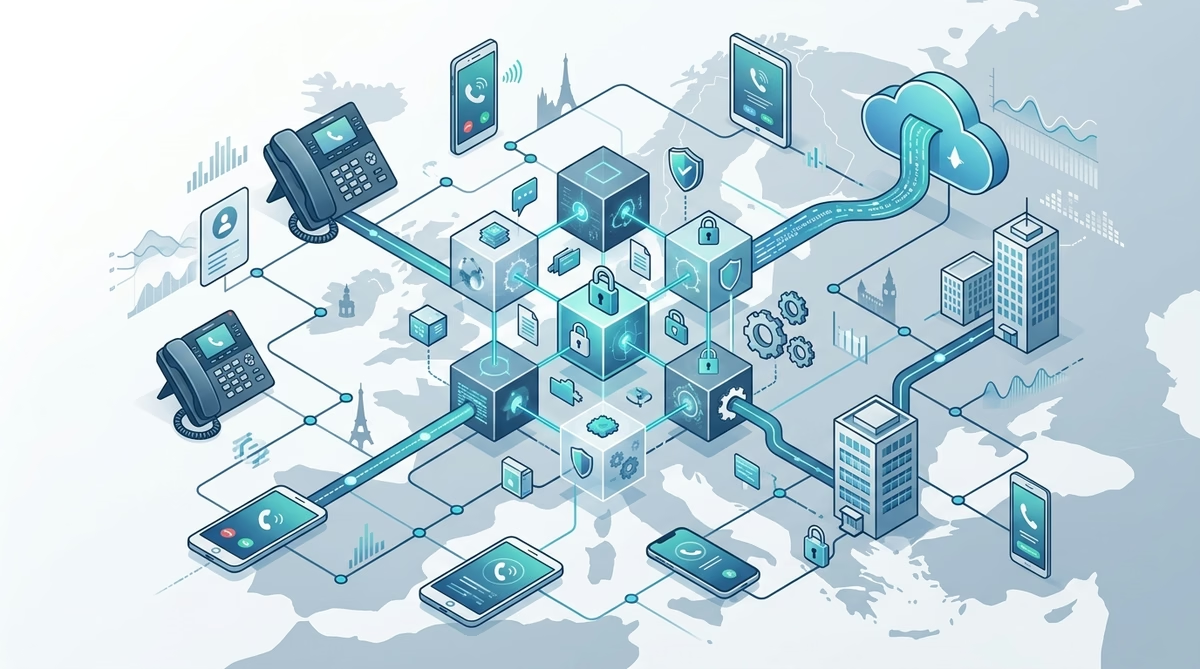
Introduction to Blockchain in Telecom The telecommunications sector is undergoing a rapid digital transformation, driven by cloud-based solutions and the need for seamless global connectivity. As businesses across Europe transition to VoIP and Cloud PBX systems, the security of these communications has become a paramount concern. Blockchain technology, often associated solely with cryptocurrencies, is emerging as a powerful tool to address these challenges. By decentralising records and creating immutable audit trails, blockchain offers a robust framework for enhancing transparency, security, and efficiency in modern telecommunications. ## Fraud Prevention and Identity Management Telecommunications fraud costs the industry billions every year, with businesses often falling victim to toll fraud or identity spoofing. Blockchain provides a unique solution by creating a decentralised identity management system. Instead of relying on a single central database that could be compromised, blockchain allows for: - Immutable verification of network users. - Real-time validation of identities, preventing 'man-in-the-middle' attacks. - Reduced risk of unauthorised access through decentralised authentication tokens. For European organisations operating across multiple borders, this means a standardised approach to identity that works regardless of regional provider infrastructure. ## Streamlining Billing and Smart Contracts One of the most complex aspects of international telecommunications is the settlement process between carriers. Managing roaming charges and wholesale settlements is notoriously inefficient, often involving manual reconciliation that spans weeks. Blockchain introduces 'Smart Contracts'—self-executing agreements that trigger automatically when conditions are met. Benefits include: 1. Near-instant settlement of roaming charges between international carriers. 2. Automated invoicing based on real-time usage data. 3. Reduction in administrative overhead and human error. By automating these processes, businesses can ensure that their communication costs remain predictable and transparent, allowing IT managers to focus on core operations rather than auditing bills. ## Enhancing Security and GDPR Compliance Data sovereignty is a critical pillar of business operations in the European Union. With the stringent requirements of the General Data Protection Regulation (GDPR), companies must ensure that personal data is handled with the highest level of security and accountability. Blockchain supports this by: - Providing a cryptographically secure audit trail of all data interactions. - Enabling data portability without compromising the integrity of the underlying records. - Ensuring that sensitive information remains tamper-proof and traceable throughout its lifecycle. When integrated with modern VoIP systems, blockchain can act as a layer of verification that ensures communication logs are authentic, supporting businesses in meeting their audit requirements with ease. ## Future-Proofing Your Communication Infrastructure As we look toward the integration of AI-powered telecommunications and 5G, the infrastructure layer must be as reliable as it is scalable. Blockchain is not just a trend; it is an foundational technology that supports the decentralised nature of future network topologies. Businesses adopting cloud-based systems should consider providers who are actively exploring distributed ledger technologies to enhance their service offerings. Practical steps for IT leaders include: - Evaluating your current provider's commitment to cryptographic security standards. - Assessing how blockchain could potentially integrate with your current ERP or CRM systems for automated billing. - Prioritising vendors who provide transparency in their data handling processes. ## Conclusion The convergence of blockchain and telecommunications promises to redefine how businesses connect, communicate, and collaborate globally. From mitigating fraud risks to automating complex billing cycles, the advantages are clear for forward-thinking European enterprises. At TheVoĉo, we are committed to staying at the forefront of these technological advancements, ensuring our cloud phone systems remain the gold standard for security and innovation. Ready to modernise your business communications? Contact our team today to learn how our secure, AI-powered solutions can help your organisation thrive in the digital age.