Introduction: Unlocking the Future of Telecom with Blockchain
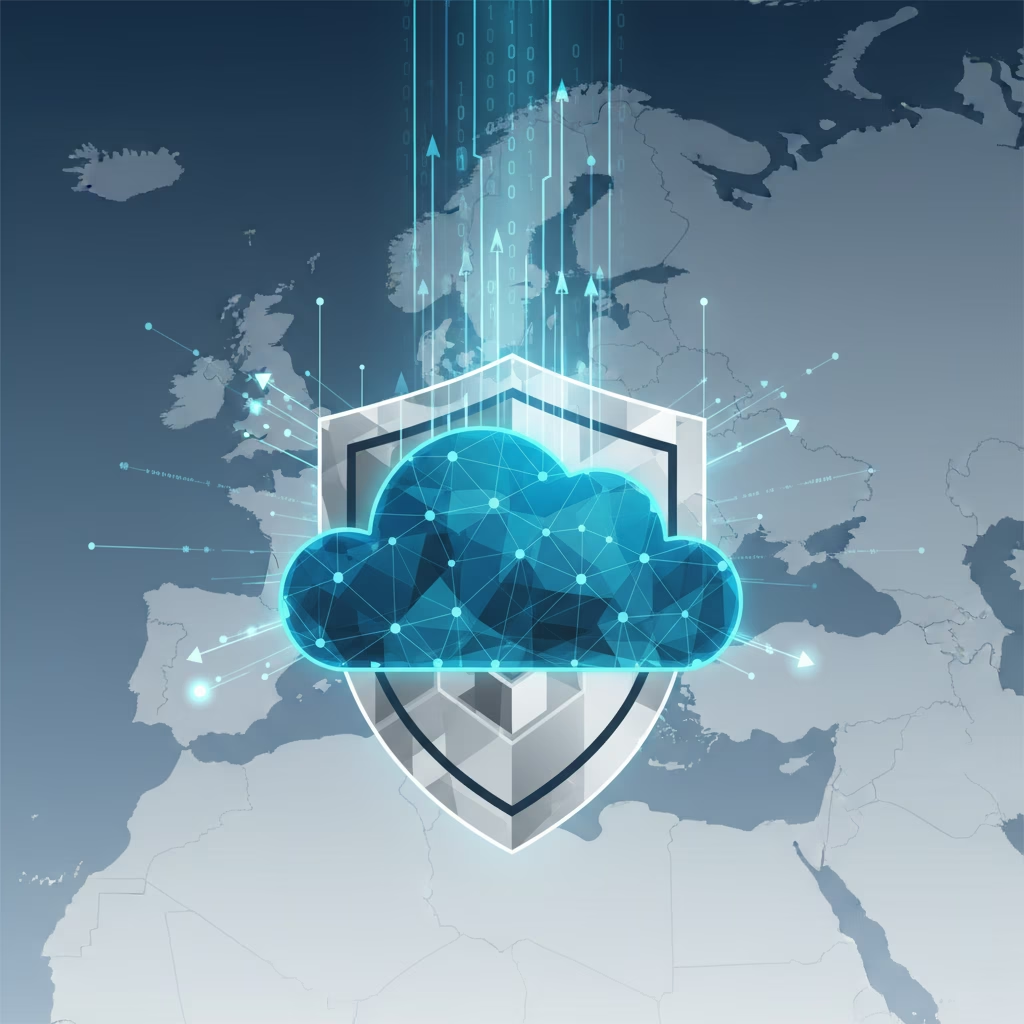
The telecommunications industry, a cornerstone of global connectivity, is constantly evolving. From the early days of landlines to the ubiquity of Cloud PBX and VoIP, innovation drives progress. As we navigate an increasingly digital landscape, new challenges arise concerning security, data integrity, and operational efficiency. This is where blockchain technology, often associated with cryptocurrencies, emerges as a powerful contender to address these issues within the telecom sector, offering profound benefits for European businesses.
At its core, blockchain is a decentralised, distributed ledger technology that records transactions in a secure, transparent, and immutable manner. Each 'block' contains a timestamped list of transactions, and once added to the chain, it cannot be altered. This inherent trust and transparency make it uniquely suited to tackle some of the most persistent hurdles in telecommunications, from securing customer data to streamlining complex inter-operator settlements. For organisations reliant on robust and secure communication systems like those provided by TheVoĉo, understanding blockchain's potential is crucial for future-proofing operations.
Tackling Telecom's Core Challenges with Blockchain
The telecommunications industry grapples with several long-standing issues that blockchain could revolutionise. These challenges often lead to increased costs, reduced trust, and operational inefficiencies.
- Fraudulent Activities: Billions are lost annually due to various forms of telecom fraud, including international revenue share fraud, SIM swap fraud, and identity theft. Blockchain's immutable ledger can provide an unalterable record of identities and transactions, making it significantly harder for fraudsters to operate undetected.
- Data Security and Privacy: With the rigorous requirements of regulations like GDPR across Europe, ensuring the privacy and security of customer data is paramount. Traditional centralised databases are attractive targets for cyberattacks. Blockchain's decentralised nature and cryptographic security could offer enhanced protection for sensitive data, distributing it across multiple nodes and reducing single points of failure.
- Complex Billing and Settlement: Inter-operator roaming agreements and settlement processes are notoriously complex, time-consuming, and prone to disputes. This often involves manual reconciliation across different billing systems, leading to delays and errors. Smart contracts, self-executing contracts with the terms of the agreement directly written into code, can automate and streamline these processes, ensuring transparent and dispute-free settlements.
- Lack of Transparency: The intricate web of partnerships and service providers in telecom often lacks a unified, transparent view of operations and data flow. Blockchain can provide a shared, auditable record that all parties can trust.
Practical Applications of Blockchain in Telecommunications
The theoretical benefits of blockchain translate into tangible applications that can significantly impact how telecommunications services are delivered and managed.
- Identity Management and KYC (Know Your Customer): Blockchain-based digital identities can offer a secure, self-sovereign way for individuals and businesses to prove their identity. This reduces the need for repeated KYC checks, streamlines onboarding processes for new services (like a Cloud PBX subscription), and enhances security against identity-related fraud. Imagine a European business client using a single, verifiable digital identity across multiple service providers, reducing administrative burden and increasing trust.
- Roaming and Inter-carrier Settlement: This is perhaps one of the most promising areas. Blockchain and smart contracts can automate the recording and settlement of roaming charges between network operators. Instead of lengthy manual reconciliation, transactions are instantly recorded and verified on the blockchain, leading to faster payments, fewer disputes, and reduced operational costs for operators, ultimately benefiting end-users through potentially more competitive roaming rates.
- IoT Device Management and Security: As the Internet of Things (IoT) expands, managing billions of connected devices and ensuring their security becomes critical. Blockchain can provide a secure, decentralised framework for device registration, authentication, and data exchange. Each IoT device could have a blockchain identity, making it easier to track, manage, and secure against unauthorised access or manipulation. This is particularly relevant for businesses utilising smart offices or industrial IoT solutions.
- Supply Chain Transparency for Network Components: Ensuring the authenticity and integrity of network hardware and software components is vital for national security and service reliability. Blockchain can create an immutable ledger for the entire supply chain, tracking components from manufacturer to deployment. This transparency helps combat counterfeit products and ensures that infrastructure components meet regulatory and security standards, a crucial consideration for secure network operations in Europe.
Tangible Benefits for European Businesses
For businesses across Europe, the integration of blockchain into telecommunications infrastructure offers clear advantages that align with contemporary business demands for security, efficiency, and compliance.
- Enhanced Security and Data Integrity: With cyber threats constantly evolving, blockchain's cryptographic security and distributed nature provide a robust defence against data breaches and tampering. For cloud-based systems like TheVoĉo's VoIP and Cloud PBX, this could mean an additional layer of verifiable security for call records, user data, and service configurations.
- Operational Efficiency and Cost Reduction: By automating processes like inter-operator settlements and identity verification through smart contracts, businesses and service providers can significantly reduce manual effort, minimise errors, and lower operational expenditures. This efficiency gain translates into better service and potentially more competitive pricing for customers.
- Increased Trust and Transparency: The immutable and transparent nature of blockchain fosters greater trust among all participants in the telecom ecosystem – from network operators to end-users. Businesses can have greater assurance about the integrity of their communication services and the security of their data.
- Support for Compliance and Data Sovereignty: While blockchain itself doesn't guarantee GDPR compliance, its ability to provide an unalterable audit trail of data access and processing can significantly aid organisations in demonstrating adherence to data protection regulations. Decentralised data storage models could also contribute to strategies around data sovereignty, allowing for more granular control over data location and access in line with European legal frameworks.
The Future Landscape: Integrating Blockchain with Cloud Telecom
The synergy between blockchain and cloud telecommunications, such as TheVoĉo's offerings, is particularly exciting. Cloud-based business phone systems already offer flexibility and scalability. Integrating blockchain capabilities can elevate these systems to new heights of security and efficiency.
Imagine smart contracts automating Service Level Agreements (SLAs) for your Cloud PBX, guaranteeing uptime and performance with unparalleled transparency. Or a secure, blockchain-verified identity for every employee accessing your VoIP system, drastically reducing the risk of unauthorised access. As the technology matures, we can expect blockchain to underpin various aspects of network management, service provisioning, and billing in cloud environments.
For European businesses, staying informed about these advancements is key. While full-scale blockchain integration into telecom is still on the horizon, the underlying principles of security, transparency, and decentralisation are already paramount in choosing a communications provider. Providers like TheVoĉo are continuously investing in advanced technologies, including AI and robust security measures, to ensure their platforms are ready for these future innovations.
Conclusion
Blockchain technology offers a compelling vision for the future of telecommunications – one characterised by enhanced security, unparalleled transparency, and streamlined operations. From combating fraud and securing identities to optimating inter-operator settlements, its applications are vast and transformative. For European businesses, adopting cloud-based communication solutions that are built with future-proof security and efficiency in mind is a critical step towards harnessing these advancements. As the digital landscape continues to evolve, embracing innovative technologies like blockchain will be essential for maintaining a competitive edge and ensuring robust, reliable communication networks. Explore how TheVoĉo's secure and efficient cloud communication solutions can empower your business today.