
The Future of Business Communication: AI-Powered Voice Assistants
The landscape of business telephony is constantly evolving, driven by innovation and the demand for greater efficiency and enhanced customer experiences. For European businesses, staying competitive means embracing cutting-edge technologies. The latest frontier? AI-powered voice assistants integrated into cloud-based business phone systems. Far beyond the simple interactive voice response (IVR) systems of yesteryear, today's AI voice assistants offer sophisticated capabilities that promise to revolutionise how organisations connect with their clients and manage internal communications.
At TheVoĉo, we understand the critical role that advanced telecommunications play in modern business success. Specialising in Cloud PBX, VoIP, security, and AI-powered solutions, we see first-hand how artificial intelligence is not just a futuristic concept but a practical tool delivering tangible benefits right now. From London to Berlin, Paris to Rome, businesses are seeking ways to optimise operations, and AI voice assistants are proving to be a game-changer.
What Are AI-Powered Voice Assistants in Business Telephony?
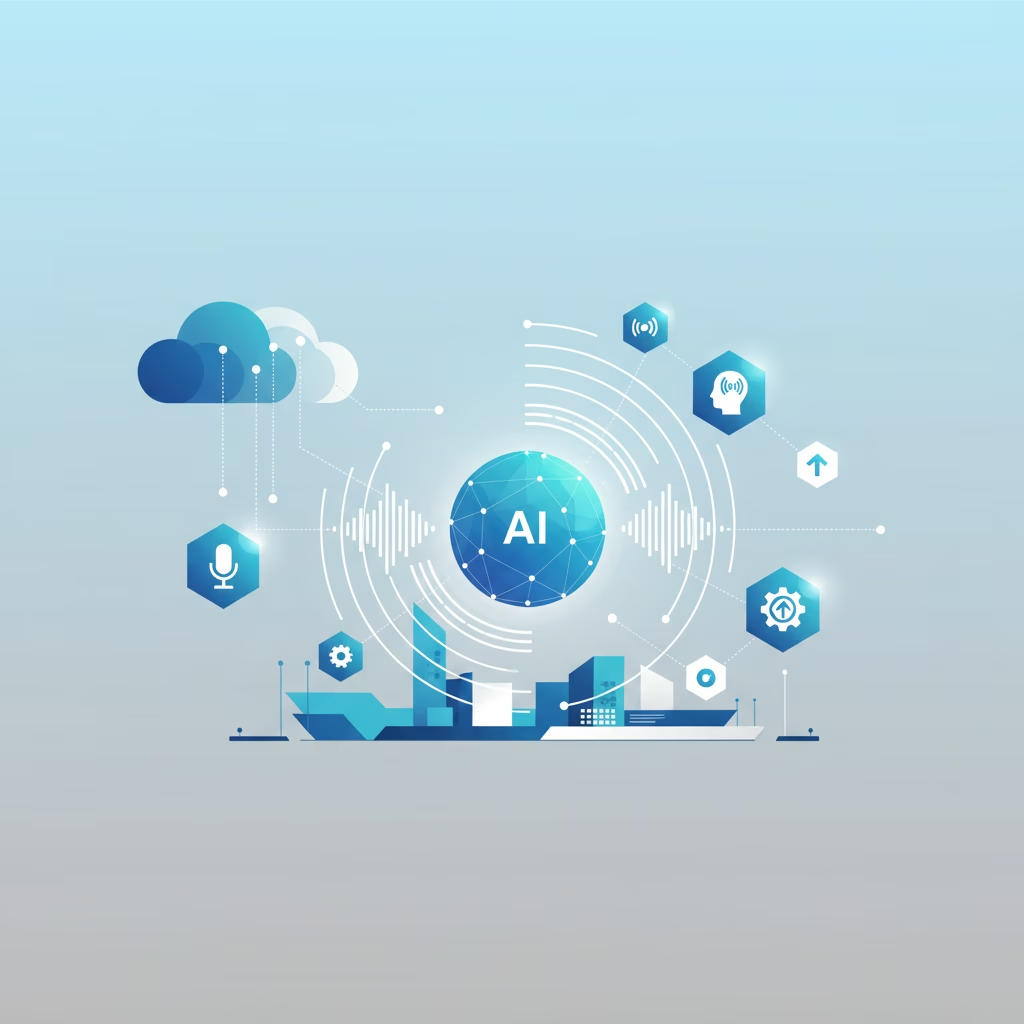
An AI-powered voice assistant in a business telephony context is a sophisticated software application designed to understand, process, and respond to human voice commands and queries. Unlike traditional IVR, which relies on rigid menu trees, AI assistants leverage advanced technologies like Natural Language Processing (NLP) and machine learning to interpret natural speech, context, and even caller sentiment.
Key functionalities often include:
- Intelligent Call Routing: Directing callers to the most appropriate department or agent based on their spoken intent, not just numerical selections.
- Automated Information Retrieval: Answering frequently asked questions (FAQs) instantly by accessing databases, saving agents time.
- Appointment Scheduling and Reminders: Managing calendars, booking meetings, and sending out automated reminders.
- Basic Task Automation: Processing simple transactions, updating customer records, or initiating specific workflows.
- Multilingual Support: Providing seamless communication in multiple European languages, catering to diverse customer bases across the continent.
These assistants are not replacements for human agents but powerful complements, handling routine enquiries and administrative tasks, thereby freeing up human staff to focus on more complex, high-value interactions.
Unlocking Efficiency and Productivity Across Europe
The immediate impact of integrating AI voice assistants is a significant boost in operational efficiency and productivity. Businesses operating across diverse European time zones, for instance, can maintain 24/7 customer service without the need for extensive human staffing in every region. This continuous availability is a huge advantage in today's globalised economy.
Consider a few practical benefits:
- Reduced Call Volumes for Human Agents: By automating answers to common questions (e.g.,